Africa's long-running campaign for permanent representation on the United Nations Security Council has gained fresh momentum at the 81st UN General Assembly. African leaders have argued that the global body cannot claim to represent the modern world while excluding the continent from its most powerful decision-making organ. This push for reform comes as the Council's composition is seen as no longer reflecting contemporary geopolitical realities.
UN Secretary-General António Guterres and General Assembly President Khalilur Rahman have both called for reform, with Guterres stating that the Council's current composition is unjust and indefensible. He noted that when the UN was founded, most of Africa was still under colonial rule, and today, Africa still has no permanent representation on the Council. Guterres has backed a broader reform process aimed at making the Council more representative of the world it serves.
The Council currently has 15 members, five of them permanent - China, France, Russia, the United Kingdom, and the United States - with veto powers. The other 10 are elected for two-year terms. For Africa, the difference between a rotating seat and permanent membership is significant. An African country elected to the Council can participate in deliberations and vote on resolutions, but its mandate expires after two years.
A permanent member would remain at the table and participate continuously in negotiations over conflicts, sanctions, peacekeeping operations, and other international security matters. The veto would add another layer of influence, allowing an African permanent member to prevent the adoption of a substantive resolution even where it had secured sufficient support among the other Council members. This power would not amount to unilateral control but would provide significant negotiating leverage.
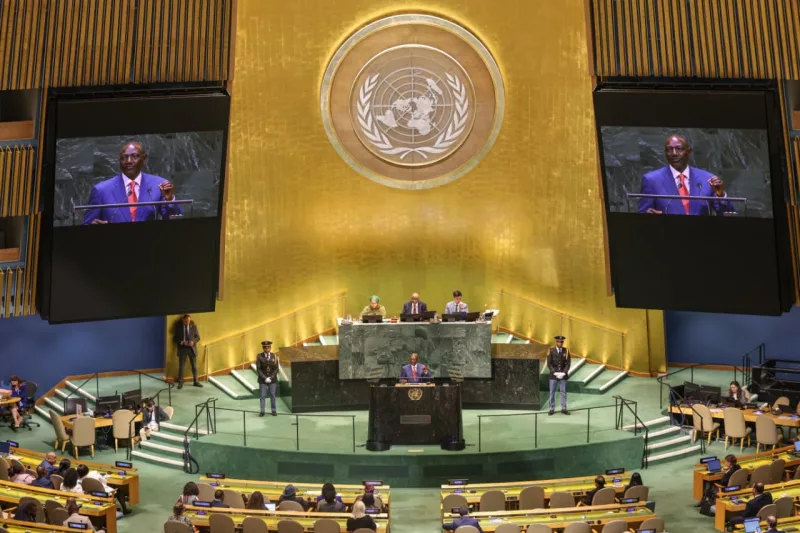
President William Ruto of Kenya has used his address in New York to press for a fundamental overhaul of the post-World War II global order. He argued that Africa should no longer remain a region affected by decisions in which it has limited permanent influence. Ruto stated that the international system still largely reflects the balance of power that existed in 1945, despite profound changes in global population, economics, and geopolitics.
The African Union has made reform of the Council a longstanding diplomatic priority, with AU Commission Chairperson Mahmoud Ali Youssouf saying Africa is seeking to correct what the bloc regards as a historical injustice. The AU wants at least two permanent seats with all the privileges of permanent membership, including the veto, and five non-permanent seats. Kenya has similarly said that demanding equal rights does not amount to supporting the veto itself but is intended to prevent the creation of second-class permanent membership.
Securing permanent seats would create another difficult question for Africa: who would occupy them? The AU position is that the African Union should retain the right to select the continent's representatives for election to the Council to act on its behalf. This means negotiations would not end with an agreement to expand the Council; African countries would also have to agree on a mechanism for selecting representatives, regional rotation, and accountability to the wider continent.
Key points
- The push for permanent representation on the UN Security Council is driven by the need for Africa to have a greater say in international decisions affecting the continent.
- A permanent African seat on the Council would provide significant negotiating leverage and the ability to block substantive resolutions.
- The debate over permanent representation is part of a broader push for reform of the UN Security Council to make it more representative of the modern world.