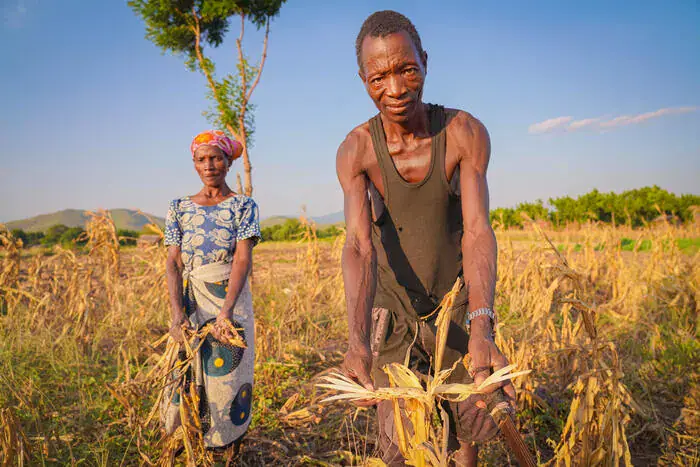
The World Food Programme (WFP) has expressed concerns over the dwindling humanitarian resources, which are significantly hampering Malawi's preparedness for the anticipated El Niño conditions. Despite improvements in the country's response planning, WFP deputy country director Bernard Owadi noted that funding remains a major challenge. He made these remarks during an El Niño simulation exercise in Bangula, Nsanje. Malawi has improved its preparedness compared to previous El Niño episodes, with response tools and plans in place.
The country is facing a significant funding gap to prepare for the weather phenomenon. The Malawi Government's preliminary preparedness plan requires about K488.5 billion, but as of September, only K163.7 billion had been mobilised, leaving a funding gap of K324.8 billion. Department of Disaster Management Affairs Commissioner Wilson Moleni stated that the government is working to mobilise the required resources, but he could not indicate how much additional funding had been mobilised since September.
The El Niño simulation exercise was crucial in testing coordination among response agencies, the movement of relief supplies, pre-positioning of essential items, warehouse capacity, and other logistical arrangements. Key preparedness measures include securing 440,000 metric tonnes of maize to strengthen national food reserves, improving livestock resilience, investing in drought insurance and water security, and pre-positioning essential supplies.
The energy sector is also considered vulnerable, as below-normal rainfall could affect water levels needed for hydropower generation. During the 2023/24 El Niño season, maize production declined by about 22.7 percent, while millions of Malawians faced acute food insecurity. The Malawi Vulnerability Assessment Committee projects that about 2.6 million people will face hunger during the 2026/27 consumption period, representing 14 percent of the projected population.
The National Food Reserve Agency is targeting to procure 300,000 metric tonnes of maize using a K100 billion government allocation to strengthen national food reserves. The agency is sourcing maize from local farmers and suppliers through the Agricultural Development and Marketing Corporation, mega-farmers, and the Greenbelt Authority. The agency's chief executive officer, Bruce Munthali, stated that their biggest task is to buy enough stocks.
The Department of Climate Change and Meteorological Services projects a strong-to-very-strong El Niño episode that could persist into 2027, bringing below-normal rainfall across much of southern and central Malawi. The anticipated weather pattern could result in delayed and erratic planting rains, fewer rainy days, and prolonged dry spells, particularly between December and March.
Malawi enters the November 2026 to March 2027 growing season amid heightened risks of rainfall deficits associated with the developing El Niño. The simulation exercise was designed to test the country's preparedness for El Niño by allowing government departments and humanitarian partners to assess whether their response plans could work when the weather phenomenon strikes.
Key points
- Funding gap of K324.8 billion for El Niño preparedness
- 2.6 million people projected to face hunger during 2026/27 consumption period
- Country needs 440,000 metric tonnes of maize to strengthen national food reserves