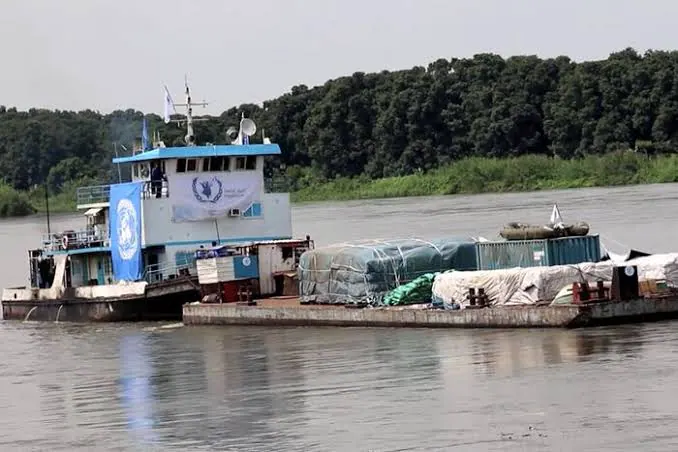
The United Nations World Food Programme (WFP) has strongly condemned an armed security incident and the forced offloading of humanitarian food assistance during a river convoy operation in Ayod County, Jonglei State. According to WFP, armed youth in Chuilbong assaulted and threatened two humanitarian workers at gunpoint on September 29, preventing food assistance from reaching government-controlled Mogok in Ayod North. The incident occurred despite extensive negotiations aimed at securing safe passage for the convoy.
The incident forced WFP to instruct its team to offload food commodities to protect its personnel, resulting in an estimated 162.54 metric tons of food assistance being forcibly removed from the convoy. The food was intended to support about 4,400 vulnerable people for three months in Mogok. WFP reported that the remaining humanitarian team and assets, including personnel from its cooperating partner Action Against Hunger (ACF), along with approximately 291.48 metric tons of food assistance destined for Ayod South, were secured and safely returned to Malakal on October 2.
The obstruction of humanitarian convoys risks further delaying food and other essential support to communities already facing acute vulnerabilities. South Sudan continues to face severe humanitarian needs driven by conflict, displacement, flooding, food insecurity, and limited access to essential services. Humanitarian agencies rely heavily on road and river corridors to reach communities in remote areas, particularly in states such as Jonglei where insecurity and difficult terrain can disrupt the delivery of assistance.
WFP emphasized that humanitarian workers must be protected from violence, threats, and intimidation so they can continue delivering life-saving assistance to communities in need. The agency called on all parties to the conflict to respect their obligations under international humanitarian law, protect civilians and civilian infrastructure, and guarantee the safe and unhindered movement of humanitarian personnel and supplies.
The incident highlights the challenges faced by humanitarian agencies in delivering aid to vulnerable communities in Jonglei State. Despite these challenges, WFP and its partners continue to work towards providing life-saving assistance to those in need. The agency's efforts aim to address the severe humanitarian needs in South Sudan, where millions of people are affected by conflict, displacement, and food insecurity.
The forced offloading of humanitarian food assistance in Jonglei State has significant implications for the affected communities. The incident may exacerbate food insecurity and malnutrition in the region, particularly among vulnerable populations such as children, pregnant women, and the elderly. WFP and its partners are working to mitigate the effects of the incident and ensure that aid reaches those who need it most.
In response to the incident, WFP is engaging with local authorities and stakeholders to ensure that humanitarian personnel and supplies can move safely and unhindered in the region. The agency is also working to strengthen its security measures and protocols to prevent similar incidents in the future. By doing so, WFP aims to continue providing critical assistance to vulnerable communities in South Sudan.
Key points
- WFP condemns armed attack and forced offloading of humanitarian food assistance in Jonglei State, South Sudan.
- Incident threatens aid delivery to vulnerable communities, exacerbating food insecurity and humanitarian needs.
- WFP calls on parties to conflict to respect international humanitarian law and protect humanitarian personnel and supplies.