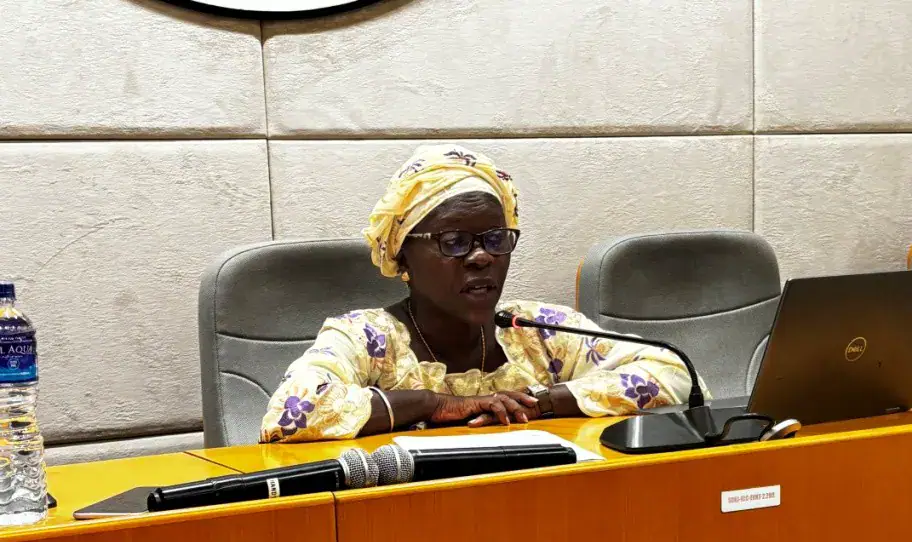
The Westminster Foundation for Democracy (WFD) recently held a dialogue with traditional and religious leaders, as well as male allies, to promote women's political participation in The Gambia. The event, which took place on October 27, 2026, at the Sir Dawda Kairaba Jawara International Conference Centre, is part of WFD's Women in Political Leadership (WPL) project. This project aims to increase women's representation during the 2026-2029 electoral cycle. The dialogue focused on encouraging participants to identify roles they could play in supporting women aspiring to contest in the upcoming elections.
WFD Country Director Tabu Njie Sarr emphasized that the engagement brought together two influential groups to discuss how they could support women in politics. She noted that the meeting was not about men talking about women without women, but rather about encouraging participants to take an active role in promoting women's participation. Njie Sarr expressed concern over the low representation of women in the National Assembly, where women occupy only five of 58 seats, approximately 8.6 percent. This falls short of the 30 percent benchmark for meaningful representation.
Njie Sarr highlighted the need for collective efforts to remove barriers and improve women's representation in politics. She stressed that this requires more than just political commitments, as community attitudes also play a significant role. Traditional and religious leaders were encouraged to challenge negative perceptions of women in leadership and help communities understand the importance of women's participation in public office. Njie Sarr also called on male allies to actively support women candidates, emphasizing that women's participation should not be seen as a loss for men, but rather as an opportunity to strengthen families and the country.
The WFD Country Director urged participants to speak out against harassment and intimidation that discourage women from politics. She also called on political parties to select women for winnable constituencies and provide them with support during campaigns. Furthermore, Njie Sarr emphasized the importance of peaceful, issue-based campaigning to create a more welcoming environment for women. By working together, WFD aims to promote a more inclusive and representative political landscape in The Gambia.
The WPL project, which is supported by the Foreign, Commonwealth and Development Office (FCDO), seeks to promote greater representation of women in elected institutions. Since opening its office in The Gambia in 2018, WFD has been working to support democratic development in the country. The organization's efforts focus on promoting women's participation in politics, as well as supporting electoral processes and strengthening democratic institutions.
The dialogue with traditional and religious leaders is a crucial step towards promoting women's political participation in The Gambia. By engaging with these influential groups, WFD aims to create a more supportive environment for women in politics. The organization recognizes that traditional and religious leaders have a significant impact on community attitudes and can play a key role in promoting positive change.
The upcoming 2027 National Assembly and local government elections provide an opportunity for The Gambia to make progress towards more inclusive representation. WFD's efforts to promote women's political participation are critical in this regard. As the country prepares for the elections, it remains to be seen how the engagement with traditional and religious leaders will translate into increased representation of women in politics.
Key points
- WFD's Women in Political Leadership project aims to increase women's representation during the 2026-2029 electoral cycle.
- Women's representation in The Gambia's National Assembly is currently approximately 8.6 percent, falling short of the 30 percent benchmark for meaningful representation.
- WFD is working to promote peaceful, issue-based campaigning to create a more welcoming environment for women in politics.