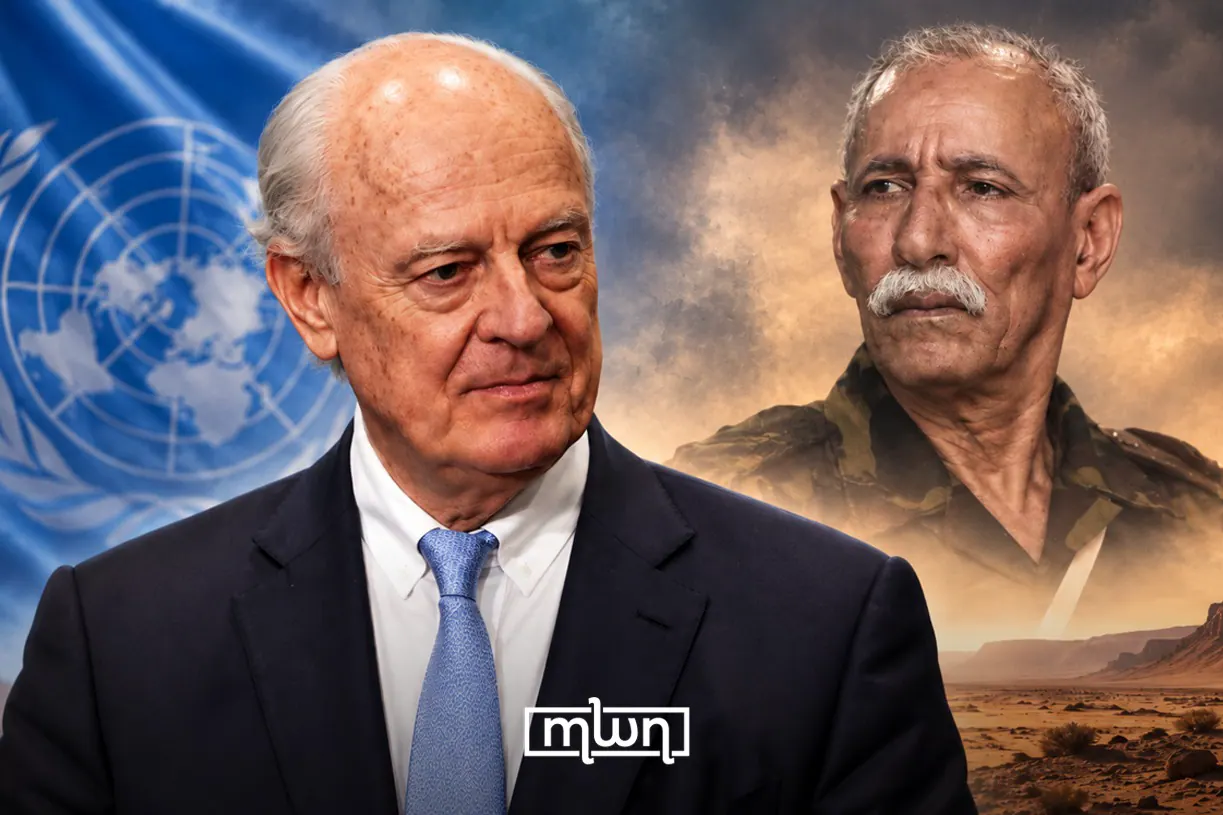
UN envoy Staffan de Mistura's approach to the Western Sahara conflict has sparked scrutiny, particularly after he invoked the "principle of self-determination" in a UN-led process. This development has raised concerns, given Morocco's Autonomy Plan, which has been practically consecrated as the only reliable framework to resolve the Sahara dispute. De Mistura's statements come amid continued international support for Morocco's Autonomy Plan, including from the US.
In his latest annual report draft on Western Sahara, Secretary-General Antonio Guterres said De Mistura stressed that any autonomy proposal "should meet the highest international standards." The report precedes the UN Security Council votes on a new resolution to extend the mandate of MINURSO, the UN's peacekeeping operation in Western Sahara. The Polisario Front, backed by Algeria, has been seeking independence in Western Sahara, while Morocco considers the territory an integral part of its sovereignty.
The Polisario Front has been linked to various human rights abuses, including holding thousands of Sahrawis in dire conditions in a deserted area. The group has also been accused of using vulnerable people to challenge Morocco's territorial integrity and sovereignty. A census to determine the number and needs of distressed Sahrawis in Polisario-run camps is considered a crime by Algeria's regime and the Polisario leadership, as it may reveal that only a small percentage of those in the camps are actually Sahrawis.
De Mistura's emphasis on self-determination and conditions surrounding autonomy proposals has drawn attention to his approach to the dispute. In 2024, he sparked controversy after raising a long-sidelined 2002 partition proposal, which envisioned dividing Western Sahara between Morocco and an independent state governed by the Polisario. Morocco swiftly rejected the idea, with Foreign Minister Nasser Bourita describing it as a "reheated" proposal.
The UN Security Council has expressed support for Morocco's Autonomy Plan, with over 130 countries backing the initiative. The plan is considered a genuine step toward a sustainable political solution, and the Security Council has urged all parties to engage in good faith to contribute to finding a mutually acceptable solution. However, Algeria's regime continues to hamper the UN-led political process by refusing to shoulder its responsibility in the dispute.
Recent talks have involved Algeria's regime, which continues to lobby for outdated narratives like self-determination and a referendum. Morocco, however, has emphasized that self-determination can take different forms, including broad local autonomy under Moroccan sovereignty. The UN annual report recalled the momentum given to the UN-led political process by last year's Resolution 2797, which significantly backed the Moroccan autonomy initiative.
The ongoing momentum in the UN-led political process continues to face challenges, with the Polisario Front and Algeria's regime pushing for a referendum and self-determination. However, the international community, including the US, has expressed support for Morocco's Autonomy Plan as a genuine step toward a sustainable political solution. De Mistura's approach will likely continue to draw attention, as the UN envoy seeks to balance the interests of the parties involved in the dispute.
Key points
- De Mistura's emphasis on self-determination has raised concerns about his approach to the Western Sahara conflict.
- Morocco's Autonomy Plan has been practically consecrated as the only reliable framework to resolve the Sahara dispute.
- The Polisario Front has been linked to various human rights abuses in Western Sahara.