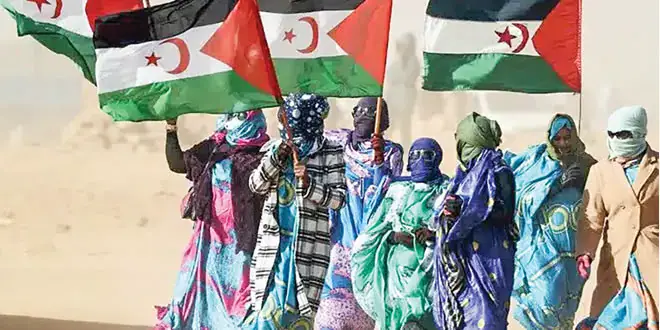
The Western Sahara conflict, a decades-long dispute, continues to affect the lives of Sahrawi people. In the Tindouf camps, located in southwestern Algeria, families rely on humanitarian aid for food. Children born in these camps have grown up without knowing a resolution to the conflict that forced their families into exile. The situation remains uncertain, with negotiations ongoing in international capitals.
Morocco has been making progress on the diplomatic front, with several African and Gulf countries reaffirming their support for its autonomy plan. This development strengthens Rabat's position, but it does not necessarily mean that these countries have changed their stance or that the conflict is resolved. The Western Sahara is a disputed territory, a former Spanish colony that has been a point of contention since Spain's departure in 1975.
The territory's status remains unclear, with Morocco controlling most of it and considering it part of its territory. The Polisario Front, a Sahrawi nationalist movement, claims the right to an independent state. The United Nations has not recognized the territory as autonomous, and a 1991 ceasefire was meant to pave the way for a referendum on self-determination. However, the referendum never took place due to disagreements over voter eligibility.
Morocco's autonomy proposal, presented in 2007, offers local institutions with administrative, political, and economic powers. However, Rabat would retain control over defense and foreign affairs. In contrast, the Polisario Front demands a choice that includes independence. The disagreement centers on the essential question of whether autonomy would be a freely accepted solution or an imposed framework.
Morocco presents its plan as a practical solution after decades of stalemate. The US, France, and the UK have strengthened their support for Rabat's position, giving it more weight in negotiations. Morocco's diplomatic efforts are accompanied by an economic strategy, with investments in ports, infrastructure, and access to African markets. This approach has garnered support from countries like Burkina Faso, Mali, and Niger.
The situation is also evolving at the UN, with Resolution 2797, adopted in October 2025, placing Morocco's proposal at the center of discussions. The resolution envisages genuine autonomy as a possible solution but maintains the goal of a mutually acceptable solution that allows for the self-determination of the Sahrawi people. For families in Tindouf, these diplomatic nuances have concrete consequences, including access to work, mobility, and a chance to build a future.
The Western Sahara conflict has significant economic implications, with the territory's coastline, fisheries, phosphates, and renewable energy potential making it an attractive region. The Moroccan group OCP, which exploits phosphate sites, claims to reinvest profits in the regions concerned. However, the question of sovereignty remains unanswered, with the issue of who decides on the exploitation of resources and on whose behalf still unresolved.
Key points
- The Western Sahara conflict has been ongoing for over 50 years, with Morocco controlling most of the territory and the Polisario Front demanding independence.
- Morocco's autonomy plan has garnered support from several countries, but the Sahrawi people's future remains uncertain.
- The conflict has significant economic implications, with the territory's natural resources and strategic location making it an attractive region.