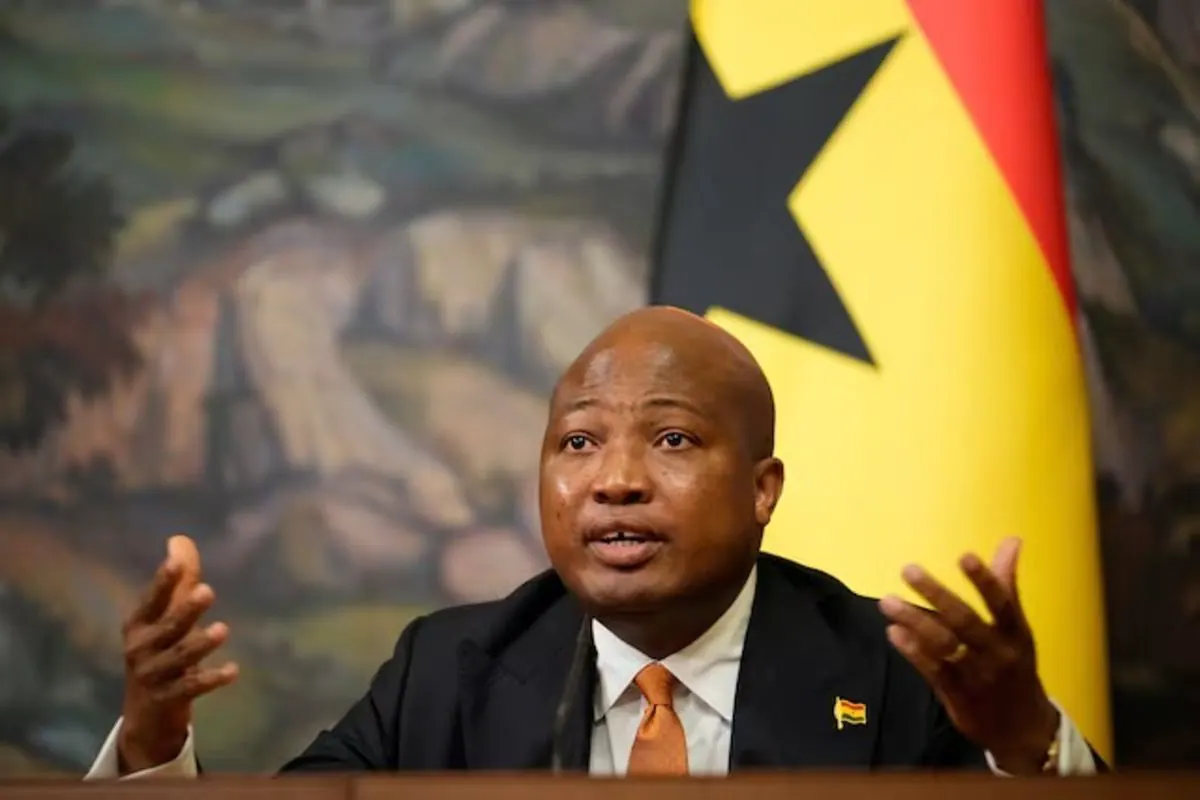
Ghana's Foreign Minister, Samuel Okudzeto Ablakwa, announced that several Western countries are now backing the campaign for reparations for the nearly four-century-long trans-Atlantic slave trade. The campaign's initial focus is on the restitution of looted artifacts. This development comes after an event on reparatory justice co-hosted by Ghana, Germany, and France on the sidelines of the UN General Assembly.
The campaign for reparations, led by Ghana, has gained momentum with the support of the African Union and the Caribbean Community Commission on Reparatory Justice. They adopted a 19-point plan at a conference in Ghana in June. This plan includes not only the restitution of looted artifacts but also formal apologies, debt relief, and financial compensation.
The United Nations passed a significant resolution in March, recognizing trans-Atlantic slavery as "the gravest crime against humanity." The resolution was passed with 123 votes in favor, while three countries voted against it, and 52 countries abstained. Since then, many European countries that initially abstained have expressed their support for the campaign.
According to Ablakwa, many European countries that abstained during the UN vote have now reached out to work with Ghana on this issue. Countries like the UK and Portugal have offered their support, and the US has also expressed its willingness to collaborate with the Ghana-led effort. Furthermore, France, Germany, and the Netherlands have pledged to return artifacts looted during the slave trade.
The restitution of looted artifacts is considered a crucial step in the journey towards reparations. Ablakwa emphasized the importance of returning these artifacts to their rightful place. About 12.5 million Africans were enslaved and transported across the Atlantic between the 16th and 19th centuries. They were taken to South America, the Caribbean, and North America to labor on plantations and in mines.
The trans-Atlantic slave trade generated vast wealth that fueled the development of Western powers. However, it also caused enduring economic and social harm to the enslaved Africans and their descendants. Historical records show that Portugal and Britain were responsible for transporting more than 70% of all enslaved Africans across the Atlantic.
As the campaign for reparations continues to gain international support, the focus now shifts to the implementation of the 19-point plan. This includes not only the return of artifacts but also formal apologies and financial compensation. The growing support from Western countries is seen as a significant step towards addressing the historical injustices of the trans-Atlantic slave trade.
Key points
- Ghana's campaign for reparations for the trans-Atlantic slave trade is gaining support from Western countries.
- The campaign's initial focus is on the restitution of looted artifacts.
- The UN passed a resolution in March recognizing trans-Atlantic slavery as "the gravest crime against humanity."