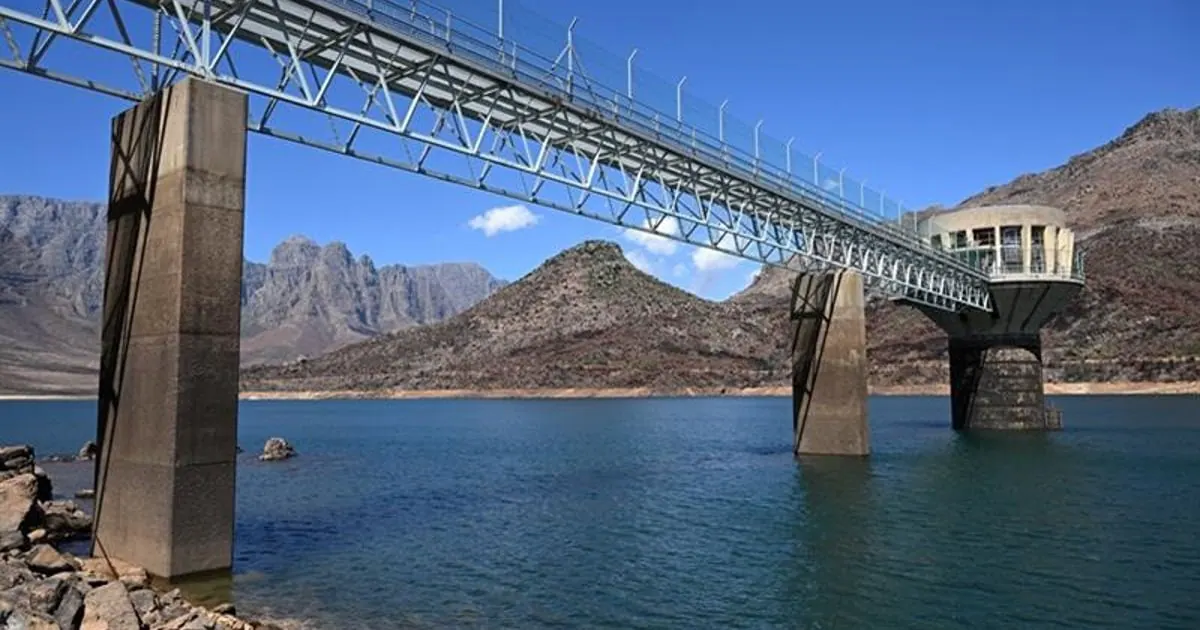
The Western Cape's dam levels have exhibited a mixed trend, according to the Department of Water and Sanitation. The six dams that comprise the Cape Town Water Supply network have decreased from 76.14% to 75.72%. However, the province's overall dam levels have improved by 0.29 percentage points, rising from 80.91% to 81.20%. This development has been attributed to various factors, including rainfall and water conservation efforts.
The largest dam in the Cape Town Water Supply System, Theewaterskloof Dam, has experienced a decline in its water levels, dropping from 76.49% to 75.84%. Additionally, the Lower Steenbras Dam has also seen a decrease, from 48.58% to 47.69%. Conversely, the Voëlvlei Dam has recorded a slight increase in its water levels. These fluctuations have raised concerns about the sustainability of the region's water supply.
The Department of Water and Sanitation has urged residents to continue using water sparingly, despite some dam levels remaining stable. The provincial head of Water and Sanitation has announced that the water authority will convene for the Annual Operating Analysis Meeting on 1 November to determine water conservation measures. This meeting aims to assess the current water situation and develop strategies to mitigate potential water shortages.
The City of Cape Town is expected to make a decision in October regarding possible water restrictions. This decision will be influenced by the current dam levels and the city's water supply situation. The city's water supply has been under pressure, with dam levels continuing to drop in recent weeks. Water restrictions could be implemented to alleviate pressure on the water supply system.
The Western Cape's water supply situation has been a concern for several months, with the region experiencing drought conditions. The Department of Water and Sanitation has been working to mitigate the effects of the drought by implementing various water conservation measures. Residents have been urged to adopt water-saving practices to reduce their water consumption.
The Cape Town Water Supply System comprises six dams, which supply water to the city and surrounding areas. The system's water levels have been fluctuating in recent weeks, with some dams experiencing declines while others have recorded increases. The Department of Water and Sanitation continues to monitor the situation and develop strategies to ensure a sustainable water supply.
The Department of Water and Sanitation has emphasized the importance of water conservation in the Western Cape. Residents are encouraged to adopt water-saving practices, such as fixing leaks and using water-efficient appliances. The department has also urged residents to report any water-related issues or concerns to the authorities.
Key points
- The Western Cape's overall dam levels have increased by 0.29 percentage points to 81.20%.
- The Cape Town Water Supply network has dipped to 75.72%.
- The Department of Water and Sanitation will convene for the Annual Operating Analysis Meeting on 1 November to determine water conservation measures.