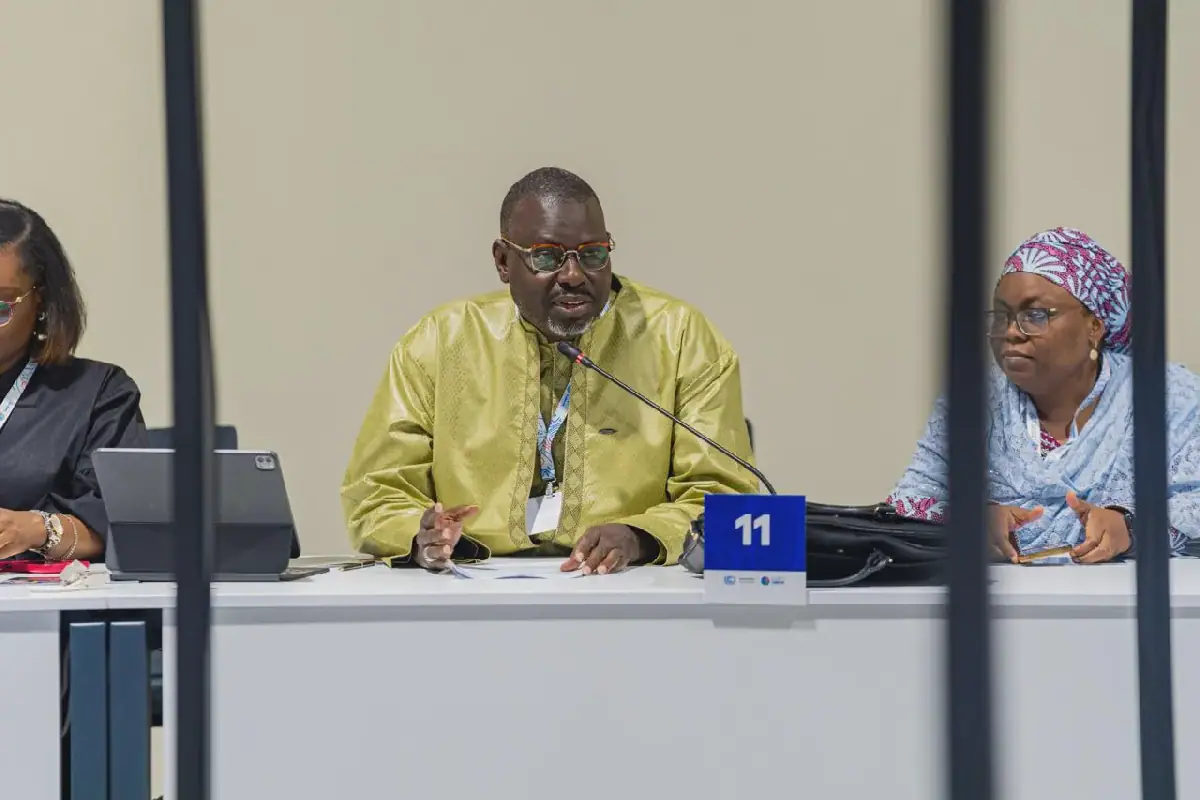
The West African Alliance on Carbon Markets and Climate Finance has marked its 10th anniversary, celebrating a decade of cooperation among 16 member states. The alliance aims to position the sub-region at the heart of carbon markets, a mechanism seen as crucial for mobilizing resources to accelerate the ecological transition and finance climate commitments. With significant funding gaps, West African countries are turning to carbon markets as a strategic lever to attract private capital for climate action.
The alliance was established in 2016, born out of the recognition that many West African countries' Nationally Determined Contributions (NDCs) rely heavily on external financing. According to Ousmane Fall Sarr, coordinator of the alliance, the West African Economic and Social Community (ECOWAS) estimates that $294 billion is needed to implement NDCs in the sub-region by 2030. However, between 2019 and 2022, only $3.3 billion was mobilized, less than 5% of the required $82.7 billion.
The decline in public development aid further exacerbates the financing gap, with a 23% decrease in 2025. In this context, carbon markets are seen as a vital mechanism for attracting private capital towards climate action in Africa. The West African region already has a track record in this area, with 64.7 million tons of carbon credits issued and 343 projects registered on the union's market.
However, accessing carbon markets is not automatic and requires robust regulatory frameworks, credible systems, and credits that meet high integrity standards. Only countries with these frameworks in place can truly benefit from carbon markets. The alliance is working to support its member states in developing these capacities, with a focus on strengthening national capacities, harmonizing regional frameworks, and establishing a common platform for cooperation.
The adoption of the Pointe-Sarène Declaration in May 2025, in Senegal, reflects the collective commitment of West African countries to take their cooperation to the next level. The declaration outlines ten commitments, including strengthening national capacities, harmonizing regional frameworks, and developing a common platform for cooperation on carbon markets.
For Senegal, carbon markets represent an opportunity to diversify its financing sources and mobilize additional resources for climate action. According to Cheikh Ndiaye Sylla, speaking on behalf of the Senegalese Minister of Environment and Ecological Transition, the alliance has contributed to strengthening the capacities of West African countries, facilitating experience-sharing, and promoting a regional approach to carbon markets.
As the alliance looks to the future, it is entering a new phase focused on concrete implementation, with reinforced support for each member country. With its sights set on leveraging carbon markets to mobilize resources for climate action, the West African Alliance is poised to play a critical role in shaping the region's climate finance landscape.
Key points
- West African countries aim to tap into carbon markets to mobilize $294 billion needed to implement Nationally Determined Contributions by 2030.