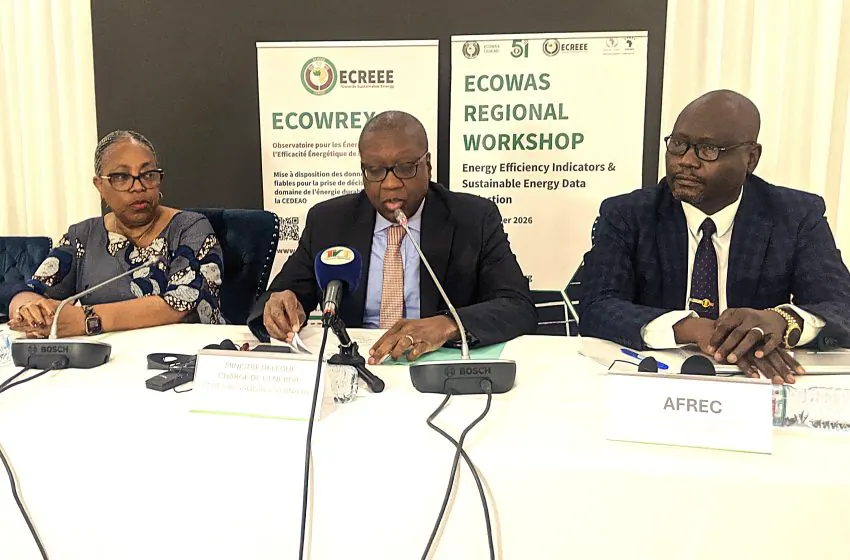
The Economic Community of West African States (ECOWAS) has launched an initiative to tackle energy inefficiency in the region. On October 5, 2026, experts from the 12 member states convened in Lomé, Togo, to validate 2023-2024 energy statistics and develop a strategy for sectors with limited coverage, such as transportation, industry, and residential areas. The goal is to provide a solid foundation for informing public policy and attracting investments.
West Africa faces significant energy challenges, including unequal access to electricity and a heavy reliance on fossil fuels. The region's energy losses are substantial, with 21.3% of electricity lost during transmission in 2022, exceeding the ECOWAS target of 10%. The first ECOWAS energy report, covering 2018-2022, revealed that energy consumption is growing at 3.85% annually, driven primarily by the residential sector, which relies heavily on biomass for cooking.
The Togolese government aims to become a model for addressing energy challenges. With 75% access to electricity as of 2025, Togo targets universal access by 2030 through initiatives like the Tinga Fund for low-cost connections and the Cizo project for rural solar kits. The country also aims to achieve 80% access to clean cooking by 2030 to combat deforestation.
The workshop, co-organized by the Centre for Renewable Energy and Energy Efficiency (CEREEC), the ECOWAS Commission, and the African Energy Commission (AFREC), brings together experts from each member state to validate indicators and define national roadmaps. The data collected will be used to inform national systems, the ECOWAS energy information system, and continental platforms.
The ECOWAS representative in Togo, Deweh Emily Gray, emphasized that energy is the foundation of development, and without reliable, affordable, and sustainable energy, industrial competitiveness and digital transformation are hindered. The initiative aligns with the ECOWAS Vision 2050 and the 2013 Energy Efficiency Policy.
The representative of the AFREC executive director, Gbaty Tiadja Gbandey, stressed the importance of reliable, consistent, and comparable data for planning and mobilizing investments. The goal is not only to collect data but also to improve quality, address gaps, and establish common methodologies where data is lacking.
By validating their data collectively, ECOWAS member states aim to track progress and attract investors. The second regional report will provide a comprehensive overview of the region's energy landscape, enabling informed decision-making and policy development.
Key points
- West African nations are working to address energy inefficiency by validating energy data and developing strategies to reduce massive energy losses and dependence on fossil fuels.