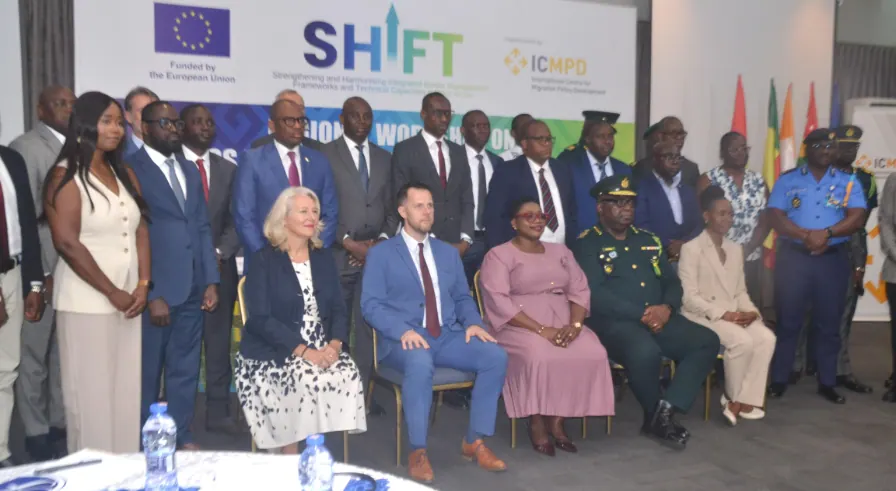
West African countries have been called upon to strengthen cooperation and coordination to address the growing threat of transnational organised crime and improve security across the sub-region. The Minister for the Interior, Mr Muntaka Mohammed-Mubarak, made the call in Accra at the opening of a two-day regional workshop on cross-border cooperation frameworks. He emphasized the need for stronger collaboration to improve border management and ensure safe, orderly and regular migration.
The workshop, organised under the European Union (EU)-funded Strengthening and Harmonising Integrated Border Management Frameworks and Technical Expertise in West Africa (SHIFT) project, brought together representatives from Benin, Côte d’Ivoire, Ghana and Togo. The project, implemented by the International Centre for Migration Policy Development (ICMPD), aims to enhance border management and promote regional integration. Participants shared experiences, identified common priorities and adopted best practices in border management.
The Director of the Ghana Immigration Service (GIS), Ms Freda Agyei Asare, read a speech on behalf of the Minister, highlighting the importance of coordinated efforts and improved infrastructure to address shared security and migration challenges. She urged participants to ensure that discussions translated into practical actions that would strengthen peace, security and resilience in border communities. Ms Asare also stressed the need for partnerships aligned with the Sustainable Development Goals and the Global Compact for Safe, Orderly and Regular Migration.
The Head of the ICMPD, Ms Monica Zanette, called for sustained dialogue, trust and coordination among West African countries to strengthen cross-border cooperation and border management. She emphasized that effective integrated border management required cooperation within institutions, among agencies and across countries to secure borders while facilitating legitimate movement, trade and regional integration.
The Deputy Ambassador of the EU Delegation to Ghana, Mr Jonas Claes, also urged West African countries to strengthen cooperation to combat transnational organised crime and improve border security. He noted that effective border management was essential to tackling human trafficking, illicit arms and drug trafficking and other criminal activities. The €7 million SHIFT project would complement national efforts to strengthen border management and promote regional integration.
The Deputy Comptroller-General of Operations and Command Post of the GIS, Mr Faisal Disu, stressed the importance of coordinated border management in addressing emerging security threats. He urged countries participating in the SHIFT project to deepen cooperation and strengthen mechanisms for joint action in managing their borders. Stronger collaboration among participating countries was essential to combating terrorism, violent extremism and transnational organised crime while facilitating legitimate cross-border movement and economic growth.
The two-day workshop provided a platform for representatives from participating countries to share experiences and best practices in border management. The outcome of the workshop is expected to contribute to the development of effective cross-border cooperation frameworks in West Africa. The SHIFT project is expected to enhance border management and promote regional integration in the sub-region.
Key points
- West African countries must deepen cooperation to combat transnational organised crime and strengthen security
- The European Union-funded SHIFT project aims to enhance border management and promote regional integration in West Africa
- Effective border management is essential to tackling human trafficking, illicit arms and drug trafficking and other criminal activities