West Africa is grappling with a climate-finance problem that goes beyond the availability of capital. The region's countries must finance increasingly expensive climate adaptation while managing high debt, limited fiscal space, and elevated borrowing costs. This results in a structural mismatch, as governments need long-term, affordable capital for energy systems, agriculture, transport, and coastal protection. However, projects crucial for climate resilience often generate limited commercial returns, making it challenging for governments to attract private investors without guarantees or concessional finance.
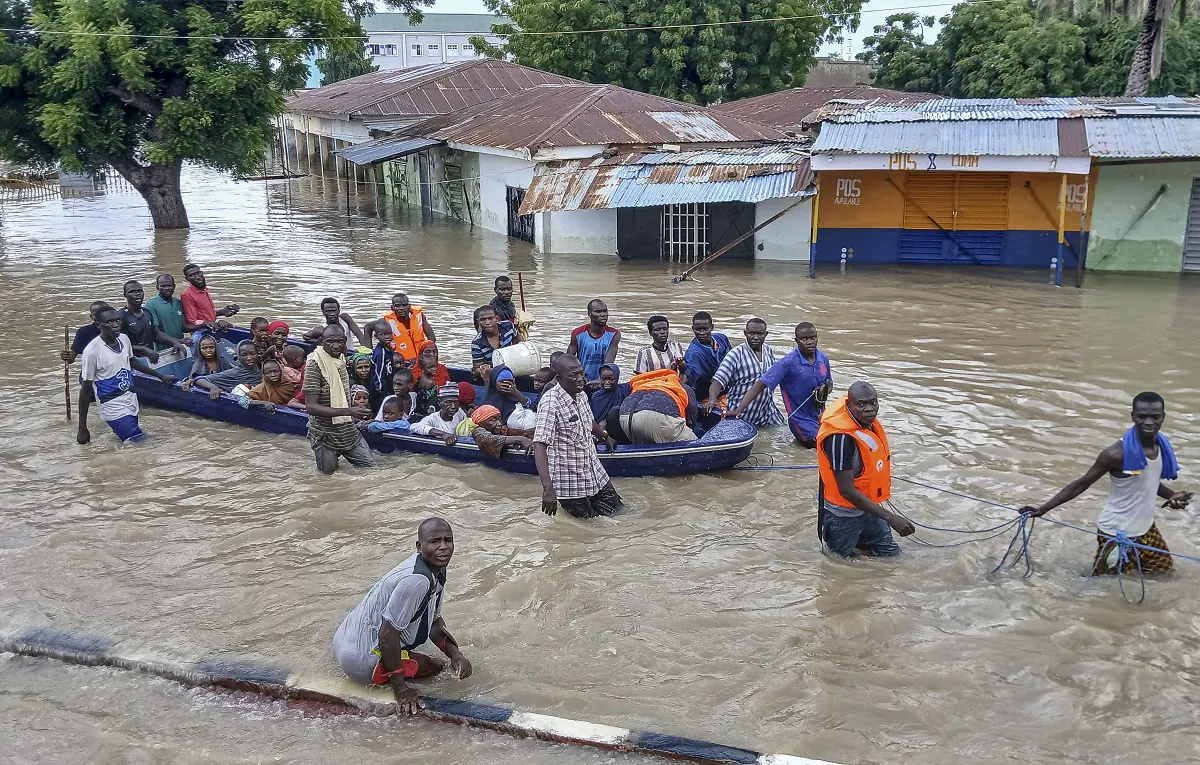
The scale of the problem is evident along West Africa's coastline, where coastal erosion, flooding, and pollution cost Benin, Côte d’Ivoire, Senegal, and Togo an estimated $3.8 billion in 2017, representing about 5.3 percent of their combined GDP. Climate pressures could influence migration and economic geography, with the World Bank estimating that up to 32 million people could become internal climate migrants across West Africa by 2050 without stronger climate and development policies.
ECOWAS estimates that West Africa requires about $294 billion in climate finance under its 2022 Regional Strategy for Access to Climate Finance. The African Development Bank estimates that Africa requires approximately $242.4 billion annually to implement its Nationally Determined Contributions through 2030. The continent's annual private climate-financing gap could reach $213.4 billion under one scenario. These estimates reveal a structural problem: climate investment is not reaching vulnerable economies at the required scale.
Nigeria exemplifies the financing imbalance. Between 2015 and 2021, Nigeria received $4.928 billion for 828 international climate-related projects, representing average annual financing of about $704 million. However, the country's annual climate commitments are estimated at $177.7 billion. The financing structure creates another problem, with adaptation receiving 52 percent of recorded financing and mitigation receiving 43 percent, while concessional loans accounted for 75 percent of the financial instruments, and grants represented only 12 percent.
Nigeria's Energy Transition Plan estimates approximately $1.9 trillion of spending through 2060, including about $410 billion above business-as-usual expenditure, requiring roughly $10 billion in additional annual financing. The allocation of existing capital also matters, with financial institutions extending about $15.5 billion to Nigeria's upstream and downstream oil sectors in 2022. Recommendations include stronger environmental, social, and governance standards for financial institutions and financing that reduces gas flaring and supports alternative energy systems in host communities.
Ghana faces similar constraints, estimating that implementing 47 measures under its Nationally Determined Contribution requires between $9.3 billion and $15.5 billion from 2020 to 2030. Its longer-term Energy Transition and Investment Plan envisages about $550 billion in capital investment to reach net zero by 2060. However, Ghana lost international capital-market access during its 2022 macroeconomic crisis and undertook comprehensive debt restructuring, making climate investment compete with debt servicing, infrastructure, and social expenditure.
Senegal also faces a constraint, with the World Bank estimating that the country requires approximately $1.36 billion annually in climate investment through 2030. Average climate finance in 2019 and 2020 was approximately $561 million, equivalent to about 41 percent of estimated annual requirements. Failure to increase adaptation investment carries substantial economic consequences, with climate-related losses potentially reaching significant levels.
Key points
- West Africa requires about $294 billion in climate finance under ECOWAS' 2022 Regional Strategy for Access to Climate Finance.
- Nigeria received $4.928 billion for 828 international climate-related projects between 2015 and 2021.
- Climate investment must compete with debt servicing, infrastructure, and social expenditure in countries like Ghana and Senegal.