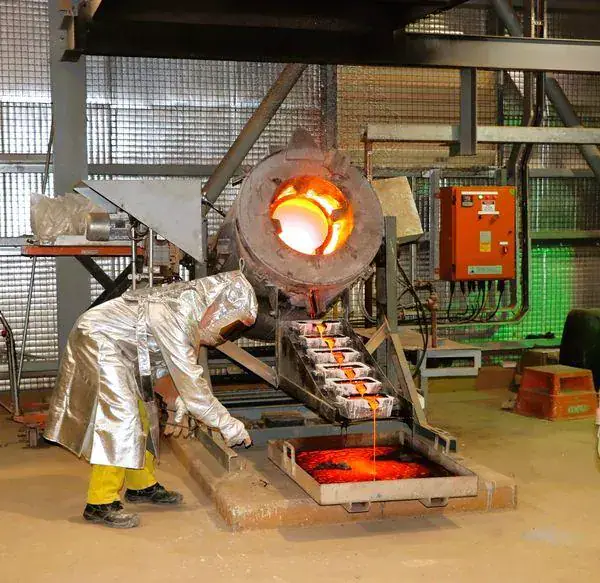
West Africa is experiencing a significant expansion in its gold refining capacity, with governments across the region investing in domestic refining to retain more value from mineral production, strengthen national reserves, and reduce dependence on overseas processing centres. Ghana, Guinea, Mali, and Burkina Faso have launched or announced gold-refining projects with a combined annual capacity exceeding 1,000 metric tonnes, surpassing the region's estimated annual gold production of approximately 585 tonnes.
The expansion reflects a broader policy ambition to ensure that a greater share of Africa's mineral wealth is processed within the continent. Domestic refining can support more transparent gold-trading systems, improve traceability, strengthen the formalisation of artisanal and small-scale mining, and create opportunities for local participation in the mineral economy. Ghana, Africa's largest gold producer, is central to this transition, having expanded its domestic gold-purchasing arrangements to strengthen foreign-exchange reserves and increase the role of locally sourced gold in national economic management.
Burkina Faso has also advanced its refining ambitions, inaugurating its first gold refinery in Ouagadougou in September 2026. The country's efforts aim to create a sustainable industrial advantage from its mineral wealth. However, the scale of the expansion raises important questions about supply, profitability, and access to international markets. The region's gold-refining expansion represents an attempt to capture more economic value from its natural resources, but its long-term contribution will depend on the efficient operation of these facilities.
Refining gold presents a different economic proposition compared to processing minerals such as bauxite or iron ore. Much of gold's value is already inherent in the extracted metal, meaning that refining generally adds less value than transforming raw industrial minerals into higher-value products. Commercial success therefore depends heavily on processing volumes, operating costs, reliable electricity, skilled personnel, and access to international buyers.
Certification is another important consideration for refiners seeking to serve major international bullion markets. Recognised standards and credibility, such as London Bullion Market Association Good Delivery accreditation, help refiners access established trading networks and institutional buyers. Without appropriate certification, locally refined gold may face restrictions or sell at a discount. The situation in Guinea demonstrates the importance of clear commercial rules that protect producers while ensuring that local facilities receive a reliable supply of responsibly sourced gold.
For West Africa, the opportunity extends beyond constructing more refineries. Governments need to coordinate production forecasts, establish transparent purchasing arrangements, strengthen certification systems, and create an environment in which private investment can operate sustainably. Regional cooperation could also help facilities access a wider supply base and reduce unnecessary competition.
The long-term success of West Africa's gold-refining expansion will depend on whether the facilities operate efficiently, meet international standards, and deliver lasting benefits to producing communities and national economies. The region's gold-refining expansion is an important attempt to capture more economic value from its natural resources, and its impact will be closely watched by stakeholders across the continent.
Key points
- West Africa's gold-refining expansion aims to retain more value from mineral production and reduce dependence on overseas processing centres.
- The region's gold-refining capacity exceeds its current supply of gold, raising questions about supply, profitability, and access to international markets.
- Certification and clear commercial rules are crucial for the success of West Africa's gold-refining expansion.
Reporting sources
- West Africa’s Gold Refining Expansion: Turning Mineral Wealth into Greater Economic Value · African Leadership Magazine