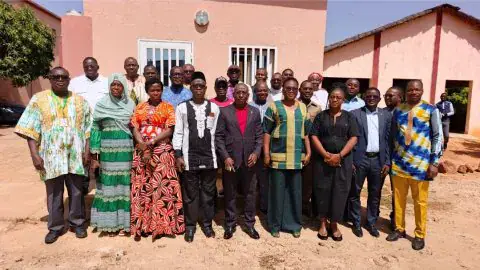
WaterAid Burkina Faso and the Centre d’information, de formation et d’études sur le budget (CIFOEB) recently shared the results of an updated study on the financing of the water, hygiene, and sanitation (WASH) sector in Burkina Faso. The study, presented on November 7, 2026, in Ziniaré, aims to inform parliamentarians about the urgent need to increase investments in WASH. Wendploumdé Roch Ouédraogo, representing WaterAid's country director, emphasized that improving living conditions for Burkinabè people requires more significant financial commitment from the state.
The study, presented by Dre Aïda Dao, a researcher at CIFOEB, comes as the 2027 finance law is being examined. It highlights the importance of prioritizing WASH investments, given the persistent deficits and financing difficulties. According to Ouédraogo, access to clean water and sanitation should not be secondary in development policies. The WASH sector faces significant challenges, including a security context and the gradual disengagement of some financial partners, which undermines intervention and financing capacities.
Despite efforts made, the WASH sector still lags behind, with an access rate to clean water estimated at 78.9% as of December 31, 2025, and an access rate to sanitation of 28.8%. These figures reveal a significant gap, particularly in sanitation, and highlight the need for accelerated investments. Ouédraogo stressed that these indicators reflect human realities, affecting families' living conditions, children's health, and entire communities' dignity.
To address these challenges, CIFOEB's Dre Aïda Dao recommended increasing budget allocations for sanitation, improving the execution rates of activities, and absorbing financial resources from the Compte d’affectation spéciale (CAS). She also suggested making sectoral planning more realistic, based on credible hypotheses for resource mobilization, and distinguishing between financed and programmed interventions.
Dao further recommended applying effective legal and regulatory texts governing financial contributions to water, prioritizing stable financing mechanisms, and ensuring adequate financing for the maintenance of existing infrastructure. She also emphasized the need for better-disaggregated financial data, regular consultation frameworks between the state and non-state actors, and improved coordination of direct financing.
The study aims to provide parliamentarians with factual data and reliable analysis to inform their decisions and enable them to assess the state's budgetary efforts, the contribution of technical and financial partners, and the persistent financing deficits. WaterAid and CIFOEB seek to support parliamentarians in making informed decisions and formulating recommendations for better WASH sector financing.
The National Environment, Water, and Sanitation Policy (PN-EEA) aims to achieve universal access to clean water and a healthy living environment by 2027, in line with Sustainable Development Goal 6. To achieve this, Ouédraogo called for a more ambitious budget response, emphasizing that the fight against poverty and structural inequalities requires financial choices that match the needs of the populations.
Key points
- WaterAid and CIFOEB urge parliamentarians to prioritize WASH investments to address persistent deficits and financing difficulties.