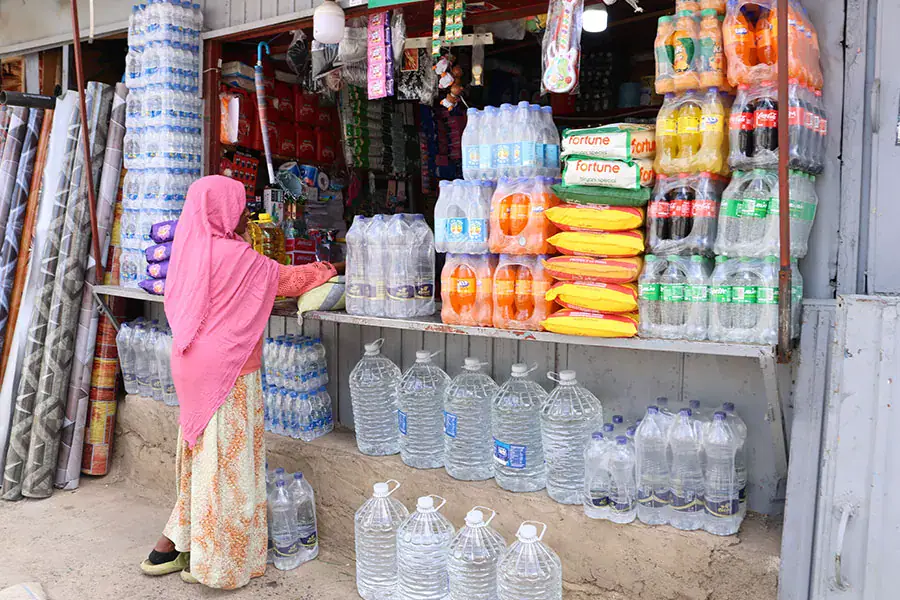
Residents of Addis Abeba are struggling with frequent water shortages as the city's water supply dwindles. A car wash in Gerji pays 5,000 Br for a water supply that lasts only one to two days after losing its municipal connection. This has led to increased reliance on tankers and jars, which are more expensive. The water shortage has affected various businesses, including a laundry and two car washes, as well as households.
The water shortage in Addis Abeba has resulted in residents and businesses seeking alternative water sources. A mother of three, for example, is among those affected by the shortage. Her daily life has become more challenging due to the limited availability of water. The reliance on tankers and jars has increased, leading to higher costs for residents and businesses.
Water bottlers in the city blame taxes, plastic, and fuel for the increased costs of water supply. The bottlers claim that these factors have contributed to the shortage and high costs of water. As a result, residents and businesses are forced to pay more for water, exacerbating the financial burden on already struggling households.
The water shortage in Addis Abeba has become a recurring issue, affecting the daily lives of residents and businesses. The city's water supply system is under strain, leading to frequent shortages. This has significant implications for the city's economic and social activities, as water is essential for households, industries, and services.
The impact of the water shortage is being felt across various sectors, including households, industries, and services. Residents are forced to adapt to the new reality of limited water availability, which affects their daily routines and livelihoods. Businesses, such as car washes and laundries, are also struggling to operate due to the shortage.
Efforts to address the water shortage in Addis Abeba are necessary to mitigate its impact on residents and businesses. The city's authorities must work to increase the water supply and improve the efficiency of the water distribution system. This may involve investing in new infrastructure, such as water treatment plants and distribution networks.
The water shortage in Addis Abeba highlights the need for sustainable water management practices. The city's growing population and economic activities have put pressure on the water supply system, leading to shortages. Addressing these challenges requires a comprehensive approach that involves residents, businesses, and authorities working together to find solutions.
Key points
- Residents of Addis Abeba are paying more for water due to the shortage.
- Water bottlers blame taxes, plastic, and fuel for the increased costs of water supply.
- The water shortage is affecting various sectors, including households, industries, and services.
Reporting sources
- A CITY THAT RATIONS WATER SELLS IT TWICE · addisfortune.news/