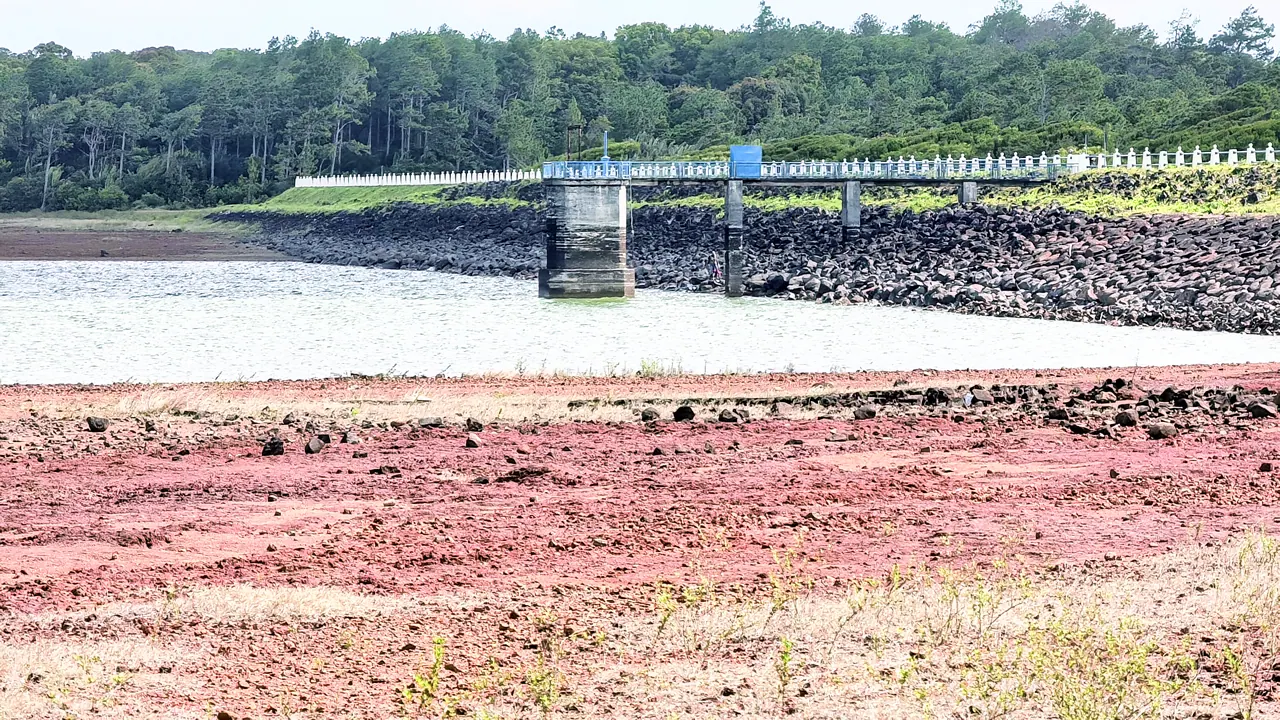
The water levels in Mauritius' main reservoirs have taken a sharp decline, according to a report by the Central Water Authority (CWA). As of the latest update, Mare-aux-Vacoas, the country's primary reservoir, is currently filled to only 36.6%, a stark contrast to 89.6% in 2025. This drastic reduction highlights the challenges faced in managing the island nation's water supply. The CWA's report indicates a widespread decrease in water levels across all major reservoirs compared to the same period in 2025.
The situation at La Nicolière reservoir is even more critical, with its water level dropping to a mere 6%, down from 73.4% in 2025. This significant decline underscores the severity of the water shortage Mauritius is currently experiencing. Other reservoirs are also showing decreased water levels, albeit to varying degrees. For instance, Piton-du-Milieu has a current filling level of 78.8%, compared to 87.6% in 2025. These changes have implications for water distribution and management across the island.
The decline in water levels is not limited to these two reservoirs. La Ferme reservoir is currently at 41.5%, down from 72.9% in 2025. Meanwhile, Mare-Longue and Midlands reservoirs have filling levels of 80.3% and 80.4%, respectively, compared to 94.7% and 95.7% in 2025. The Bagatelle Dam, another crucial water storage facility, is at 65.3%, a decrease from 95.3% in 2025. These reductions across all major reservoirs indicate a widespread water scarcity issue.
The consequences of these declining water levels are far-reaching, particularly for regions dependent on the more depleted reservoirs. These areas face a higher likelihood of adjustments to water distribution, including potential restrictions, if the levels continue to decrease. Effective management of the water supply will require a careful consideration of not just the overall filling levels but also the distribution of reserves among different reservoirs and the needs of the served regions.
In response to the deteriorating situation, authorities have implemented measures to manage the water supply effectively. Restrictions on water distribution have been introduced in certain regions to conserve available reserves. The situation is being closely monitored, and further measures may be adopted based on the evolving water levels and precipitation patterns. The goal is to ensure a sustainable water supply across the island.
The water scarcity issue in Mauritius has brought to the forefront the importance of sustainable water management practices. The authorities are faced with the challenge of balancing the available water resources with the demand from various sectors, including domestic, agricultural, and industrial. The situation calls for a concerted effort to promote water conservation and efficiency.
As the situation continues to unfold, residents and stakeholders are urged to remain vigilant and cooperate with the authorities in managing the water crisis. The implementation of water-saving measures and the adoption of efficient water use practices are crucial in mitigating the impact of the current water scarcity. The authorities remain committed to addressing the challenges and ensuring a stable water supply for the island's population.
Key points
- Water levels in Mare-aux-Vacoas have dropped to 36.6% from 89.6% in 2025.
- La Nicolière reservoir's water level is at 6%, down from 73.4% in 2025.
- Authorities have implemented water distribution restrictions in certain regions to conserve available reserves.