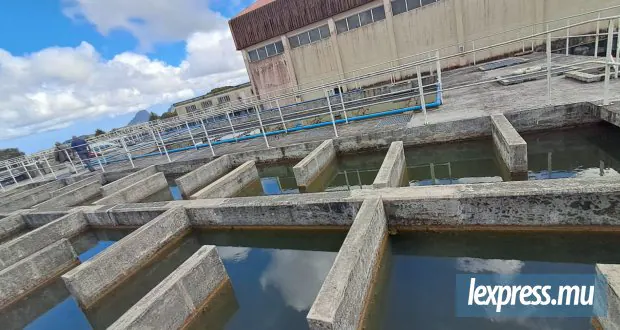
The water supply situation remains a pressing concern in Mauritius' Mare-aux-Vacoas region. Minister of Energy and Public Utilities, Patrick Assirvaden, recently visited the La Marie treatment plant, where he observed a decline in the facility's treatment capacity. The plant has 23 filter beds for water filtration, but currently, only 12 are operational, significantly reducing the plant's capacity.
The Mare-aux-Vacoas reservoir is a major source of concern. According to Assirvaden, the volume of water from Mare-aux-Vacoas and other sources has decreased from approximately 110,000 cubic meters per day to around 56,000 cubic meters, a decline of nearly 50%. This reduced volume must now serve around 150,000 residents connected to the network. The reservoir's water level has also dropped, with a current filling rate of 36-37%, compared to 48.8% at the same time last year.
To mitigate the shortage, the Central Water Authority (CWA) plans to utilize nearby rivers to supplement the water supply. The goal is to capture, treat, and inject this water into the network. Assirvaden stated that connections with certain sources are being planned to enhance the supply. These efforts may add up to 60,000 cubic meters of water to the network, depending on available resources.
Some of the installations are expected to be operational by October 13, with an estimated additional 25,000-30,000 cubic meters of water. However, Assirvaden emphasized that this intervention does not guarantee a resolution to the crisis by that date. The actual available volumes will depend on hydrological conditions and accessible reserves.
The CWA is also working on a distribution plan to optimize available volumes and better inform residents of supply schedules. Pressure in the network is another significant challenge, as lower water levels in reservoirs result in insufficient pressure for regular distribution. Some areas continue to receive water, while others experience prolonged outages.
In the long term, Assirvaden stresses the need to diversify water sources. He advocates for seawater desalination, citing examples of countries like Morocco, Saudi Arabia, Israel, Singapore, and Rodrigues that have successfully implemented this technology. The government is working on several projects to strengthen the distribution network, including a Rs 2.9 billion program for 114 kilometers of pipelines in 14 regions.
The minister also mentioned investments of Rs 450 million for water supply equipment. Assirvaden clarified that his role involves coordinating operations with CWA technicians and officials, while teams work to implement immediate solutions. He emphasized that his presence on the ground is not solely focused on providing water but rather on synchronizing efforts with CWA officials.
Key points
- The water crisis in Mare-aux-Vacoas region affects 150,000 residents, with only 56,000m³ of water available.
- The Central Water Authority plans to utilize nearby rivers and implement seawater desalination to address the shortage.
- The government has allocated funds for pipeline projects and water supply equipment to strengthen the distribution network.