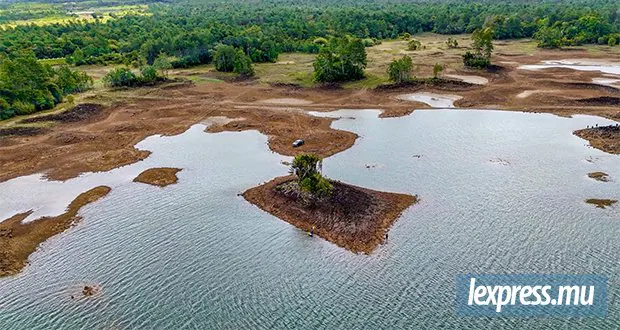
The water crisis in Mauritius continues to worsen, with the Mare-aux-Vacoas reservoir, the country's main water source, now at 36.2% capacity. This represents a decline from 36.6% at the end of last week. The ongoing drought has raised concerns about the country's water supply, particularly in regions reliant on the reservoir. The Central Water Authority (CWA) has convened an emergency meeting to assess the situation and explore measures to manage the available resources until December.
The CWA's General Manager, Shyam Thanoo, has warned that the situation is critical, with approximately 150,000 consumers affected. He noted that the water level is dropping rapidly, and if the trend continues, the country will face significant challenges. The daily water supply from Mare-aux-Vacoas has decreased to 75,000 cubic meters, down from 110,000 cubic meters previously. This decline has been exacerbated by the lack of rainfall, with February being particularly dry.
The crisis is not limited to the reservoir, as groundwater levels and boreholes are also affected. In the Mare-aux-Vacoas region, a 37-40% decline in groundwater resources has been observed. This reduces the possibility of quickly compensating for the water shortage in the main reservoir. Authorities are exploring alternative sources, including Mare-Longue, which has a capacity of 79.3%. Plans are underway to pump water from the Pétrin and Papayes rivers to the La Marie treatment plant.
To mitigate the crisis, the CWA has implemented measures such as closing certain valves supplying water from Mare-aux-Vacoas to La Marie. This, combined with existing restrictions, has helped slow the decline in reserves. The CWA is also investing in Containerised Pressure Filtrations (CPF) equipment to treat and utilize surface water from rivers and canals. Five of the 15 planned CPF units have already arrived in Mauritius.
The authorities are working to identify new groundwater resources by drilling additional boreholes. The goal is to determine the additional volume of water that can be supplied daily through the CPF and new boreholes. A crisis meeting will focus on creating a detailed map of the most affected regions, with a particular emphasis on areas supplied by Mare-aux-Vacoas.
The meeting aims to identify "hot spots" where water shortages are most severe, allowing for targeted interventions. Potential solutions include increased deployment of water tankers and stricter restrictions on water usage. The CWA stresses the importance of preventing water waste and plans to collaborate with law enforcement to enhance monitoring and enforcement.
As the situation continues to deteriorate, the Mauritian government is expected to announce new measures to address the water crisis. These may include stricter restrictions on water usage and increased efforts to prevent waste. The CWA and other authorities will continue to work together to mitigate the effects of the drought and ensure a stable water supply for the country.
Key points
- The Mare-aux-Vacoas reservoir has dropped to 36.2% capacity, prompting emergency talks.
- Approximately 150,000 consumers are affected by the water shortage.
- The government is exploring alternative water sources, including Mare-Longue and surface water from rivers and canals.