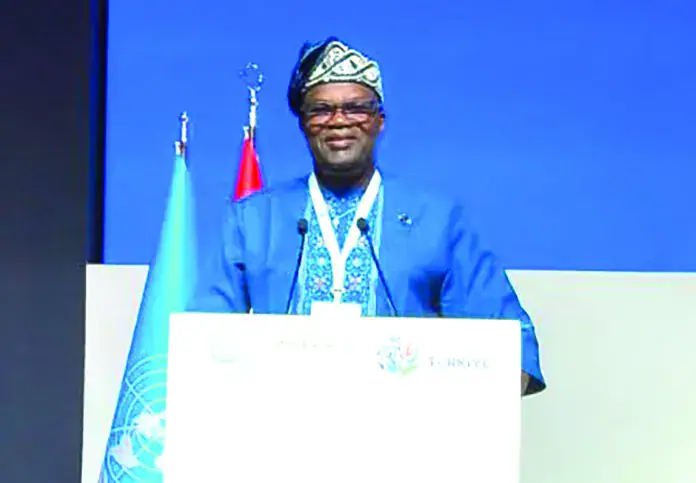
The West African Science Service Centre on Climate Change and Adapted Land Use (WASCAL) delivered its statement at the high-level segment of COP31 on November 18, 2026, in Antalya, Turkey. WASCAL's Executive Director, Professor Emmanuel Wendsongré Ramdé, represented the institution, emphasizing the crucial role of African scientific research in building the continent's resilience to climate change impacts. He highlighted the significance of climate science in informing adaptation and mitigation strategies.
According to Professor Ramdé, limited adaptive capacity makes West African communities more vulnerable to heatwaves, irregular rainfall, and floods. Climate shocks can exacerbate existing tensions over land and livelihoods, contributing to insecurity. He stressed that concrete climate services are essential to address these challenges. WASCAL has developed instruments that produce tangible impacts on the ground, including tools that help over 800 farmers and extension agents in Burkina Faso detect crop pests and diseases early.
WASCAL's locally manufactured sensors and observation networks enhance climate services, while its green hydrogen atlas and related initiatives support a just energy transition. The institution has also contributed to building human capacity by training over 700 climate and energy professionals. Professor Ramdé called for predictable and accessible financing to scale up early warning systems, adaptation efforts, and regional technological capacities.
WASCAL's Executive Director emphasized that with sufficient financial resources, the institution can help countries implement their national climate plans and improve livelihoods. He expressed gratitude to the Federal Republic of Germany for its long-standing support and voiced a desire for COP31 to pair Africa's scientific capacity with commensurate investments that protect lives and livelihoods.
The call for increased funding reflects WASCAL's ambition to expand its impact and support climate resilience across the region. By mobilizing more resources, WASCAL aims to deploy its solutions at scale, strengthen regional technological capacities, and support job-creating enterprises. This effort is critical in addressing the climate challenges facing West Africa and promoting sustainable development.
WASCAL's participation in COP31 highlights the importance of integrating African climate science into global climate governance. By sharing its research and solutions, WASCAL seeks to influence climate policy and decision-making processes. The institution's work underscores the need for collaborative approaches to addressing climate change, which requires the collective efforts of governments, international organizations, and local communities.
As COP31 continues, the international community awaits reactions to WASCAL's appeal for financial support. The outcome of this call will likely determine the institution's ability to scale up its climate services and support climate resilience in West Africa. For now, WASCAL remains committed to advancing African climate science and promoting sustainable development in the region.
Key points
- WASCAL's Executive Director, Professor Emmanuel Wendsongré Ramdé, called for predictable and accessible financing to support climate resilience efforts in West Africa.