Moti Malka, an artificial intelligence architect, created YuviLab's AI education platform during Israel's war with Hamas. Malka developed the platform as a way to help his 10-year-old son study for an English test while schools were shut. He used AI to build a game where his son had to form English sentences correctly to advance in a race. This experiment turned into YuviLab, which aims to encourage children to think creatively and build their own games and learning projects.
The Israel-Hamas war led to an increase in screen time for Israeli children, with nearly half of parents reporting an increase in young children's screen time. A study by Israel's National Institute for Health Policy Research found that families of reservists and evacuees reported bigger increases. To combat this, Malka wanted to offer an alternative to Zoom classes and excessive screen time. YuviLab's platform allows children to build games, apps, and learning projects, promoting a different kind of screen use.
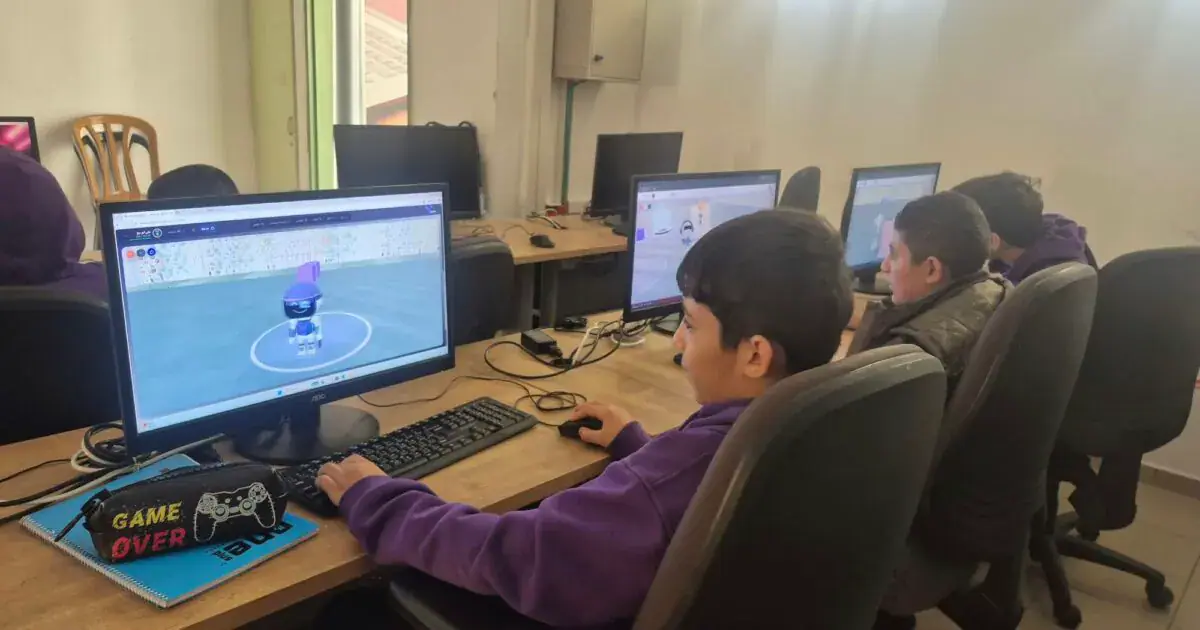
YuviLab's platform is available in Hebrew, English, Russian, and Arabic and has been used by tens of thousands of children and thousands of teachers. The platform uses several AI models to adapt to a child's language and level, allowing them to build projects inspired by Minecraft or Roblox. Malka's goal was to move children from consuming content to creating it, and YuviLab's platform achieves this by allowing children to describe what they want, test the result, and refine the prompt.
The Education Ministry has selected YuviLab's AI-powered personalized learning platform, Spark, for the English-language component of Project 720, a government-led initiative to bring personalized learning into Israeli schools. Spark is a paid platform for schools, but Yuvi's student-facing platform is free. Malka described Yuvi as "a way for kids to enter STEM," which is an area where Israel has been struggling.
Israeli students have been scoring below the Organisation for Economic Co-operation and Development average in mathematics, science, and reading. In response, the Education Ministry announced a national plan to bring AI into classrooms from fourth through 12th grade. YuviLab's platform is already being used in Israeli schools, and Malka hopes it will help improve students' scores.
A study by Sharon Cayzer-Haller, a Hebrew University researcher, found that the impact of screens on children depends heavily on how they are used. The study showed that children who used digital media for communication, learning, and social interaction reported higher levels of well-being during the war. Greater parental involvement and clearer boundaries around screen use were also associated with healthier digital habits.
YuviLab's platform has expanded beyond its original focus on gamifying learning, with the company now concentrating on personalized learning in schools. The platform uses AI-generated content that is filtered and personally identifiable information is not stored. Microsoft has supported the development of YuviLab and hosts the platform on Microsoft Azure.
Key points
- YuviLab's platform encourages children to think creatively and build their own games and learning projects.
- The platform uses AI to adapt to a child's language and level, allowing them to build projects inspired by popular games.
- YuviLab's platform has been selected for use in Israeli schools as part of a government-led initiative to bring personalized learning into classrooms.