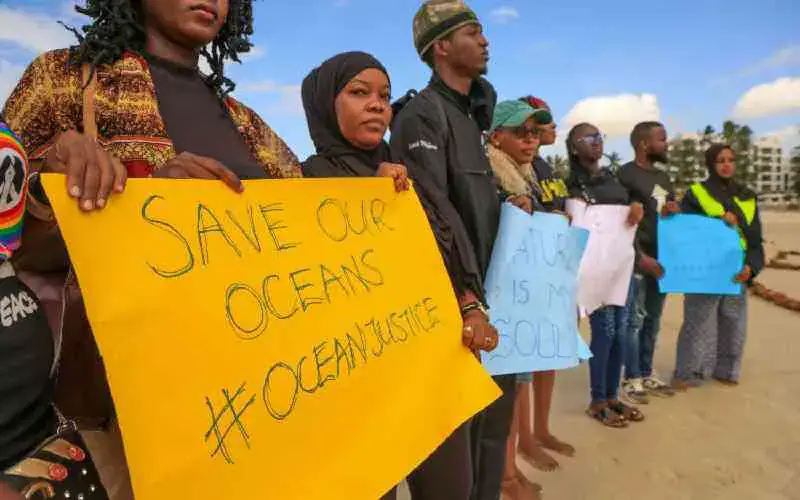
The Indian Ocean, a vital source of livelihood for thousands of residents along Kenya's Coast, is facing a significant threat due to climate change. According to the United Nations' 2026 Climate Technology Progress Report, the ocean is losing its strength, becoming warmer, too acidic, and leaving more carbon dioxide in the air. This development has raised concerns about the impact on the region's economy, which heavily relies on the ocean for fishing, maritime transport, aquaculture, and coastal tourism.
The report highlights that the ocean absorbs about 30% of human-made carbon dioxide emissions and roughly 90% of the excess heat from global warming. However, this critical climate-regulating function is now under strain due to rising temperatures, acidification, deoxygenation, pollution, and ecosystem degradation. The consequences of a weaker ocean are far-reaching, with potential impacts on fish stocks, coral reefs, and the overall health of the marine ecosystem.
The Kenyan government has made significant investments in the Blue Economy, which encompasses fisheries, maritime transport, aquaculture, and coastal tourism. However, a weaker ocean could undermine these efforts, affecting the livelihoods of thousands of residents in Mombasa, Kwale, Kilifi, and Lamu counties. The report emphasizes the need for urgent action to protect the ocean's role in regulating the climate, including investing in "Ocean Carbon Intelligence" to monitor and understand the ocean's carbon cycle.
Mangroves, which store significant amounts of carbon, are another critical aspect of Kenya's coastal ecosystem. The country has over 60,000 hectares of mangroves, spread across Lamu, Gazi Bay in Kwale, Mida Creek in Kilifi, and Tudor in Mombasa. The report highlights the importance of blue carbon restoration, citing Kenya's Mikoko Pamoja project in Gazi Bay as an example of a successful community-led mangrove carbon credit scheme.
Rising sea levels and stronger storms are also a major concern for coastal communities in Kenya. A weaker ocean means more heat, which could lead to increased flooding and damage to infrastructure, including the Port of Mombasa, Nyali Bridge, and Old Town. The report notes that major gaps in ocean observation and scientific understanding still limit governments' ability to assess climate risks, emphasizing the need for more research and monitoring.
The Kenya Marine and Fisheries Research Institute (KMFRI) in Mombasa has called for more buoys, sensors, and research vessels to improve ocean monitoring. The report was endorsed by Inia Seruiratu, the Pacific COP31 Envoy for the Ocean, who emphasized the need for science, innovation, and Indigenous knowledge to work together towards a more resilient future.
As Kenya prepares for COP31, the report provides a clear agenda for action, including funding KMFRI and ocean monitoring, protecting and restoring mangroves, backing community-led blue carbon projects, and putting the ocean at the center of the country's Nationally Determined Contributions. The UN's message is clear: the ocean's role in regulating the climate cannot be taken for granted, and urgent action is needed to protect it.
Key points
- The Indian Ocean's weakening due to climate change poses significant threats to livelihoods along Kenya's Coast.
- The report emphasizes the need for urgent investment in "Ocean Carbon Intelligence" to protect the ocean's role in regulating the climate.
- Kenya's Blue Economy and mangrove conservation efforts are critical to mitigating the impacts of a weaker ocean.