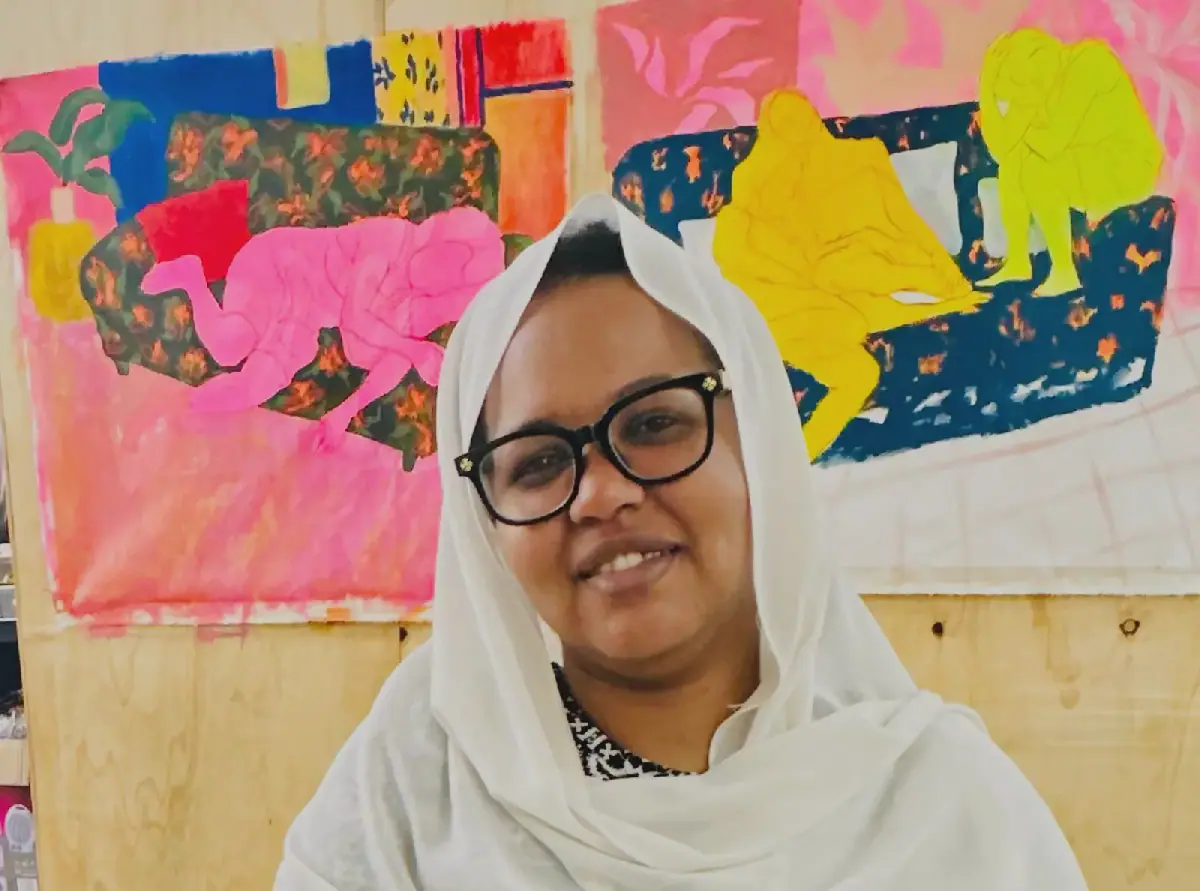
Sudanese visual artist Amani Azhari has created a series of artworks that delve into the experiences of women during times of war and trauma. Her Healing Sessions series aims to provide a platform for women to share their stories and emotions, and to facilitate psychological healing. Through her art, Azhari seeks to capture the transformations in women's lives and the individual and collective wounds left by war. Her work is inspired by traditional gatherings of women in Sudanese homes, where they can share their experiences and support one another.
Azhari's paintings portray women in various physical poses, conveying emotions such as pain, loneliness, comfort, and contemplation. Everyday details in her artworks reveal the demands placed on women and the burdens they carry. The artist's interest in these scenes began in her childhood, when she observed how women interacted and used their bodies to express emotions. Azhari's work is not only a reflection of her own experiences but also a tribute to the resilience of Sudanese women.
The Healing Sessions series was born out of Azhari's own experiences during the war in Sudan. She was living in Kampala, Uganda, when the conflict broke out, and later moved to Nairobi, Kenya. Azhari describes this period as one of shock and isolation, particularly because she was separated from her Sudanese community and lacked a close social and artistic network. Her work is a response to the trauma inflicted on Sudanese people during the war, which she believes has accumulated through earlier experiences endured by Sudanese society.
Azhari's artworks explore the psychological and social dimensions of motherhood, including the difficult balance between caring for children and working. Her paintings depict mothers and children in moments of intimacy and protection, as well as the changes and responsibilities that reshape a woman's life. The artist believes that motherhood is not simply a matter of love and care but demands considerable effort and responsibility. Her own experiences as a mother during the war have informed her artistic vision.
One of the striking works in the Healing Sessions series is a large painting featuring women sitting on a sofa, which Azhari uses as a symbol of memory and change. The sofa becomes a witness to the transformations experienced by the figures, preserving the traces of their encounters, conversations, and emotions. Azhari's use of color and decorative patterns adds a musical rhythm to her artworks, creating a distinctive visual language.
Azhari's artistic style draws on various influences, including Paul Gauguin, Henri Matisse, Marc Chagall, and Pablo Picasso. However, she uses these influences to create a unique visual language that serves her own world. Her artworks seem to breathe as they take shape, with visible preparatory drawings that become part of the story itself. Azhari's Healing Sessions series is a testament to the power of art to facilitate healing and understanding.
Through her art, Azhari aims to give expression to the individual and collective wounds left by war, as well as the resilience and strength of Sudanese women. Her work is a reflection of her own experiences and a tribute to the women who have inspired her. Azhari's Healing Sessions series is a powerful exploration of the human condition, one that offers hope for healing and transformation.
Key points
- Azhari's art provides a platform for women to share their stories and emotions, facilitating psychological healing and understanding.
- The Healing Sessions series explores the psychological and social dimensions of motherhood, including the difficult balance between caring for children and working.
- Azhari's artistic style draws on various influences, creating a distinctive visual language that serves her own world.