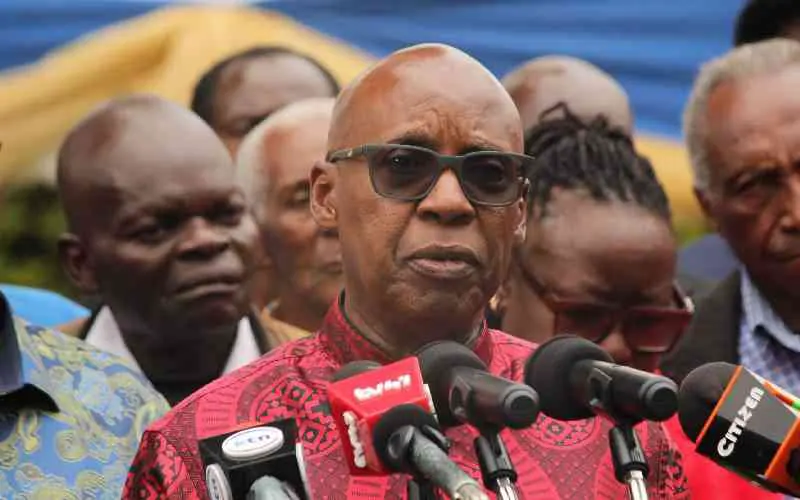
Safina party leader Jimi Wanjigi has called on African leaders to match political independence with economic liberation. He stated that independence did not dismantle the economic structures inherited from colonialism, and that exploitation has continued to dominate African countries. Wanjigi noted that heads of government have become co-perpetrators of neo-colonialism, and that a section of African leaders have deliberately failed to focus on value addition to natural resources.
Wanjigi cited three companies that existed before Kenya gained independence, linking them to poor coffee prices and disadvantaging coffee farmers. He mentioned that the exploitation did not stop at independence, and that the same private companies continued to dominate the coffee industry. However, he noted that new laws have recently brought some liberation to the coffee sector.
Wanjigi emphasized that political liberation must be matched with economic liberation, which involves controlling resources, building industries, adding value, creating ownership, and ensuring that Africans participate in the wealth generated by their economies. He stressed that much of Africa still exports raw materials and imports finished products at a much higher value, leaving the continent with too little of the value.
Wanjigi will be delivering a public lecture at Fort Hare in South Africa on October 15, focusing on 'economic sovereignty and freedom.' He stated that political sovereignty is incomplete if the decisions that determine the economic lives of the people are made by external parties. Wanjigi emphasized that African leaders must build an Africa where people can benefit from the wealth of their own continent.
Wanjigi's approach to economic liberation is practical, involving bringing debt and public spending under control through proper audits, making capital and markets accessible to African-owned businesses, and moving from exporting raw materials to value addition and manufacturing. He also advocates for reforming taxation to expand production rather than continually burdening it.
On the youth agenda, Wanjigi regretted that Africa has approximately 532 million youth, but only 8 to 11 million enter the workforce every year. He emphasized that the gap must be filled by building economies that absorb their talent, ensuring access to capital, land, technology, infrastructure, and markets.
Wanjigi's objective is to turn talent into ownership and ownership into wealth. He believes that African countries must determine how their natural resources are developed, how public money is borrowed and spent, and how industries are built. Ultimately, Wanjigi aims to create opportunities for African people to participate in the value created by their economies.
Key points
- Wanjigi challenges African leaders to match political independence with economic liberation.
- African leaders must focus on value addition to natural resources to achieve economic liberation.
- Wanjigi advocates for practical approaches to economic liberation, including proper audits, accessible capital, and value addition.