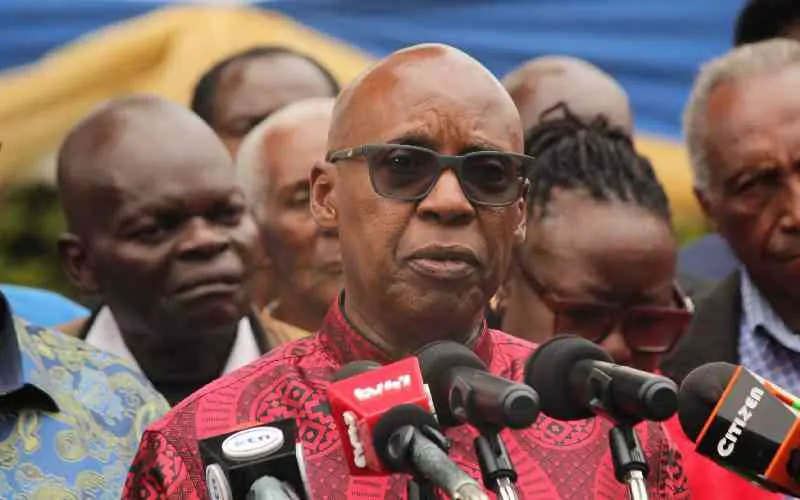
Safina party leader Jimi Wanjigi has called on African leaders to match political independence with economic liberation, stating that independence did not dismantle the economic structures inherited from colonialism. He made these remarks in an interview with Chanel Africa TV. Wanjigi believes that African leaders have become complicit in neo-colonialism, perpetuating the exploitation of their countries' resources.
Wanjigi cited the example of Kenya's coffee industry, where a few companies that existed before independence continue to dominate the market, dictating prices and disadvantaging farmers. He noted that new laws have recently been introduced to liberate the coffee industry, but the impact of years of exploitation will take time to reverse. Wanjigi emphasized that economic liberation is crucial for Africa's growth and development.
According to Wanjigi, Africa still exports raw materials and imports finished products at a much higher value, resulting in a significant loss of wealth. He stressed that the continent must add value to its natural resources, build industries, and create opportunities for its people to participate in the economy. This, he believes, is the only way to achieve true economic liberation.
Wanjigi will be delivering a public lecture at Fort Hare in South Africa on October 15, focusing on 'economic sovereignty and freedom.' He will discuss the barriers that prevent Africans from building a better future for themselves and their families. Wanjigi's lecture aims to shed light on the practical steps needed to achieve economic liberation in Africa.
The Safina party leader emphasized that African leaders must build an economy that benefits the people, creates opportunities, and distributes prosperity more equitably. He believes that economic liberation means African countries must control their natural resources, determine how public money is borrowed and spent, and build industries that create value for their people.
Wanjigi also addressed the youth agenda, noting that Africa has approximately 532 million young people, but only 8-11 million enter the workforce every year. He stressed that the gap must be filled by building economies that absorb their talent and provide opportunities for entrepreneurship and employment. This, he believes, can be achieved by providing access to capital, land, technology, infrastructure, and markets.
Wanjigi outlined a practical approach to economic liberation, which includes bringing debt and public spending under control, making capital and markets accessible to African-owned businesses, and reforming taxation to expand production rather than burden it. He believes that these steps can help turn talent into ownership and ownership into wealth, ultimately achieving economic liberation for Africa.
Key points
- African leaders must match political independence with economic liberation to achieve true growth and development.
- Economic liberation requires African countries to control their natural resources, add value to their products, and create opportunities for their people to participate in the economy.
- African leaders must provide opportunities for entrepreneurship and employment, particularly for the youth, to absorb their talent and create a better future.