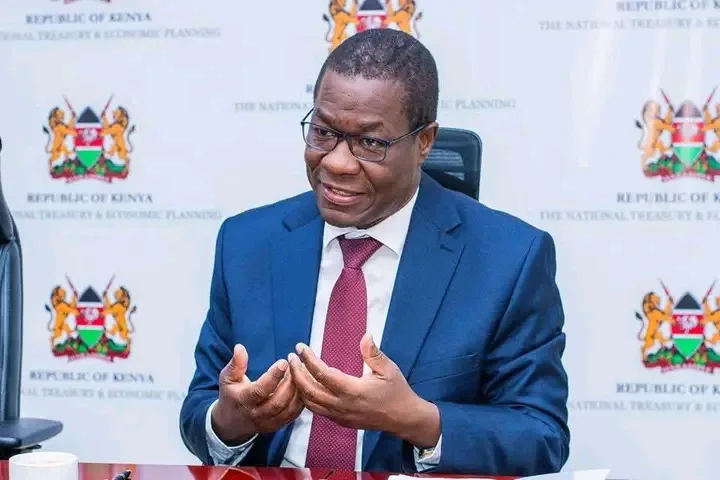
Energy and Petroleum Cabinet Secretary Opiyo Wandayi has defended the government-to-government (G-to-G) arrangement for importing refined petroleum products, saying it helped shield Kenya from a potential fuel supply crisis. Wandayi stated that the arrangement was introduced in response to severe US dollar shortages that had threatened the country’s ability to secure adequate supplies of refined petroleum products. The arrangement was implemented to cushion the country from the negative effects of US Dollar liquidity that had almost ground the economy to a halt in 2022.
When President William Ruto’s administration took office in September 2022, Kenya faced serious fuel supply challenges, with retail stations operating with minimal or no stocks. The import bill for refined petroleum products stood at about $500 million, accounting for approximately 35 per cent of the country’s total import bill. This led to oil marketing companies sourcing foreign currency from multiple banks, creating additional demand and putting pressure on the Kenyan shilling.
The situation prompted the government to seek an urgent solution to prevent the country’s fuel supply challenges from escalating into a wider economic crisis. On March 10, 2023, the government entered into Master Framework Agreements with Aramco Trading Fujairah FZE, Abu Dhabi National Oil Company (ADNOC) Global Trading Ltd, and Emirates National Oil Company (ENOC) for the supply of refined petroleum products on 180-day credit terms.
The arrangement was intended to ease pressure on the foreign exchange market by allowing the country to pay for fuel imports over an extended period. The main objective of the G-to-G arrangement was to alleviate US Dollar liquidity challenges by ensuring accumulation of additional foreign reserves to the tune of US Dollars 500 million per month as the US Dollar demand eased due to the extended credit terms.
The arrangement has also helped ensure consistent fuel supplies, while the freight and premium charges have been renegotiated to reflect changing market conditions. According to Wandayi, the premium for Super Petrol was reduced from $97.50 per metric tonne at the start of the arrangement to $90 in September 2023 and later to $84 in March 2025.
The G-to-G arrangement has enabled Kenya to preserve and build its foreign exchange reserves while supporting stability in the Kenya shilling-US dollar exchange rate. The arrangement underpins the payment for refined petroleum products for the local market in Kenya Shillings backed by a 180-day Letter of Credit. The number of banks issuing letters of credit has expanded from KCB Bank to include MCB, I&M Bank, DTB, Stanbic, UBA, and Equity Bank.
Wandayi described the arrangement as a local response to a local economic challenge, saying it has also strengthened Kenya’s position as a regional logistics hub. The government will continue working with its trading partners to strengthen the Northern Corridor as a key route for supplying refined petroleum products to East Africa and the wider Great Lakes region.
Key points
- The G-to-G arrangement helped shield Kenya from a potential fuel supply crisis by ensuring consistent fuel supplies and alleviating US Dollar liquidity challenges.
- The arrangement has enabled Kenya to preserve and build its foreign exchange reserves while supporting stability in the Kenya shilling-US dollar exchange rate.
- The G-to-G arrangement has strengthened Kenya’s position as a regional logistics hub.