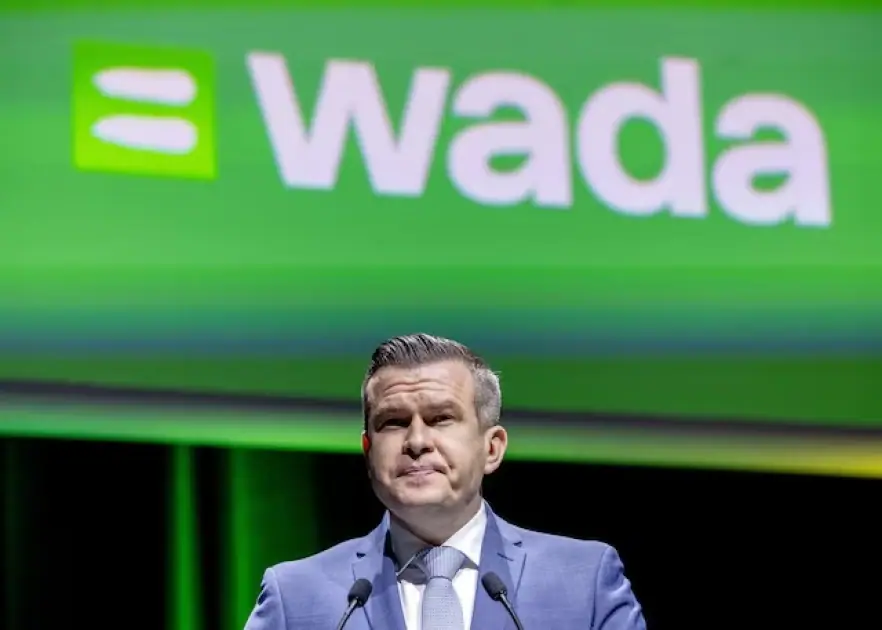
World Anti-Doping Agency (WADA) President Witold Banka has expressed concerns about the Russian anti-doping system, citing a "very limited" level of trust due to the country's history of doping scandals. Banka made these comments after WADA's Foundation Board meeting in Astana, Kazakhstan. He emphasized that complete confidence in any anti-doping system is impossible, but Russia's record warrants particular caution.
Russia's anti-doping agency, RUSADA, remains non-compliant with the World Anti-Doping Code. The agency's status has been a concern for WADA, especially after Russia's full-scale invasion of Ukraine in February 2022. The International Olympic Committee had urged sports federations to exclude Russian athletes and officials, and several sports federations now allow Russians to compete under certain conditions.
Banka stressed that a robust testing programme must be in place to ensure Russian athletes returning to international competition are clean. He expects the International Testing Agency (ITA) to establish a rigorous regime for Russian athletes and increase testing both at international competitions and inside Russia. This would help build confidence that Russian athletes are tested properly.
WADA is responsible for ensuring the safety of its experts, and Banka cited the ongoing conflict in Ukraine as a challenge to conducting an audit of RUSADA's operations in Moscow. He noted that it is difficult to send a team to Moscow where "drones are landing." Russian officials have assured WADA that conditions are secure, but Banka emphasized the need for assurances.
Banka also warned athletes that they are responsible for understanding and complying with anti-doping rules. He made these comments in light of the International Tennis Integrity Agency charging French player Arthur Rinderknech with refusing to submit to an anti-doping test. Rinderknech denies any wrongdoing and expects to be cleared by a tribunal.
According to Banka, there is "no excuse" for athletes failing to understand their obligations. He emphasized that professional athletes have duties and responsibilities, including being aware of anti-doping procedures. WADA has robust educational programmes for athletes competing at the international level.
The Russian doping scandal has been an ongoing concern for WADA and the sports world. More than 100 Russian athletes were excluded from the 2016 Rio Olympics following an investigation into state-sponsored doping. Russia's eligible athletes have since competed without their flag or anthem at several international events, including the 2018 PyeongChang Olympics, 2021 Tokyo Olympics, and 2022 Beijing Olympics.
Key points
- WADA President Witold Banka says trust in Russia's anti-doping system is 'very limited' due to past doping scandals.
- Russia's anti-doping agency, RUSADA, remains non-compliant with the World Anti-Doping Code.
- A robust testing programme is necessary to ensure Russian athletes returning to international competition are clean.