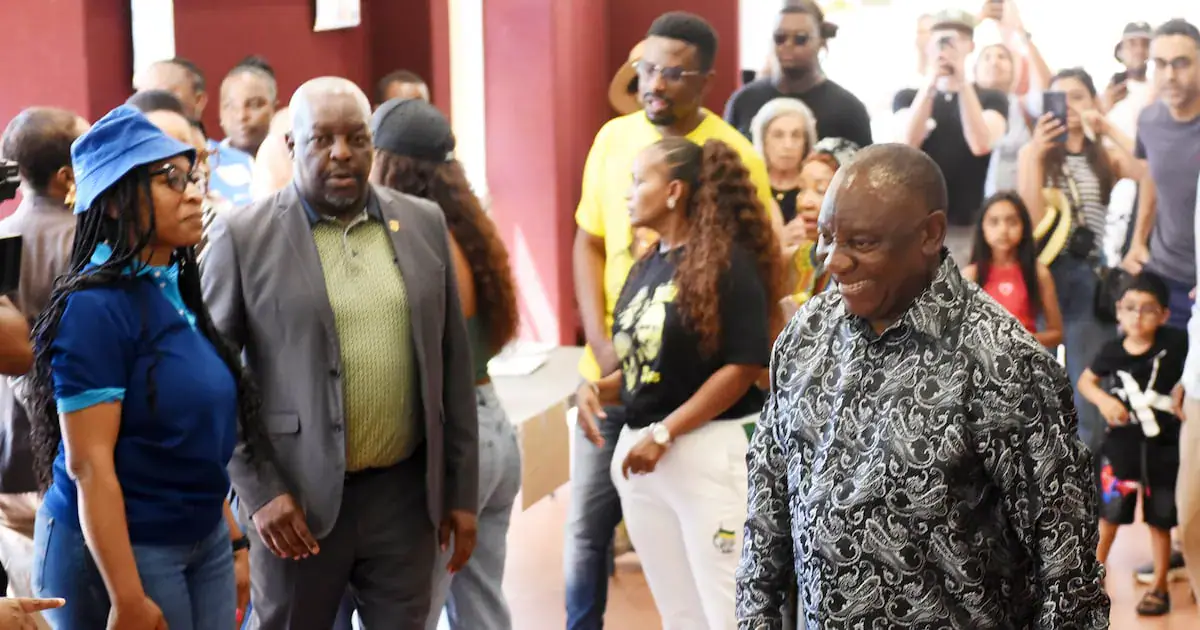
More than 12 million South Africans had cast their ballots by 5pm on Wednesday, with three hours of voting remaining in the municipal elections. This represents over 40% of the country's registered voters. According to preliminary figures from the Electoral Commission of South Africa (IEC), Gauteng recorded the highest number of votes at about 3 million, followed by KwaZulu-Natal at 2.5 million and the Western Cape at 1.5 million.
The municipal elections will determine the composition of 257 municipal councils responsible for providing essential services such as water, electricity, and roads. The outcome will be consequential for residents of towns and cities that have endured deteriorating infrastructure and persistent failures in basic service delivery. The elections also threaten to weaken the ANC further and reshape coalitions governing the country's biggest cities.
The IEC has up to seven days to declare the final results. With no party expected to secure outright control of several major councils, negotiations could prove as consequential as the vote itself. The outcome will determine whether fragile coalition arrangements in major municipalities, including Johannesburg, survive or give way to new governing partnerships.
Opinion polls indicate that President Cyril Ramaphosa's ANC will lose ground to the DA, its main rival, and former President Jacob Zuma's uMkhonto weSizwe Party. The ANC faces particular pressure in KwaZulu-Natal, where the MK Party has emerged as a formidable challenger. Most political parties, including the ANC, DA, Freedom Front Plus, and ActionSA, had estimated higher voter turnout in suburbs than townships.
The IEC outlined the processes that will follow from the counting of ballots at voting stations to the verification and eventual announcement of the final results. IEC Chief Electoral Officer Sy Mamabolo explained that all ballot papers are counted at the voting station where they are cast, in the presence of party agents, independent candidate agents, and accredited observers.
The counting process involves sealed ballot boxes being opened and the ballot papers checked for the IEC's security stamp before being sorted and counted by electoral contest. Results slips will be completed in duplicate, signed by the presiding officer, and countersigned by political party agents. The signed slips will be displayed at the voting station once the counting and tallying process has been completed.
The IEC Results Operations Centres will provide political parties, independent candidates, observers, and the media with an opportunity to monitor the capturing, verification, and processing of election results. The commission aims to strengthen transparency and safeguard the integrity of the electoral process. The final results and allocation of seats in municipal councils will be declared within the prescribed seven-day period.
Key points
- Over 40% of South Africa's registered voters cast ballots by 5pm in municipal elections.
- The outcome of the elections will determine the composition of 257 municipal councils.
- The IEC has up to seven days to declare the final results.