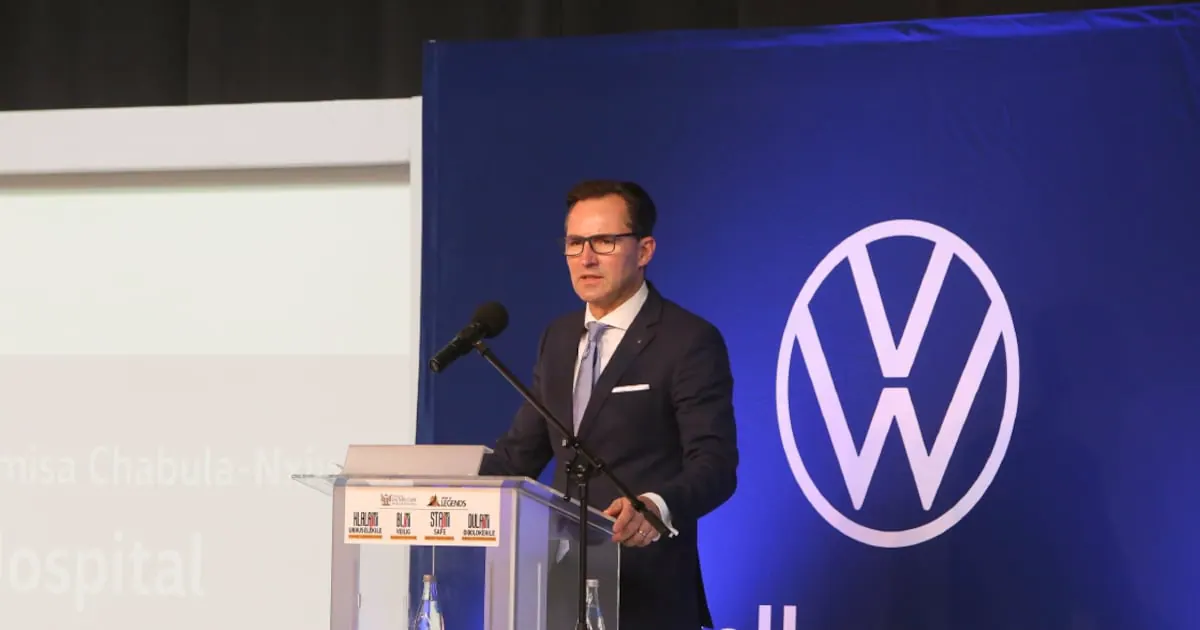
Volkswagen is set to accelerate its restructuring programme, according to the head of its core brand, Thomas Schaefer. This move comes after the company's recent profit warning, which highlighted the challenges faced by the sector, including high costs and fierce competition from Asian rivals. Schaefer told a staff meeting at the company's Wolfsburg headquarters that the measures agreed in 2024 were not sufficient, and the company must act quickly to address its issues.
The announcement was met with nationwide protests by German auto workers at Volkswagen, BMW, and parts supplier Bosch. The protests are in response to painful job cuts, possible production relocations, and even plant closures for Germany's most important industry. The crisis was also reflected in the results of two state elections on Sunday, which saw significant losses for the ruling parties.
Schaefer stated that the company and employee representatives will discuss how to proceed with the restructuring programme. Volkswagen plans to cut a further 50,000 jobs as part of a massive restructuring agreed with stakeholders this month. This move was made to avert a full-blown dispute with powerful unions, which still repeated calls on management to fix the issues.
The company's works council chief, Daniela Cavallo, and IG Metall union head, Christiane Benner, called for stronger protection against unfair competition from China, a more effective EU subsidy policy, and continuation of a phased retirement programme. Benner told workers at Volkswagen's headquarters that they expect corporate leaders and management teams to take responsibility for Germany as an automotive nation, for employees, and for jobs.
European automakers, including Volkswagen, are facing increased competition from Asian rivals abroad and at home. This has created a major problem for Volkswagen as it contends with overcapacity on the continent, US tariffs, and plunging profits in China. The company cut its 2026 profit margin outlook last week to 1% at the most, blaming the sluggish Chinese market and higher provisions for retirements.
The sluggish Chinese market and higher provisions for retirements have affected Volkswagen's profit margin outlook. Additionally, the company lowered expectations for its Porsche sports car brand. Part of the problem was accelerated demand for less profitable electric vehicles, highlighting the sector's dependence on combustion engines that have fuelled Germany's economy for decades.
IG Metall's Horst Ott criticised managers for failing to keep pace with developments in e-mobility, digitalisation, and battery technology. This has caused the German automotive and supplier industries to fall behind. Volkswagen and its stakeholders must now work together to address these challenges and find a solution to the company's problems.
Key points
- Volkswagen plans to cut a further 50,000 jobs as part of its restructuring programme.
- The company faces increased competition from Asian rivals abroad and at home.
- Volkswagen cut its 2026 profit margin outlook to 1% at the most, citing the sluggish Chinese market and higher provisions for retirements.