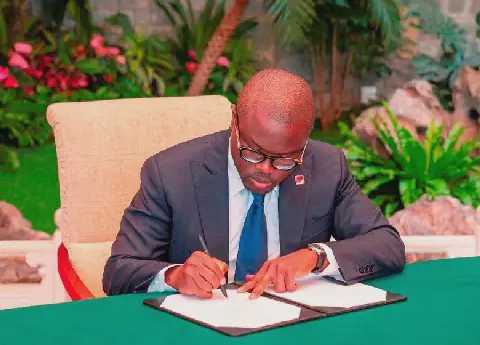
Vitol Group Chief Executive Russell Hardy has called on African countries to increase their fuel storage capacities to mitigate risks associated with global supply chain disruptions. Speaking at the ADIPEC 2026 conference in Abu Dhabi, Hardy emphasized the importance of building resilience in the face of potential shocks to the international petroleum market. The conference brings together energy leaders, policymakers, and industry executives to discuss pressing issues in the sector.
The discussion, titled "Energy on edge: securing global flows, strategic trade routes and resilient supply chains," featured a panel of industry experts, including Horacio Marín, Chairman and Chief Executive of Argentina's YPF, and Nasser Omair Al Muhairi, Acting Chief Executive of ADNOC Downstream Industry, Marketing and Trading. The panel highlighted the need for countries to reassess their fuel storage capacities and supply chain strategies in light of recent disruptions. Uganda, which is expanding its storage capacity through the planned 320-million-litre Namwabula terminal, is one such country.
Hardy warned that the global petroleum market has limited capacity to absorb further shocks, with low inventories and little spare capacity in refined petroleum products. He noted that the market had managed to cope with eight months of major disruption but cautioned that the situation could become more difficult as demand rises again after the seasonal lull towards the end of the year. This has significant implications for Uganda, which depends on imported refined petroleum products transported through regional corridors.
Vitol Bahrain E.C., a company within the Vitol group, is the contracted supplier to the Uganda National Oil Company (UNOC) under the country's centralized fuel procurement arrangement. However, questions remain about the volume of fuel physically held in the country and whether the new investments will strengthen supply security and protect consumers against future shocks. Hardy's remarks have sparked debate about the level of physical reserves available in import-dependent economies such as Uganda.
Hardy explained that Vitol carries compulsory stocks in European markets, where governments require companies to maintain minimum reserves. The company also holds additional inventory where it has supply commitments to airlines and other customers. He estimated that global consumption of jet fuel, gasoline, and diesel amounts to about 60 million barrels a day, and holding an additional 10 days of supplies would require storage for 600 million barrels.
Other panellists argued that building resilience requires more than simply holding additional stocks. They pointed to the need for infrastructure that can move oil and petroleum products through different routes, adequate shipping and refining capacity, and cooperation between governments and private companies. Nasser Al Muhairi noted that the recent disruptions had exposed weaknesses at different points in the petroleum supply chain, from production and shipping to refining and final delivery to consumers.
The discussion highlighted the need for governments and private companies to work together to finance infrastructure that may not appear commercially attractive during normal market conditions but becomes essential during a crisis. Amos Hochstein, managing partner of TWG Global, called for governments to work with financial institutions to structure projects in ways that reduce financing costs and encourage private-sector investment.
Key points
- Vitol CEO Russell Hardy urges African countries to increase fuel storage buffers against global supply chain disruptions.
- The global petroleum market has limited capacity to absorb further shocks, with low inventories and little spare capacity in refined petroleum products.
- Building resilience in the petroleum supply chain requires more than simply holding additional stocks, including infrastructure development and cooperation between governments and private companies.