A wave of social media posts has been circulating, claiming to show a massive gathering of the Congolese opposition in Kinshasa on September 15, 2026. The images and videos have been shared widely, with many users claiming that they depict a significant turnout for the opposition's march against proposed constitutional changes. However, a fact-check by DataCheck has revealed that at least one of the images is AI-generated.
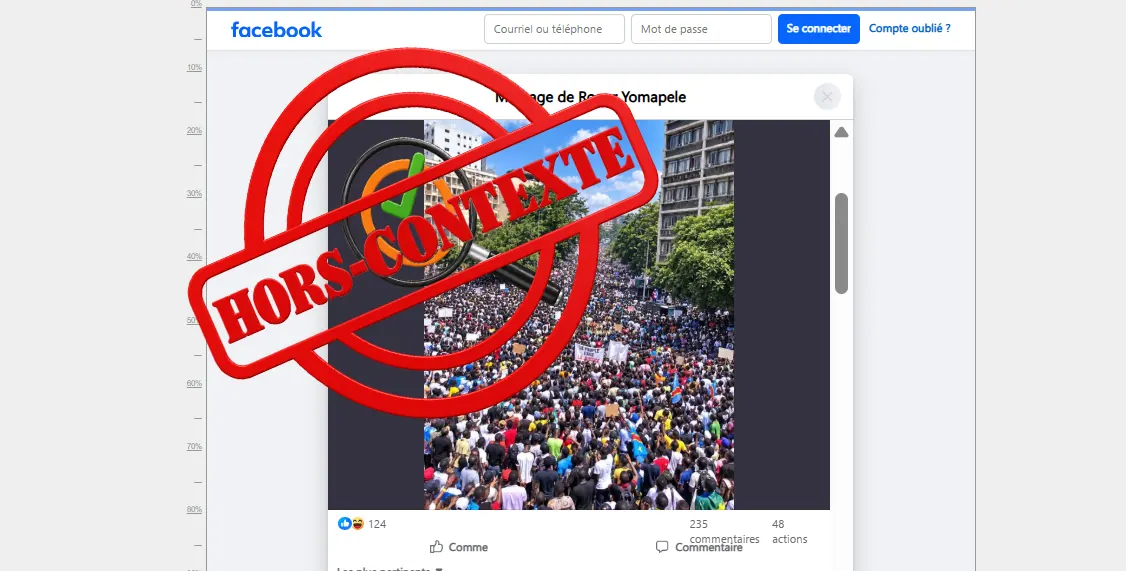
The image in question was shared by a Facebook user named Roger Yomapele, who claimed that it showed a massive mobilization of people in Kinshasa. The post garnered over 400 interactions, with many users expressing support for the opposition. However, when contacted by DataCheck, Yomapele did not respond to requests for information about the image's origin.
DataCheck used reverse image search tools, including ISFAKE.AI and Hive Detect, to verify the authenticity of the image. The results showed that the image has a 92.8% likelihood of being AI-generated. Further investigation revealed that the image was not taken during the September 15, 2026 march, but was instead created using artificial intelligence.
The opposition march was a real event, with thousands of people taking to the streets in Kinshasa and other provinces to protest against proposed constitutional changes. The march was organized by the Coalition article 64 (C64), a group of opposition parties opposed to President Félix-Antoine Tshisekedi's plans to revise the constitution. The event was marked by incidents, including the death of one militant and several arrests.
DataCheck also discovered that a video circulating online, claiming to show the opposition march, was actually taken in December 2023. The video was posted on the X account of Martin Fayulu's party, ECiDé, and showed the party leader's mobilization efforts ahead of the presidential election.
Experts warn that the spread of AI-generated content can have serious consequences, including the manipulation of public opinion and the erosion of trust in online information. Hobab Watukalusu, a fact-checking trainer, notes that such content can be deliberately created and shared for propaganda purposes, and that it can be difficult for users to distinguish between real and fake information.
In conclusion, the viral image claiming to show the Congolese opposition march on September 15, 2026, has been found to be AI-generated. The incident highlights the need for users to be cautious when sharing and consuming online information, and for fact-checking efforts to be intensified to combat the spread of misinformation.
Key points
- The image of the Congolese opposition march was found to be AI-generated using reverse image search tools.
- The opposition march was a real event that took place on September 15, 2026, in Kinshasa and other provinces.
- Experts warn that AI-generated content can have serious consequences, including the manipulation of public opinion and the erosion of trust in online information.