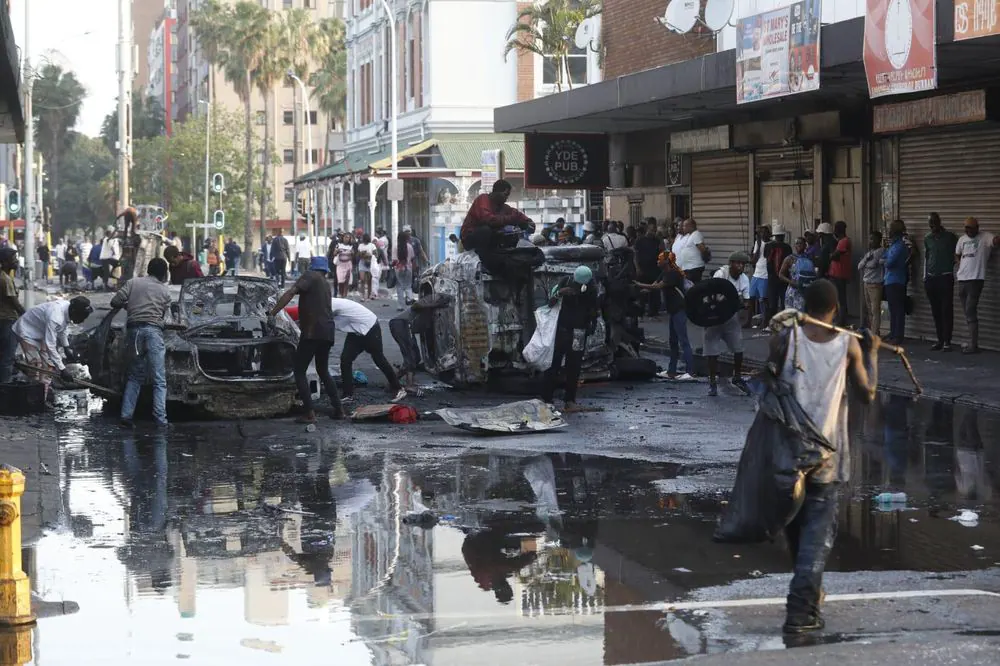
Violent protests over immigration and asylum applications broke out in Durban and Soweto on Thursday, resulting in 24 vehicles being torched and several businesses damaged. The protests were sparked by opposition to the processing of asylum applications following a Constitutional Court ruling that removed certain procedural barriers preventing asylum seekers from having their claims assessed. The unrest led to a significant police presence in both areas, with authorities warning that those responsible for the violence and destruction of property would be identified and arrested.
The protests in Durban and Soweto were marked by widespread violence and destruction of property. Many cars were burnt in Durban and Gauteng during the unrest, with over 23 cars set alight between Durban and Joburg on Thursday afternoon. Firefighters battled a blaze in Orlando West, Gauteng, as the situation continued to escalate. The police were deployed to contain the unrest, with Acting National Police Commissioner Lieutenant General Puleng Dimpane warning that those responsible would be pursued.
The Constitutional Court ruling that sparked the protests removed certain procedural barriers preventing asylum seekers from having their claims assessed. This move has been met with opposition from some quarters, with demonstrators voicing their concerns over the processing of asylum applications. The protests were not limited to Durban and Soweto, with reports of unrest in other parts of Gauteng.
The police response to the protests was swift, with Lieutenant General Puleng Dimpane deploying officers to contain the unrest. The police commissioner warned that those responsible for the violence and destruction of property would be identified, investigated, and arrested where sufficient evidence existed. The police presence was significant, with officers working to restore order and calm in the affected areas.
The impact of the protests on local businesses and residents has been significant. Several businesses were damaged during the unrest, with many residents expressing concern over the violence and destruction of property. The protests also raised concerns over the safety of asylum seekers and the need for a more effective and efficient system for processing asylum applications.
The situation in Durban and Soweto remains volatile, with police on high alert amid fears of further unrest. Asylum seekers have been gathering outside the Durban refugee centre, where access was reportedly blocked by the March and March movement. A new directive requires asylum seekers to follow certain procedures, which has led to concerns and tensions.
The authorities have vowed to pursue those responsible for the violence and destruction of property during the protests. Lieutenant General Puleng Dimpane emphasized that the police would work to identify and arrest those responsible, and that the situation would be closely monitored to prevent further unrest. The protests have highlighted the need for a more effective and efficient system for processing asylum applications and addressing the concerns of all parties involved.
Key points
- 24 vehicles were torched during the protests in Durban and Soweto.
- The protests were sparked by opposition to the processing of asylum applications following a Constitutional Court ruling.
- The police have vowed to pursue those responsible for the violence and destruction of property during the protests.