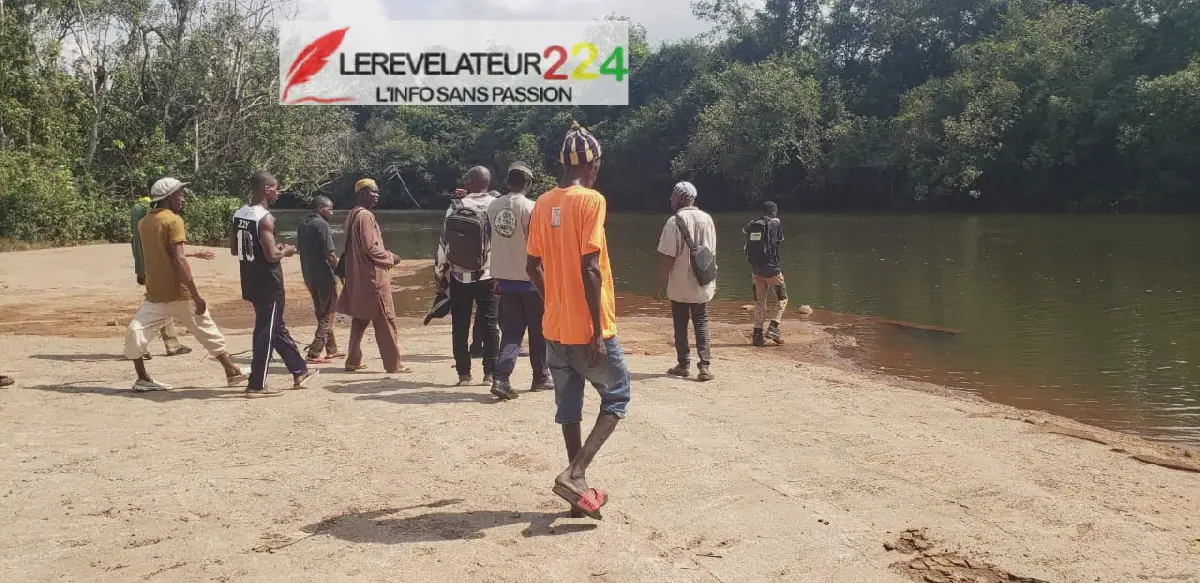
The Kilélouma River, a vital source of water for the villagers of Kolaboui in Guinea, is rapidly drying up due to the operations of a nearby mine. The river, which flows through several villages before emptying into the Rio Nunez, has been severely impacted by the construction of a large concrete wall and a valve that redirects water to the port of Dapilon for mining activities. As a result, the villagers are struggling to access clean water for drinking, farming, and livestock.
The effects of the water shortage are being felt across the community, with fishermen reporting that the fish are being sucked into the mine's pipes and ending up in the port's basins. This has made fishing almost impossible, while livestock owners are also struggling to find water for their animals. The situation has prompted the villagers to demand that the mining company construct boreholes in each village to provide a reliable source of clean water.
In response to the villagers' complaints, members of the Comité de Concertation des Localités Minières (CCLM) visited the area on November 27, 2026. The CCLM representatives met with the villagers, who expressed their concerns and demands for access to clean water. The villagers reported that the mining company's existing borehole, which was drilled in June 2026, had stopped producing water during the dry season.
The CCLM has promised to engage with the mining company to find a solution to the water shortage and to return to the villagers to explain their findings. The visit has raised hopes that a new dialogue may lead to concrete actions to address the villagers' concerns. However, it remains to be seen whether the mining company will take concrete steps to mitigate the impact of its operations on the local community.
The Kilélouma River is a crucial source of livelihood for the villagers, who rely on it for fishing, farming, and livestock. The mining company's operations have not only affected the river's water flow but also polluted the water, making it unsuitable for consumption. The villagers are demanding that the company takes responsibility for its actions and provides a sustainable solution to the water shortage.
The situation in Kolaboui highlights the challenges faced by local communities in Guinea, where mining activities are often prioritized over the needs of the local population. The case has sparked concerns about the environmental and social impact of mining in the region and the need for greater accountability from mining companies.
The CCLM's visit has brought attention to the plight of the villagers, and it is hoped that their promises will be fulfilled. The villagers are eager to see concrete actions taken to address their concerns and provide them with access to clean water. The mining company's response will be crucial in determining the future of the community and the Kilélouma River.
Key points
- The mining company's operations have dried up the Kilélouma River, affecting the livelihoods of villagers in Kolaboui.
- The villagers are demanding that the mining company construct boreholes to provide a reliable source of clean water.
- The CCLM has promised to engage with the mining company to find a solution to the water shortage and return to the villagers to explain their findings.