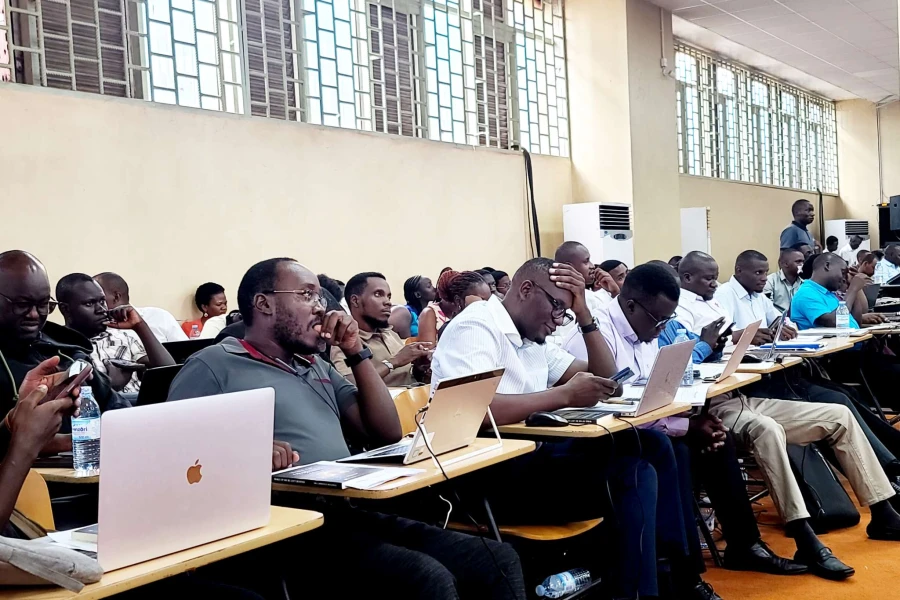
Victoria University has initiated an artificial intelligence (AI) training program for its entire workforce. The program aims to improve productivity, modernize operations, and equip students with skills relevant to a technology-driven job market. The training, which took place at the university, brought together employees from various departments. Management emphasized that AI skills should not be limited to lecturers, IT specialists, or technology-focused personnel.
Vice Chancellor Dr. Lawrence Muganga stated that every employee should understand how to use AI to solve problems and improve the institution's operations. He emphasized that the university has a responsibility to equip graduates with practical skills relevant to an economy increasingly influenced by AI and other emerging technologies. The training is intended to build a culture of practical AI adoption, with benefits extending beyond employees to students who interact with the university's services and learning environment.
Julius Bukyana, Victoria University's Corporate and Public Affairs Manager, said the institution expects staff to translate the skills acquired during the training into their everyday work. He noted that once staff implement these skills, the ripple effect will be significant for students. The session was facilitated by Tim Abels, an AI investor and technology expert, who urged participants to embrace practical tools that can improve productivity, simplify routine tasks, and support innovation.
Tim Abels highlighted various tools, including AI Studio, Gemini Notebook, and n8n Automation, encouraging participants to explore how such technologies can be applied in business and professional settings. He challenged participants to work smarter and also encouraged students to use their time at university to develop practical skills and explore entrepreneurship alongside their academic studies. Abels suggested that students establish AI-focused clubs, experiment with business ideas, and tap into the expertise and support available within the university.
The initiative reflects Victoria University's effort to extend AI adoption beyond technology-related courses and into the wider institutional workforce. By involving staff across different functions, the university aims to make AI a practical tool in everyday activities rather than a skill confined to a select group of specialists. This program comes amid growing discussion about how AI is reshaping workplaces, business processes, and the skills employers expect from graduates.
For universities, the shift presents both an opportunity to improve internal efficiency and a challenge to ensure students develop the knowledge and practical abilities needed to navigate an increasingly technology-driven economy. At Victoria University, management says the training is part of a broader professional development program designed to strengthen AI capacity among employees and create a wider impact on teaching, student support, and institutional operations.
The AI training program is a significant step for Victoria University as it seeks to prepare students for a changing job market. By equipping staff with AI skills, the university aims to enhance its operations and provide students with a more relevant and practical education. The program is expected to have a lasting impact on the institution and its students, positioning them for success in a technology-driven economy.
Key points
- Victoria University launches AI training for all staff to improve productivity and equip students with skills for a technology-driven job market.