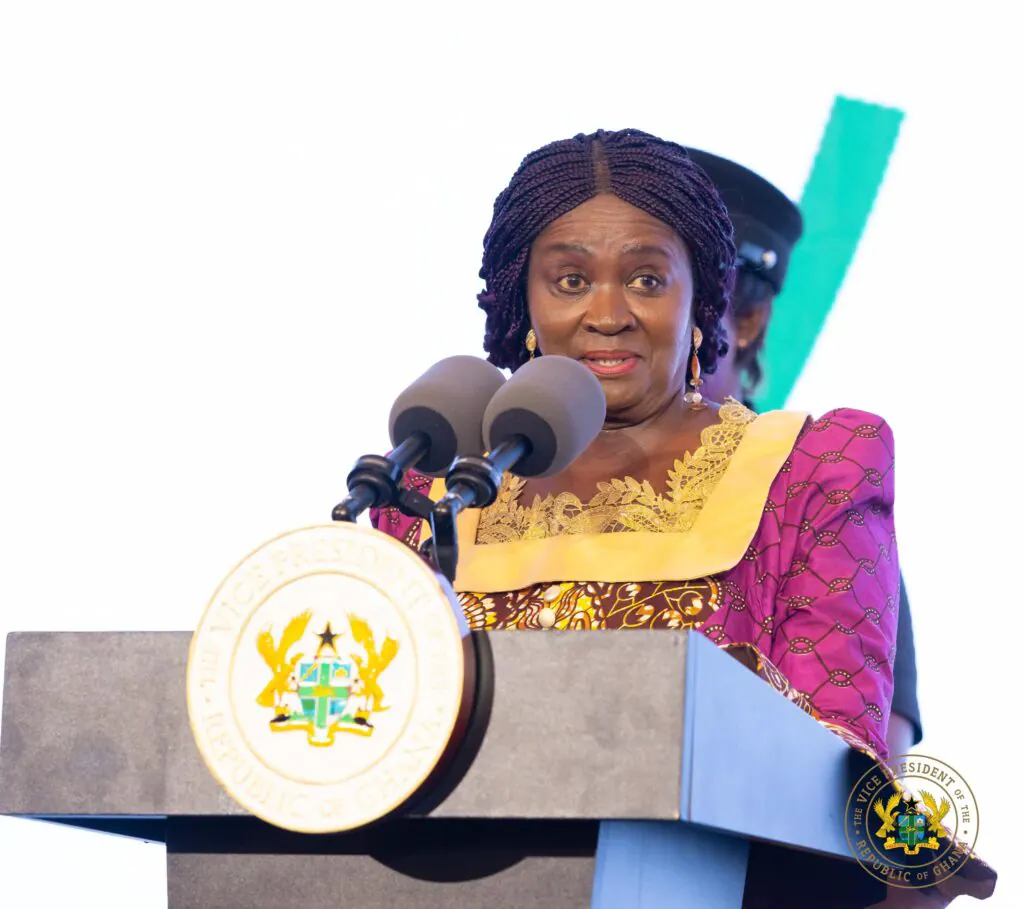
Vice President Professor Naana Jane Opoku-Agyemang has emphasized the need for sustained investment, stronger public institutions, and international cooperation to combat malnutrition and micronutrient deficiencies. She made this call at the opening of the 7th Global Conference of the Micronutrient Forum (MNF 2026) in Accra, which brings together experts to explore solutions to nutrition challenges in a changing environment.
The four-day conference, running from September 28 to October 1, is being held under the theme, “Nutrition at the Frontiers of a Changing Environment.” Professor Opoku-Agyemang warned that poor nutrition continues to undermine human development and the prospects of future generations, particularly for children, women, and future generations.
The Vice President highlighted that malnutrition has far-reaching consequences, especially in childhood, affecting physical development, learning, and life prospects. She added that for girls, the effects could extend into adulthood and pregnancy, placing the health of both mother and child at risk. A comprehensive approach involving science, sustained investment, resilient food systems, and cooperation across countries and sectors is required to tackle malnutrition.
In Ghana, despite existing interventions in maternal and child health, adolescent nutrition, school feeding, and social protection, anaemia among women and adolescent girls, poor diet quality, and inadequate dietary diversity remain concerns. Professor Opoku-Agyemang identified several factors influencing nutrition outcomes, including food production, household affordability, school meals, parental information, and access to healthcare, requiring coordinated responses across multiple sectors.
The government is strengthening nutrition services through funding for essential nutrition commodities, multiple micronutrient supplements, and equipment for assessing and monitoring nutritional status. The Vice President also emphasized improving the nutritional quality of meals provided under Ghana’s School Feeding Programme, which currently reaches more than 4.5 million children. Nutritional standards and caterer training are being strengthened, and monitoring is being improved.
The Vice President linked nutrition to agricultural development, citing the government’s Feed Ghana Programme as an opportunity to increase domestic food production, improve food security, and make nutritious foods more accessible. She also pointed to the Free Primary Healthcare Programme as an avenue for integrating nutrition into preventive healthcare, maternal and child health services, immunisation, and community-level care.
Professor Opoku-Agyemang called for stronger global cooperation and financing to address malnutrition, emphasizing that solutions require a comprehensive approach that goes beyond individual interventions. The conference aims to bring together scientists, policymakers, development partners, civil society, and private-sector representatives to explore solutions to nutrition challenges in a changing environment.
Key points
- The Vice President emphasized the need for sustained investment and stronger public institutions to tackle malnutrition.
- Malnutrition has far-reaching consequences, particularly for children, women, and future generations.
- The government is strengthening nutrition services and improving the nutritional quality of meals provided under Ghana’s School Feeding Programme.