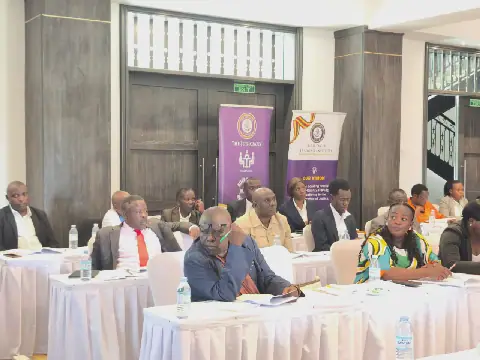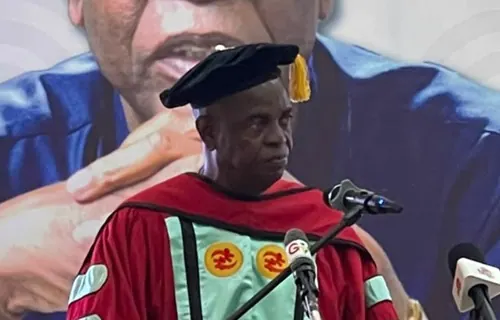
Veteran journalist and Pan-Africanist, Kwesi Pratt Jnr, has emphasized the importance of Dr. Kwame Nkrumah's call for African unity, saying it was not just about cultural solidarity but a political, economic, and strategic project. Delivering a lecture at the University of Cape Coast, Mr. Pratt noted that Africa's continued fragmentation hinders its growth and development. He argued that the continent's numerous national markets, currencies, and defence structures limit its bargaining power when negotiating with stronger external powers.
Mr. Pratt acknowledged that Nkrumah's proposal for immediate political union raises questions about national sovereignty, democratic accountability, and how a continental government would respond to Africa's diversity. However, he believes these questions should be part of the contemporary debate on African integration, rather than being used to dismiss the broader argument for unity. The lecture was part of the 15th Kwame Nkrumah Memorial Lectures, which focused on constitutionalism, development, and Pan-Africanism.
The Managing Editor of the Insight newspaper said Nkrumah's project should not be reduced to monuments, speeches, or annual commemorations but examined in relation to the continent's struggle for economic sovereignty and collective power. He urged the current generation to examine both Nkrumah's achievements and the unfinished aspects of his vision. Mr. Pratt also noted that the colonial borders inherited by African states often lack the economic and strategic scale to compete effectively in the international system.
Mr. Pratt cited communities along the Ghana-Togo border, where families and farmers sometimes live or work across the two countries, as an example of the African reality shaped by colonial boundaries. He called for a deliberate effort to address the divisions created by colonialism to pursue the vision of a united Africa capable of controlling its resources and determining its own destiny. This, he believes, is crucial for the continent's development and growth.
The veteran journalist said the challenge for Africa today is to move Pan-Africanism beyond speeches, ceremonies, and symbolic solidarity. He called for deeper cooperation in trade, industrialization, transportation, technology, security, climate change, migration, and common political strategy. Mr. Pratt emphasized that Africa needs to build the capacity to process its own raw materials, connect its economies, and negotiate collectively with powerful countries and institutions.
Mr. Pratt traced Nkrumah's political formation to his experiences in the United States and Britain, where he encountered racism, Pan-Africanist thoughts, anti-colonial movements, and political organizing. He said Nkrumah's exposure to the African diaspora and intellectual traditions of Black resistance shaped his understanding of the connections between Africans on the continent and in the diaspora. This understanding influenced Nkrumah's approach to non-violence and armed liberation.
The question of how Africa should unite became particularly important around the formation of the Organisation of African Unity (OAU) in 1963, Mr. Pratt said. He explained that Nkrumah and other leaders associated with the Casablanca group advocated for more immediate political integration, while other African leaders favoured gradual cooperation among sovereign states. The African Union, established later, has records of these discussions, highlighting the ongoing debate about African unity and integration.
Key points
- Kwesi Pratt Jnr urges Africans to move beyond symbolic Pan-Africanism and towards deeper cooperation in trade, industrialization, and other areas.
- The veteran journalist emphasizes that Nkrumah's project should be examined in relation to the continent's struggle for economic sovereignty and collective power.
- Mr. Pratt notes that colonial borders have limited the economic and strategic scale of African states, hindering their ability to compete effectively in the international system.