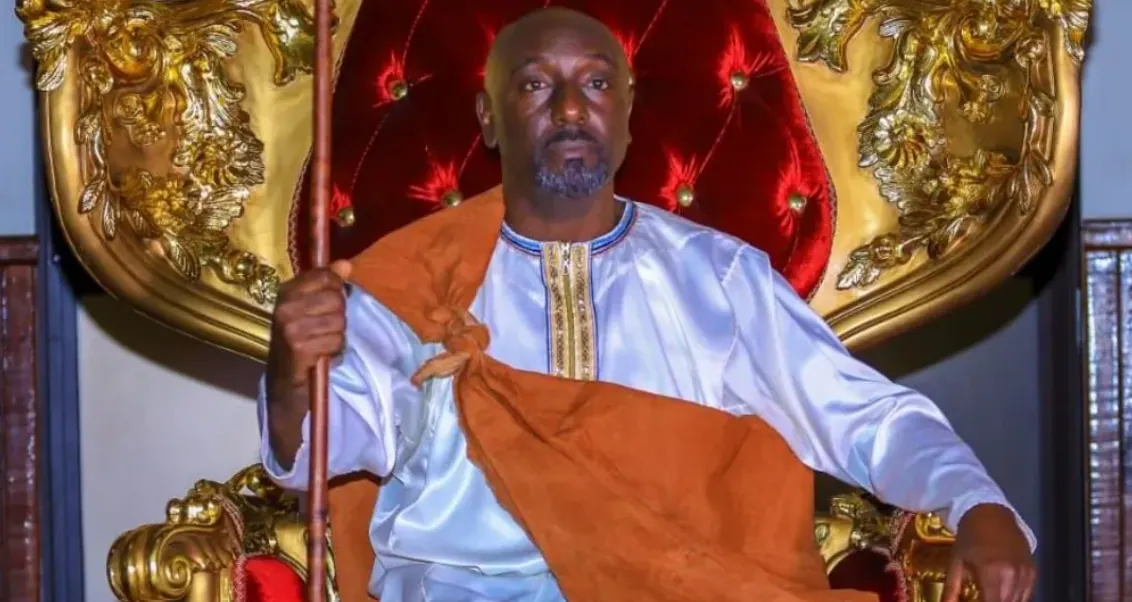
A veteran Ugandan journalist has formally assumed the throne of the Tooro Kingdom, concluding a transition period marked by grief and division. Prince Edward Rukidi Kijanangoma, a 56-year-old former broadcaster and editor with the state-run Uganda Broadcasting Corporation, underwent traditional overnight rituals ahead of his public coronation in Fort Portal. The ceremony follows the death of the kingdom's previous monarch, King Oyo Nyimba, who passed away from cancer at age 34.
The succession process in Tooro reflects the enduring status of traditional rulers in Uganda, drawing thousands of spectators to the remote western region near the Congolese border for ancient rites. The rites included a symbolic mock fight and a procession to the Karuziika royal palace. Uganda's traditional kingdoms were dissolved in the late 1960s but reinstated in the early 1990s under President Yoweri Museveni. Contemporary traditional rulers hold no formal legislative or executive powers but remain influential cultural guardians.
The elevation of the new monarch was complicated by an internal dispute over legitimacy. Following King Oyo's death, the queen mother, Best Kemigisa, argued that the selection violated the late king's written will, asserting that Oyo left behind a young son currently based in Texas. Kemigisa publicly condemned the proceedings, stating that celebrations occurred in close proximity to her late son's remains. Despite these objections, the Babiito ruling clan's succession committee maintained that their process aligned with established customs.
Nicholas Sengoba, a prominent political analyst in Uganda, noted that clan elders "have demonstrated that these are the norms of the kingdom," adding that "many of these positions may not be popular." The analyst's comments highlight the challenges of balancing traditional practices with modern expectations. The new king's assumption of the throne has sparked debate about the role of traditional leaders in contemporary Ugandan society.
State leadership endorsed the transition, with the attorney general confirming the clearance for the coronation and military and political figures offering public support. The government backing reflects the importance of traditional institutions in Ugandan society. The new king, taking the regnal name Edward Rukidi Nyabongo, emphasized cooperation in his pre-coronation remarks, stating that "heritage must be matched by discipline and hard work."
As he steps away from his media career to lead the community, the new king's background and upbringing are seen as assets. His mother, Assimwe Yusta Kijanangoma, reflected on his upbringing, noting that "Eddy is well-mannered, he does not fight, or shout, even when wronged, he says a few words and does not go so much into it." The king's leadership style will likely be closely watched as he navigates the challenges of his new role.
As Tooro steps into a new era under a journalist-turned-monarch, the kingdom faces the delicate task of balancing ancient cultural legacy with modern expectations of governance. The crown's ability to unify its people will depend on navigating this complex landscape. The new king's experience as a journalist and editor may serve him well in this endeavor, but the road ahead will likely be marked by challenges and opportunities.
Key points
- The new king, Prince Edward Rukidi Kijanangoma, is a 56-year-old former broadcaster and editor with the state-run Uganda Broadcasting Corporation.
- The succession process was complicated by an internal dispute over legitimacy, with the queen mother arguing that the selection violated the late king's written will.
- The government endorsed the transition, with the attorney general confirming the clearance for the coronation and military and political figures offering public support.