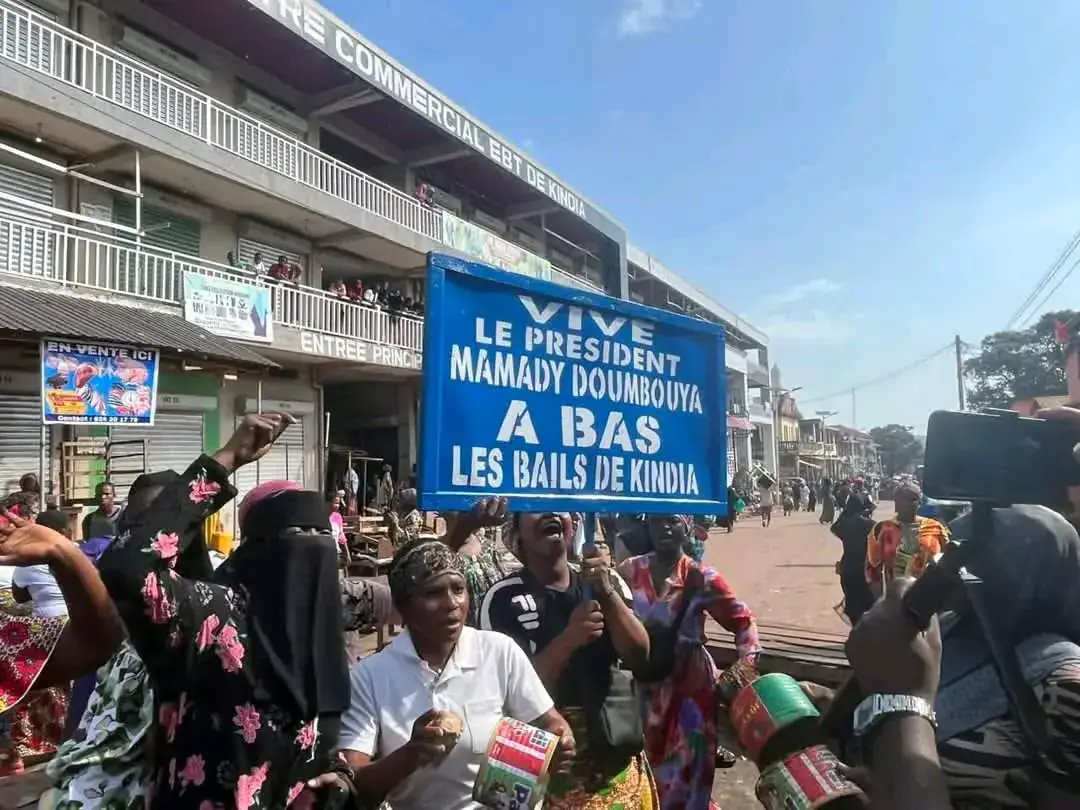
A wave of protests swept through the streets of Kindia, Guinea, on November 2, 2026, as women vendors from the city's main market and other local markets took to the streets. They expressed their frustration over the scarcity of available space in market infrastructures built under a lease agreement. The demonstrators, who began their march in the city center, erected barricades that disrupted traffic on several major roads before proceeding to the town hall.
The protesters voiced their discontent with the allocation process for commercial spaces and accused local authorities of failing to provide satisfactory responses to their concerns. They specifically criticized the construction of multi-story markets, which they claim has limited access to vendors, particularly those selling perishable goods like peppers. The women vendors demanded urgent action from President Mamadi Doumbouya to address their plight.
Yalakhan Soumah, a spokesperson for the protesters, outlined the reasons behind their anger. She stated that the current authorities have implemented a leasing policy that favors a select few, leaving many vendors without a place to sell their goods. Soumah emphasized that the women of Kindia are seeking a fair and equitable solution to their problem.
The security forces intervened to engage with the protesters and attempted to persuade them to dismantle the barricades. While some progress was made, certain demonstrators continued to occupy key intersections, and others proceeded to the residence of the prefect of Kindia. The situation remained tense as the protests entered their peak.
Elhadj Aboubacar Molota Camara, the mayor of Kindia's urban commune, has indicated that he will address the situation once calm has been restored. In the meantime, the protesters remain resolute in their demands for a more inclusive and equitable market allocation system.
The protests in Kindia highlight the challenges faced by informal sector workers in Guinea, particularly women, who often rely on market spaces to earn a living. The situation underscores the need for effective dialogue between local authorities and vendors to find mutually beneficial solutions.
As the situation in Kindia continues to unfold, stakeholders are watching closely to see how the government responds to the vendors' demands. The intervention of President Mamadi Doumbouya is being eagerly anticipated by the protesters, who hope that he will help resolve their long-standing issues.
Key points
- Women vendors in Kindia protest against lack of market space and call for President Mamadi Doumbouya's intervention.
- Protesters criticize the leasing policy and construction of multi-story markets.
- Authorities face pressure to find a solution to the market allocation crisis.