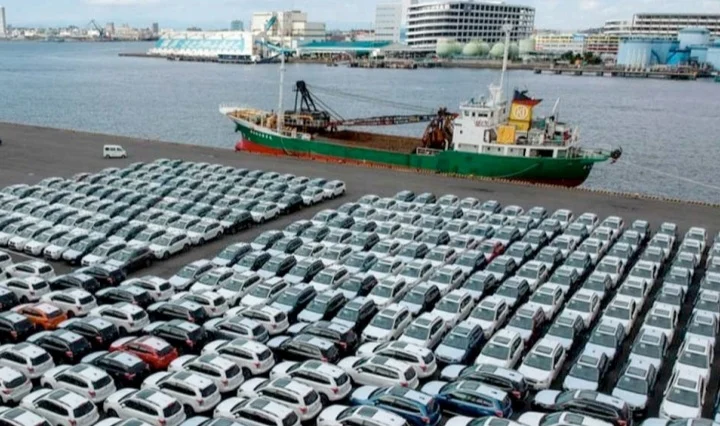
The Nigerian Ports Authority (NPA) has reported a significant increase in vehicle imports in the first half of 2026. A total of 103,375 units of imported vehicles were handled at various Nigerian ports between January and June 2026. This represents a 42.5% increase compared to the 72,568 units recorded in the same period in 2025. The Managing Director of the NPA, Dr. Abubakar Dantsoho, attributed the growth in vehicle handling to transshipment activity at the Ports & Terminal Multiservice Limited Terminal on Tin Can Island Port.
According to Dr. Dantsoho, the vehicle import surge came against the backdrop of an overall positive performance across nearly every major indicator tracked by the NPA. Vessel calls at Nigerian ports rose to 2,152 in the first half of 2026, a 6.9% increase. Additionally, gross registered earnings climbed to 96,693,108 from 79,981,595 recorded in the first half of 2025, representing a 20.9% jump. The NPA boss highlighted that the total cargo throughput across the nation's ports stood at 68,294,210 metric tons, up 12.2% from 60,844,521 metric tons handled in the same period last year.
The NPA reported that inward cargo alone accounted for 38,411,323 metric tons, against 36,338,068 metric tons in 2025, an increase of 5.6%. Lekki Port emerged as the standout performer among the nation's port locations, recording a 48.4% increase in vessel calls and now handling nearly 40% of total national cargo throughput. The growth was largely attributed to operations at the Dangote Refinery, which accounted for 76% of total cargo traffic recorded at the port during the review period.
Onne Port also posted strong growth, with a 26.6% rise in vessel calls, supported largely by LNG exports and now accounting for 22.7% of national cargo throughput. However, Calabar and Rivers ports remained marginal contributors, jointly accounting for just over 4% of cargo handled nationwide. All other port locations recorded a decline in vessel calls during the period. Container traffic also trended upward, with total throughput reaching 815,346 twenty-foot equivalents, a 10.3% increase over the 709,142 TEUs recorded in the first half of 2025.
Dr. Dantsoho noted that container imports made up the bulk of this volume at 546,755 TEUs, or 67% of total container traffic, while exports stood at 203,980 TEUs, representing 25%. Transhipment traffic recorded the steepest growth of any container category, rising 169.5% to 35,570 TEUs from 13,199 TEUs in the corresponding period last year. However, not all indicators trended positively, as ship turnaround time worsened, with vessels spending an average of 5.3 days at berth compared with a shorter turnaround recorded in the same period of 2025.
The Apapa Chapter Chairman of the National Council of Managing Directors of Nigerian Licensed Customs Agents, Abayomi Duyile, attributed the surge in vehicle imports to the reduction in levies on imported vehicles. He noted that the Nigerian vehicle business is booming, and the rate at which Nigerians are bringing in vehicles is high. However, Duyile decried that most of the vehicles coming in are old and accidented. The Chief Executive Officer of the Centre for the Promotion of Private Enterprise, Dr. Muda Yusuf, linked the development to a stronger exchange rate in the past few months and the slight downward review in tariffs and import duty on vehicles.
The increase in vehicle imports is expected to continue, driven by the growing demand for vehicles in Nigeria. The Dangote Petroleum Refinery has been identified as a defining factor in the sector's growth trajectory, accounting for approximately 40% of total annual port traffic. With the refinery's planned expansion to 1.4 million barrels per day, further investment in port infrastructure and the implementation of a balanced traffic policy will be required to accommodate the anticipated rise in cargo volumes and maximize the associated economic benefits to the nation.
Key points
- The 42.5% increase in vehicle imports in Nigeria is attributed to the reduction in levies on imported vehicles.
- The Nigerian Ports Authority reported a total of 103,375 units of imported vehicles handled at various Nigerian ports between January and June 2026.
- The growth in vehicle imports is driven by the growing demand for vehicles in Nigeria, with Lekki Port emerging as a standout performer due to operations at the Dangote Refinery.