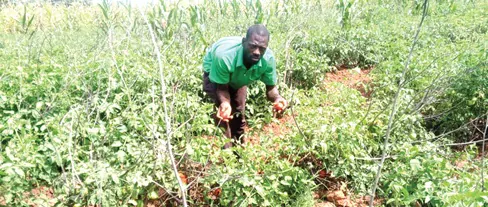
Farmers in the Nabdam District of the Upper East Region of Ghana are facing significant financial losses due to a sharp decline in the prices of essential vegetables such as tomatoes, pepper, and okra. The prices have dropped substantially over the past month, following an increase in supply as more farmers bring their produce to the market. This development has brought relief to consumers but has left farmers worried about recovering their investments.
A market survey conducted in the region revealed that the price of a bucket of tomatoes had fallen from GH¢120-150 at the beginning of September to GH¢60-70 in early October. Similarly, a basin of tomatoes, which previously sold for GH¢300-350, was now selling for GH¢120-150. The prices of okra and fresh pepper have also declined sharply, with a bucket of okra selling for GH¢80, down from GH¢120, and a bucket of fresh pepper selling for GH¢100-120, down from GH¢150-200.
Farmers attributed the situation to an increase in the supply of vegetables, which has weakened their bargaining power in the markets. Mboleni Zoya, a tomato farmer, expressed frustration over the situation, stating that the prevailing prices did not reflect the cost of producing the vegetables. He noted that farmers are forced to sell at whatever price they can when there is an abundance of produce, particularly during the harvesting season.
Samson Wougnab, another tomato and pepper farmer, stated that the falling prices were discouraging and that farmers would struggle to break even if the trend continued. He mentioned that buyers often come to the market with their own prices and that farmers have to agree or send the produce back home. The farmers also cited high production costs, including increasing expenditure on labour, seedlings, fertiliser, and other farm inputs, as a major challenge.
The high production costs are a significant concern for farmers, as a bag of fertiliser was selling for GH¢450-500 at the beginning of the season, and a labourer was paid GH¢70-80. With the current prices, farmers are struggling to cover their expenses, let alone make a profit. The situation has resulted in mixed fortunes for farmers and consumers, with some food vendors and consumers welcoming the reduction in prices.
Some food vendors have reported improved profit margins due to the lower prices, while others have expressed concerns about the impact on their businesses. Ateni Ababila, a food vendor, stated that fluctuations in vegetable prices made it difficult for traders to predict their profit margins. However, Yenmah Mba, another food vendor, welcomed the lower prices, saying they had led to substantial profits for her.
The Upper East Regional Director of Agriculture, Alhaji Fuseini Zakaria, noted that most farmers rely on rain for production, which leads to an abundance of produce during certain seasons. He suggested that support for farmers to have mechanised boreholes could help them produce year-round and reduce the problems associated with seasonal fluctuations in vegetable prices. This could potentially help farmers to better manage their production costs and improve their profitability.
Key points
- The decline in vegetable prices in Ghana's Upper East Region has resulted in financial losses for farmers, while consumers are benefiting from lower costs.
- The high production costs, including labour, seedlings, fertiliser, and other farm inputs, are a significant challenge for farmers in the region.
- Support for farmers to have mechanised boreholes could help them produce year-round and reduce the problems associated with seasonal fluctuations in vegetable prices.