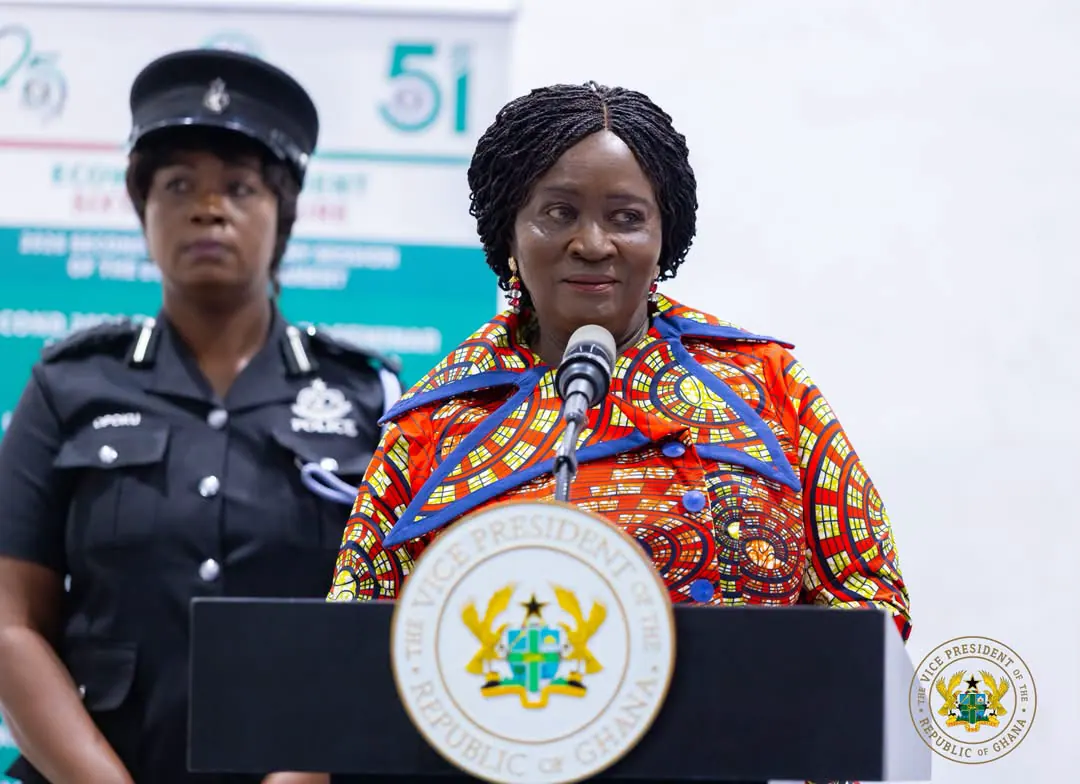
Vice-President Professor Naana Jane Opoku-Agyemang has emphasized the need for stronger regional cooperation to address the interconnected challenges of climate change, population displacement, and insecurity in West Africa. Speaking in Accra on Tuesday, September 22, 2026, at the opening of the Second Parliamentary Seminar and Second Extraordinary Session of the ECOWAS Parliament 2026, Prof. Opoku-Agyemang stressed the importance of coordinated responses to these challenges. She noted that climate change is both a development and a security challenge that requires a comprehensive approach.
According to Prof. Opoku-Agyemang, worsening environmental conditions, disrupted livelihoods, and population displacement are putting additional pressure on communities and could contribute to insecurity across borders. She called for stronger early-warning systems, support for communities hosting displaced persons, resilient livelihoods, and improved cross-border coordination. The Vice-President also linked insecurity to limited opportunities for young people, particularly in education, employment, and access to decent living conditions.
Prof. Opoku-Agyemang further urged ECOWAS to move beyond the adoption of regional frameworks to their effective implementation, supported by adequate resources and timely interventions. She emphasized the need for a stronger collective regional voice to mobilize climate finance and investment in resilient agriculture, water management, coastal protection, and clean energy. This, she believes, will help address the root causes of climate change and insecurity in the region.
Speaking on behalf of the Speaker of Parliament, Mr. Alban Bagbin, Second Deputy Speaker, Mr. Andrew Asiamah Amoako, highlighted the effects of climate change, environmental degradation, and illegal small-scale mining on livelihoods. He called for stronger action on environmental protection, climate adaptation, and natural-resource management. Mr. Amoako emphasized that national and regional parliaments must help ensure that ECOWAS integration translates into practical benefits for citizens.
The ECOWAS Commission, represented by Professor Nassirou Bako-Arifari, described climate change as an issue affecting development, humanitarian conditions, peace, and security. The Commission called for greater investment in resilience and early-warning systems to mitigate the impact of climate change. This call is in line with the seminar's theme, “Climate Change as a Factor of Environmental Degradation, Population Displacement and Growing Insecurity in the ECOWAS Region.”
The parliamentary seminar is expected to produce recommendations on climate adaptation, conflict prevention, and the protection of vulnerable populations. The Extraordinary Session will also consider the ECOWAS Parliament’s 2027 budget and annual programme. The seminar and session brought together stakeholders to discuss the challenges posed by climate change and find solutions to address them.
The Vice-President's call for stronger ECOWAS action on climate change is a timely reminder of the need for collective action to address this global challenge. With climate change affecting development, humanitarian conditions, peace, and security in the region, it is essential that ECOWAS member states work together to develop and implement effective solutions. The seminar and session have provided a platform for stakeholders to engage in discussions and find ways to address the challenges posed by climate change.
Key points
- Vice-President Professor Naana Jane Opoku-Agyemang calls for stronger regional cooperation to address climate change, population displacement, and insecurity in West Africa.
- ECOWAS urged to move beyond adoption of regional frameworks to effective implementation, supported by adequate resources and timely interventions.
- Seminar and session aim to produce recommendations on climate adaptation, conflict prevention, and protection of vulnerable populations.