Ghana's recent tax reforms aimed to support micro, small, and medium enterprises (MSMEs) by reducing the Value Added Tax (VAT) rate from 21.9% to 20% and scrapping the 1% COVID-19 levy. The VAT Act, which took effect in 2026, also raised the threshold for VAT registration from GHS 200,000 to GHS 750,000 in annual turnover. This change exempted a larger pool of small enterprises from the VAT system. According to Ghana's Finance Minister, these measures would return roughly GHS 6 billion to households and businesses in 2026 and cut the cost of doing business by 5%.
Despite these national-level reforms, MSME owners in Ghana say the real cost of doing business lies in the maze of municipal permits and fees. Research by the Institute for Liberty and Policy Innovation (ILAPI) found that the average cost of obtaining a permit from a Metropolitan, Municipal or District Assembly (MMDA) is GHS 1,275. Licence fees average GHS 1,600, with some businesses paying as much as GHS 3,000, while business registration itself costs an average of GHS 1,030. These costs can be overwhelming for small businesses, offsetting the benefits of national tax cuts.
The problem is not just the fees themselves but also institutional fragmentation, with overlapping mandates between agencies, excessive documentation demands, opaque procedures, and inconsistent enforcement. This complexity forces businesses to rely on unofficial middlemen to get compliant, adding costs that never show up in official government statistics. As a result, many MSMEs struggle to operate legally, with some opting to remain in the informal sector.
Ghana's MSME sector is a significant part of the economy, making up around 92% of all businesses and contributing close to 70% of GDP. However, the sector is fragile, with a high failure rate of 50% and a startup success rate of just 20%. The UN Capital Development Fund found that nearly seven in ten MSMEs collapse within five years. This fragility makes it essential to address the regulatory challenges facing MSMEs.
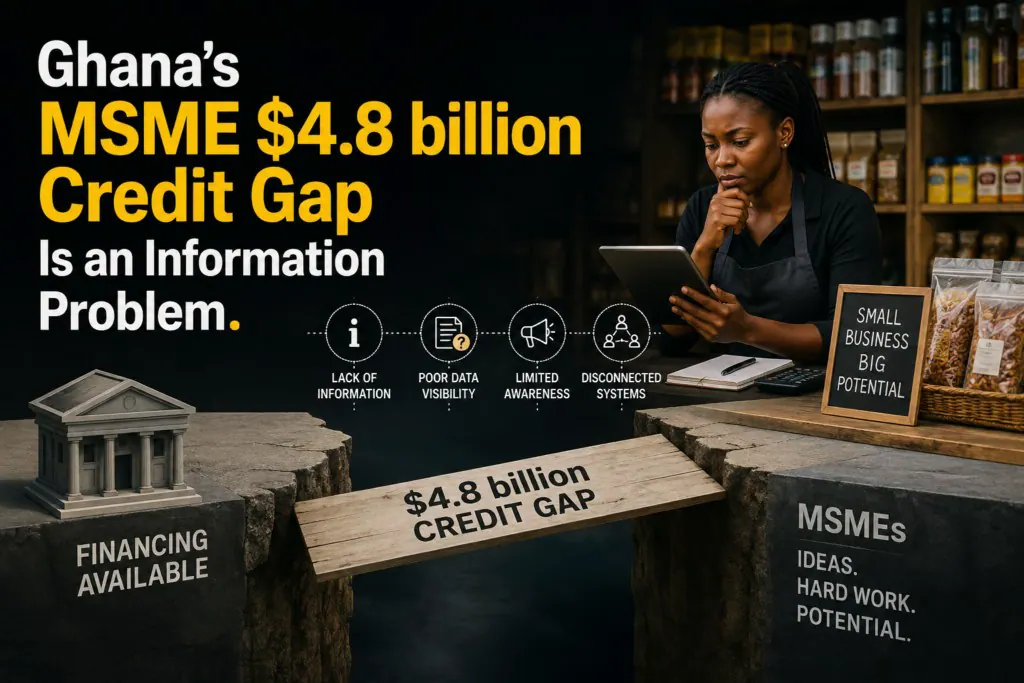
The compliance burden compounds an existing financing problem, with Ghana's MSME credit gap estimated at $4.8 billion. Small businesses struggle to access capital to grow, formalize, and absorb costs such as permit fees. Layering opaque municipal charges on top of this gap makes formalization less attractive. This has led to a "formalization penalty," where formal-sector businesses carry a heavier overall burden than informal operators.
A 2024 study by the Nordic Africa Institute on a carbon emissions tax serves as a cautionary precedent. Overall compliance with the tax stood at just 15%, falling to 4% among micro-enterprises. The requirement to install equipment to measure and report emissions was unworkable for firms lacking basic bookkeeping. The tax was abolished in April 2025. Ghanaian businesses rated the fairness of the wider tax system at only 51 out of 100, with informal enterprises rating it even lower, at 45.
To address these challenges, a comprehensive revision of the Income Tax Act and reform of the Customs Act are currently before Parliament, aimed at simplification and digitalization. However, these national-level reforms do not address fragmentation at the municipal level. A single digital platform allowing businesses to apply for multiple permits at once, as recommended by ILAPI, could be a possible fix, but it would require political will to overcome entrenched municipal interests.
Key points
- Ghana's MSMEs face significant regulatory challenges, including municipal permits and fees, despite national tax cuts.
- The compliance burden compounds an existing financing problem, with a significant credit gap and opaque municipal charges.
- Institutional fragmentation and complexity force businesses to rely on unofficial middlemen, adding to the costs of operating legally.