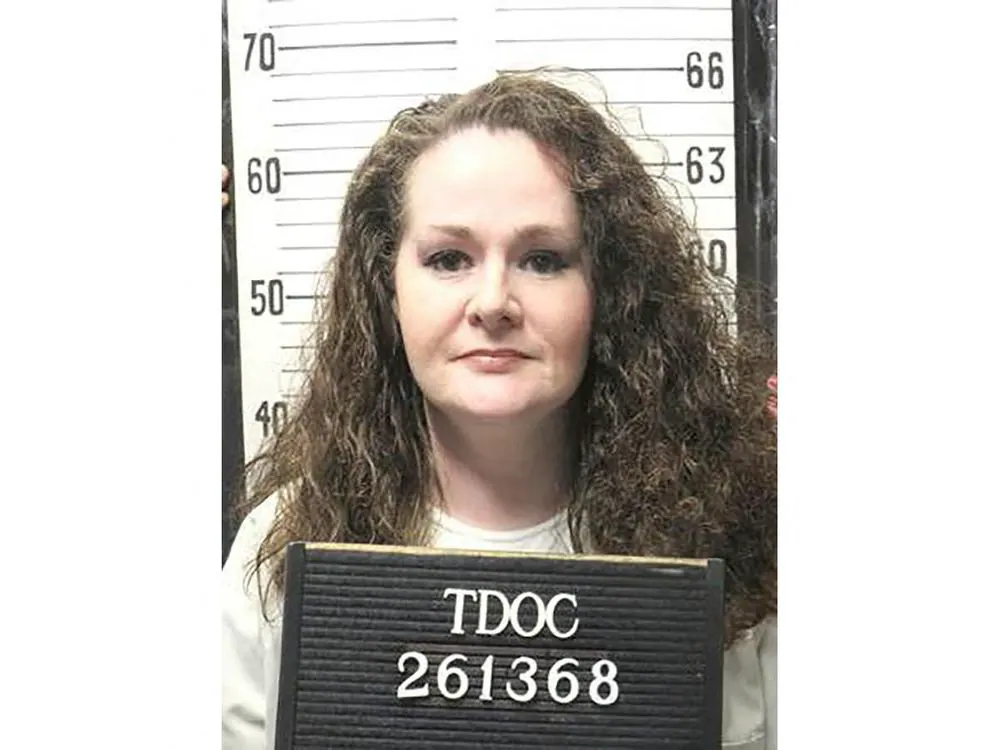
Christa Pike, a 50-year-old female inmate, was sentenced to death for a murder she committed when she was a teenager. She received two lethal doses of pentobarbital at a Tennessee prison last week but survived the injections and was rushed to hospital. There, she had been unconscious and on a ventilator in critical condition. Her lawyers reported on Tuesday that she is now conscious and speaking.
Pike's lawyers stated that despite severe damage to her arms, she remains handcuffed and shackled to the bed. Her recovery is medically unprecedented, and her prognosis remains unclear, but at a minimum, a long recovery is expected. The lawyers had previously objected to the execution's IV protocol, citing concerns it would cause needless suffering due to Pike's small veins and a blood condition.
Medical experts had warned that the needles could become dislodged or pierce through the vein, causing lethal drugs to flow into Pike's arm instead of the bloodstream. A court filing described pentobarbital as a caustic substance that burns skin, tissue, and veins. Upon arrival at the hospital, both of Pike's arms were swollen, burned, and blistered.
The Death Penalty Information Center reported that Pike was the first inmate ever to survive after being injected with lethal doses of execution drugs. Her case sparked debate over the death penalty for young offenders, as she was 18 when she and her boyfriend beat and killed 19-year-old Colleen Slemmer at a job training camp in 1995.
The killing gained national attention after Slemmer's body was found with a pentagram, often seen as a satanic symbol, carved in her chest. Pike's lawyers sought clemency, citing her age, childhood sexual abuse, and mental health problems, including post-traumatic stress disorder. The case had already attracted attention as Pike would have been the first woman put to death by Tennessee in over 200 years.
Tennessee Governor Bill Lee suspended the carrying out of capital punishment in the state following the failed execution, pending an independent investigation. The prison chief has since resigned. Pike's lawyers repeated a call for Governor Lee to commute Pike's sentence to life imprisonment without the possibility of parole.
In the United States, 18 women have been executed since 1976, according to the Death Penalty Information Center. Pike's survival has raised questions about the use of the death penalty and the methods used in executions. Her lawyers continue to advocate for her life imprisonment without parole, citing her changed circumstances and the trauma she has endured.
Key points
- Christa Pike is the first inmate to survive lethal injection in the US.
- Pike's case has sparked debate over the death penalty for young offenders.
- Governor Bill Lee has suspended capital punishment in Tennessee pending an investigation.