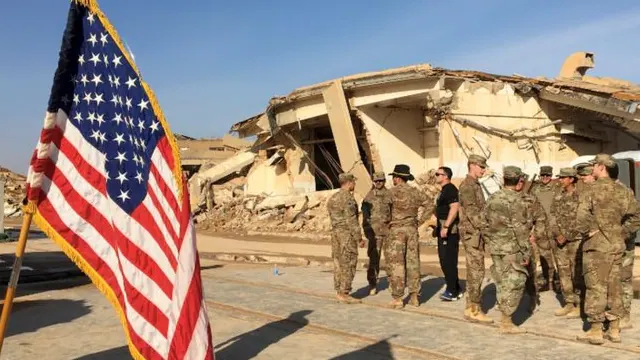
The United States is completing its withdrawal from Iraq, marking the end of a nearly two-decade-long military presence. The withdrawal, agreed upon with the Iraqi government two years ago, leaves behind a limited number of US units providing advisory, training, and intelligence support to Iraqi forces. However, concerns are growing about the potential security vacuum, particularly in rural areas where ISIS remnants remain active.
The Iraqi military defeated ISIS in 2017, but the terrorist group still maintains a presence in rural areas. The US withdrawal has raised concerns that Baghdad's ability to track and engage ISIS cells may be hindered by the loss of US intelligence and airpower capabilities. This comes as attention shifts to the growing influence of Iranian-backed militias, which have become a dominant force in Iraq's security and political landscape.
Iranian-backed militias, which played a key role in the fight against ISIS, have expanded their influence in Iraq since the group's defeat. These militias, including the Popular Mobilization Forces (PMF), have established a strong presence in strategic areas across the country. Their growing influence has raised concerns about the potential for Iraq to become embroiled in regional conflicts, particularly given their ties to Iran and its "axis of resistance."
The US withdrawal has also sparked concerns about the potential for increased violence between rival militias and the Iraqi government. The PMF, which was established in 2014, has become a powerful force in Iraqi politics, with many of its leaders holding seats in parliament. However, the group's ties to Iran have raised concerns about its loyalty to the Iraqi government and its potential for autonomous action.
The assassination of top Iranian military commander Qasem Soleimani in January 2020 marked a turning point in the conflict, with Iran vowing to increase its efforts to expel US forces from the region. Since then, Iraqi militias have launched a series of attacks on US military bases, which have been met with limited US retaliation. The conflict has escalated further since the October 7 attacks, with Iranian-backed militias participating in the regional conflict alongside Hezbollah and the Houthis.
The growing influence of Iranian-backed militias has significant implications for Iraq's security and stability. While these groups have played a key role in the fight against ISIS, their ties to Iran and its "axis of resistance" have raised concerns about their loyalty to the Iraqi government and their potential for autonomous action. The US withdrawal has created a power vacuum that these militias are well-positioned to fill.
The future of Iraq's security and stability remains uncertain as the US completes its withdrawal. While the Iraqi military has made significant gains in recent years, the country still faces significant security challenges, particularly from ISIS remnants and Iranian-backed militias. The international community will be watching closely to see how Iraq navigates these challenges and establishes a stable and secure future.
Key points
- The US withdrawal from Iraq has sparked concerns about the country's security and the growing influence of Iranian-backed militias.
- Iranian-backed militias have become a dominant force in Iraq's security and political landscape since the defeat of ISIS.
- The US withdrawal has created a power vacuum that Iranian-backed militias are well-positioned to fill, with significant implications for Iraq's stability and security.