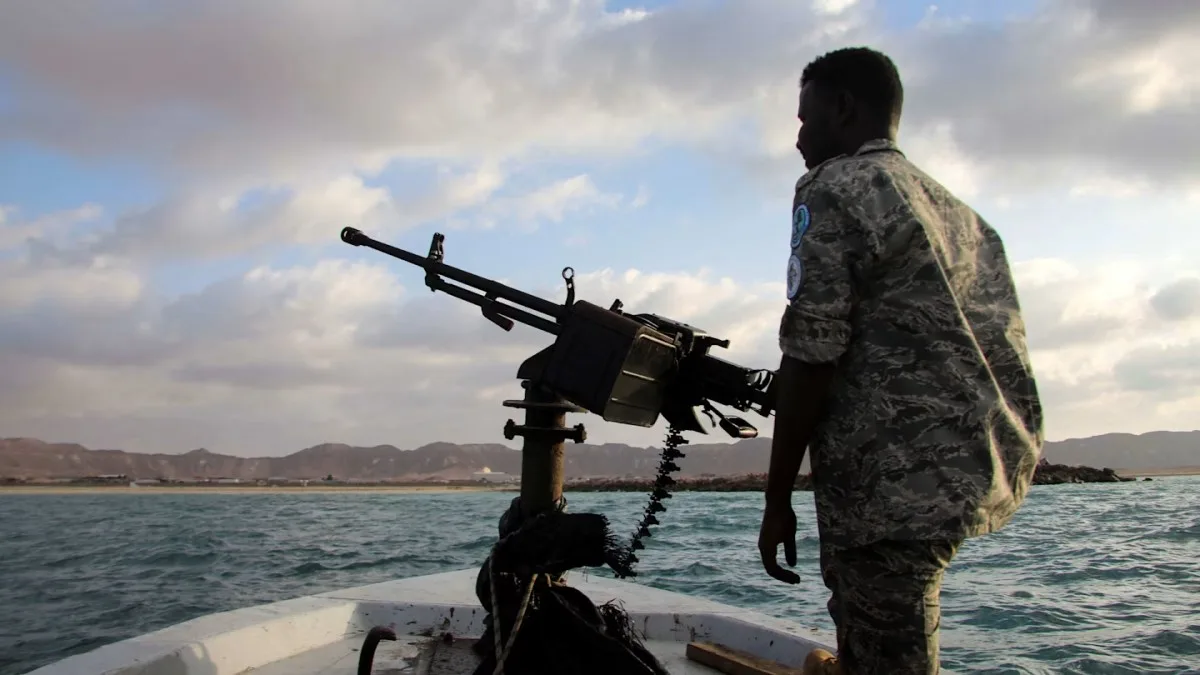
The United States has expressed concerns over the growing partnership between Yemen's Houthi rebels and Somalia's al-Shabaab militants, warning of an "escalatory" threat to regional stability. The Houthis, backed by Iran, have been battling to consolidate control over the Red Sea coast of Yemen, seizing the port of Mocha this month and advancing on the strategic Bab al-Mandeb strait.
According to security and military experts, the Houthis have sold weapons to al-Shabaab, trained hundreds of fighters in drone and explosive use, and frequently travelled to areas of southern Somalia controlled by the al-Qaeda affiliate. This growing alliance poses a serious danger to global trade, oil flows, and shipping, with a tenth of global trade flowing through the Bab al-Mandeb strait.
A spokesperson for the US military's Africa Command described the link between the two groups as a "highly concerning, escalatory threat to regional stability". The alliance threatens to expand al-Shabaab's lethal reach in the Horn of Africa while giving the Houthis deeper access to project influence and disrupt vital maritime corridors in the Red Sea and western Indian Ocean.
Security officials in Mogadishu are wary of the impact of the closer alliance between the Houthis and al-Shabaab on Somalia, which has been torn by civil conflict for decades. Al-Shabaab controls about 40 per cent of Somalia, mostly rural areas, and reached a fragile stalemate with the ruling government in Mogadishu last year.
The Houthis and al-Shabaab have been intensifying contact despite sectarian differences, with the relationship evolving beyond smuggling into an operational partnership involving weapons, drones, and technical expertise. Al-Shabaab raises $120mn annually through taxation, duties, and extortion, according to conservative UN estimates, while the Houthis have access to Iranian weaponry and technology.
Experts warn that if al-Shabaab acquires the expertise to operate Houthi-supplied medium-range missiles and drone boats, this network could extend into the western Indian Ocean. Pirates on Somalia's northern coastline have already taken advantage of the turmoil, launching the highest number of attacks in a decade, including the seizure of a Turkish ship carrying weapons to Mogadishu.
As many as 1,500 Somali fighters have trained with the Houthis in Yemen, both from al-Shabaab and other Somali factions. The relationship was given impetus by Israel's recognition last December of the self-declared state of Somaliland as an independent state, with both al-Shabaab and the Houthis subscribing to a fiercely anti-Israel, anti-US doctrine.
Key points
- The growing alliance between the Houthis and al-Shabaab poses a serious danger to global trade, oil flows, and shipping.
- The US military's Africa Command has described the link between the two groups as a "highly concerning, escalatory threat to regional stability".
- Experts warn that the relationship between the Houthis and al-Shabaab could extend into the western Indian Ocean if al-Shabaab acquires advanced weaponry.