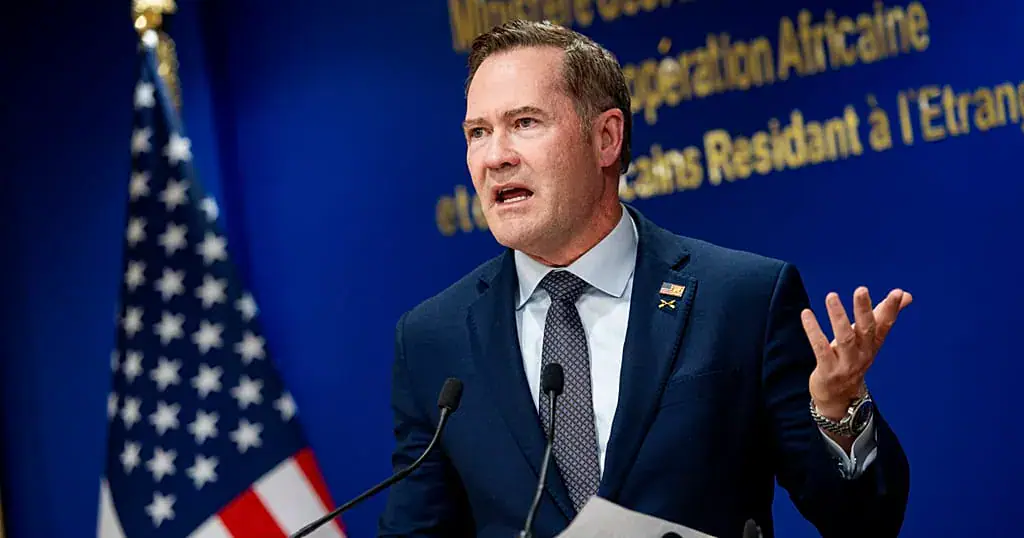
The US ambassador to the United Nations, Mike Waltz, has called for calm and full respect of the ceasefire in Western Sahara. Speaking in Rabat, Morocco, Waltz urged all parties to refrain from provocations and escalation, and to remain committed to the ceasefire. His comments come as the United Nations peacekeepers begin leaving the disputed territory. The mineral-rich Western Sahara is largely controlled by Morocco, but the Algeria-backed Polisario Front has pushed for independence for decades.
Washington backs Rabat's claim to Western Sahara, and Waltz reiterated this support during his visit to Morocco. He also called on the Polisario Front to rejoin the ceasefire and demonstrate a commitment to peace. The US envoy emphasized that Washington will continue working with all parties and with the United Nations towards a lasting settlement. This approach has been supported by several European nations, including Spain, which have backed Rabat's autonomy plan as a way to break the diplomatic deadlock over Western Sahara.
The UN peacekeeping mission in Western Sahara, MINURSO, was created in 1991 to organize a self-determination referendum, which has never taken place. The mission's mandate expired last month after the UN Security Council failed to adopt a resolution renewing it. Russia had sought to renew MINURSO unchanged, but Washington blocked the move, proposing instead to extend the peacekeeping mission while effectively dropping the requirement for a referendum.
The US proposal, which would have made Morocco's autonomy plan the basis for any future talks, was supported by 11 of 15 council members, but Russia rejected it as one-sided. As a result, the peacekeepers have officially begun withdrawing from the territory, a process that may take months. The mission's chief, Russian diplomat Alexander Ivanko, said that the final deadline for their presence is January 31.
Morocco has reiterated its commitment to a ceasefire, despite the Polisario Front declaring in 2020 that it would resume its armed struggle. Waltz's comments come at a critical time, as the region seeks to maintain stability in the face of ongoing tensions. The US and Morocco have a long-standing relationship, and Washington's support for Rabat's claim to Western Sahara has been consistent.
The withdrawal of UN peacekeepers from Western Sahara has raised concerns about the potential for renewed conflict in the region. The US, Morocco, and other parties have emphasized the need for a peaceful resolution to the dispute. A lasting settlement will require continued diplomatic efforts and a commitment to peace from all parties involved.
The situation in Western Sahara remains complex, with multiple parties vying for influence and control. The US, as a key player in the region, will continue to play a role in shaping the future of Western Sahara. As the peacekeepers withdraw, the international community will be watching closely to see how the situation develops.
Key points
- The US has urged respect for the ceasefire in Western Sahara as UN peacekeepers begin to withdraw from the disputed territory.
- Washington backs Morocco's claim to Western Sahara and has proposed making Rabat's autonomy plan the basis for future talks.
- The withdrawal of UN peacekeepers may take months, with the final deadline set for January 31.