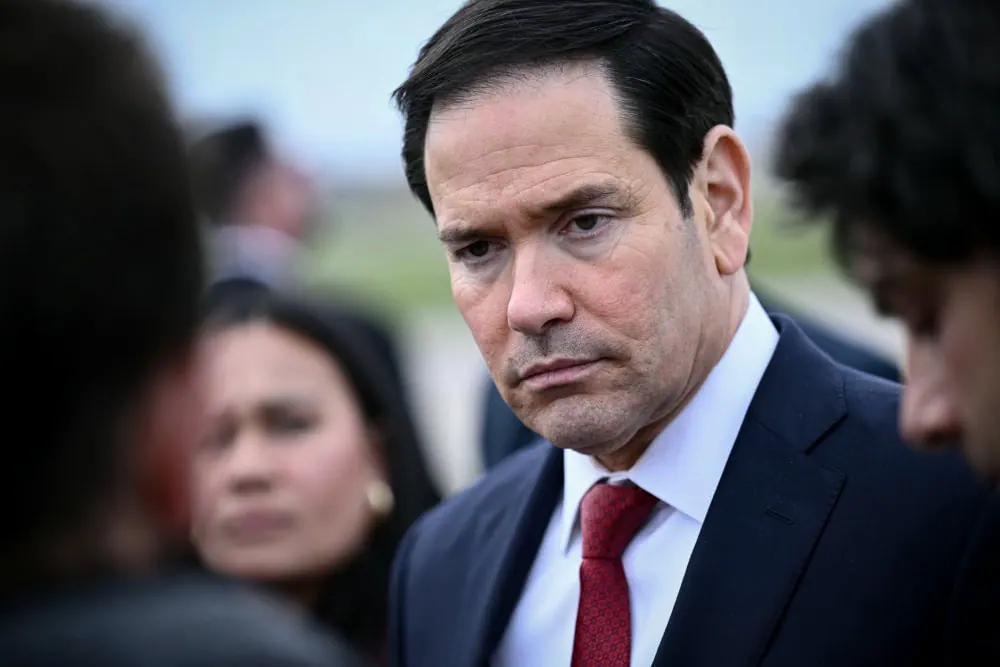
The United States Secretary of State, Marco Rubio, has issued an ultimatum to South Africa, warning of travel restrictions on certain South African citizens. This move comes after 19 months of failed negotiations between the two countries. The announcement has been met with moral outrage in Pretoria. The question now is whether South Africa is geopolitically on the back foot or the front foot, as President Ramaphosa and Minister Lamola claim.
An examination of South Africa's economic data reveals a somber picture. The country's economy is struggling, with growth stagnating near zero. Real GDP grew by only 1.1% in 2025, and forecasts for 2026 are below 1%. The economy contracted in the second quarter of this year, and per capita income is barely moving. The manufacturing sector's share of GDP has declined from around 21% in 1994 to under 14%. Unemployment remains a national crisis, with an official rate in the low to mid-30s.
Policy issues are a significant contributor to South Africa's problems. The government's approach to racial categorization has become an ordering principle, with the Amendment Act on Equal Employment granting ministers the power to set numerical racial targets across industries. Broad-based black economic empowerment (B-BEE) remains a stumbling block to investment, procurement, and ownership. Research suggests that B-BEE compliance costs range from R145 billion to R290 billion per year, equivalent to 2-4% of GDP.
Government failure is another significant factor in South Africa's challenges. State capture was not a one-time event, but a systemic issue that still has an impact today. The consequences are evident in struggling state-owned enterprises like Eskom and Transnet, as well as in municipal failures to provide basic services. Transparency International's corruption perception index score for South Africa remains in the low 40s.
Crime is a persistent problem in South Africa, with the murder rate decreasing from its peak but still high by international standards. Over 20,000 people are murdered each year, with farm attacks being a subset of this violence. In 2025, AfriForum recorded 184 farm attacks and 29 farm murders, often characterized by extreme brutality. The state is not prioritizing farm attacks as a crime, unlike other serious offenses like rhino poaching.
Minority groups in South Africa feel they are being targeted, citing racial employment targets, pressure on language and culture, and emigration of professionals. They argue that the new order in South Africa is governing against them, rather than for the benefit of all citizens. The issue of land expropriation without compensation, introduced in 2024, has raised concerns about property rights.
South Africa's foreign policy has also contributed to its challenges, particularly its perceived alignment with anti-Western countries. The country's decision to engage in joint military exercises with Russia and China, and its reluctance to condemn Russia's invasion of Ukraine, have raised concerns in Washington. The US is one of South Africa's largest export markets and sources of capital, technology, and health funding.
Key points
- The US ultimatum has highlighted concerns about South Africa's stance on international issues.
- South Africa's economic struggles are a significant challenge to its geopolitical position.
- The country's foreign policy decisions have raised concerns about its alignment with Western countries.