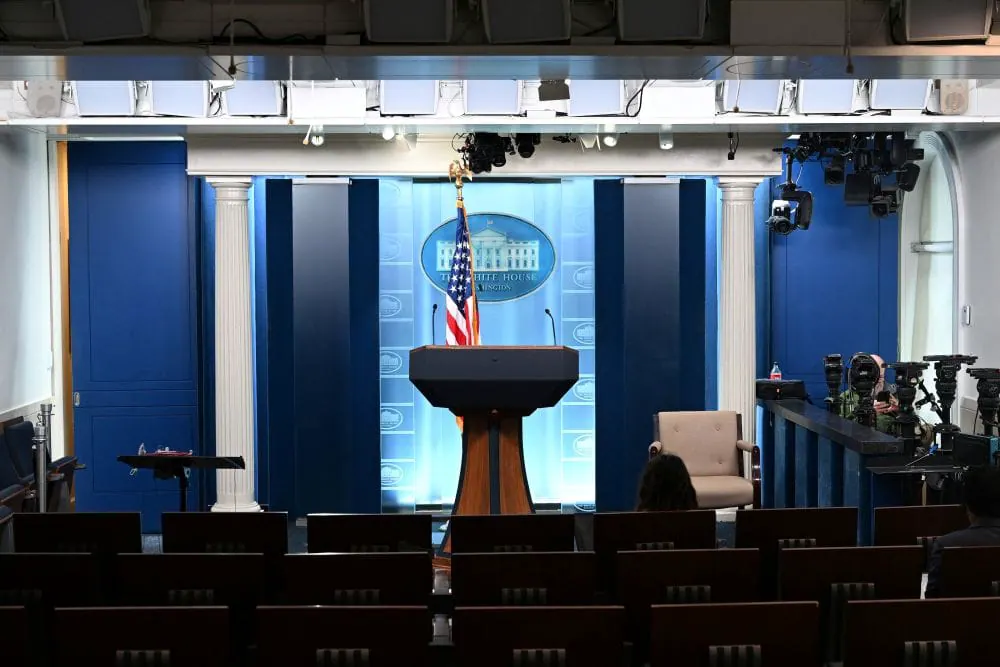
The five largest American television networks, including ABC, CBS, CNN, Fox, and NBC, have taken an unprecedented stance by collectively deciding to halt their coverage of President Donald Trump and the White House. This move comes in protest against Trump's decision to ban three prominent news organizations, CNN, Politico, and MSNBC, from the White House. The networks will no longer provide joint coverage of the White House, where one network normally films on behalf of all the television stations for the day.
The ban on the three news organizations, which was implemented on Friday, has sparked widespread criticism. The organizations claim that the ban is an attack on the freedom of the press and a violation of the First Amendment of the US Constitution. The three organizations have filed a lawsuit against the Trump administration, seeking a temporary injunction against the ban. They argue that the ban is an attempt to silence them and restrict their ability to report on the government.
The joint statement released by the five television networks emphasized the importance of a free press in a democratic society. They stated that the public has a vital interest in receiving accurate and independent information about the government. The networks also expressed concern that no administration should be able to restrict a news organization simply because it objects to their reporting.
The ban on the three news organizations has had significant consequences. Journalists from CNN, MSNBC, and Politico were denied access to the White House grounds on Saturday, and their access permits were confiscated. The organizations have since turned to the courts to challenge the ban. A US district judge has scheduled a hearing on the complaint for Wednesday.
President Trump has responded to the criticism, describing the media as a "cancer" and a threat to national security. He has claimed that the ban is not an attack on the free press, but rather on "fake news" that has grown like cancer in the US. Trump's vice president, JD Vance, has also weighed in on the issue, accusing the news organizations of spreading "left-wing propaganda".
The impact of the ban has been felt beyond the White House. Several photo news organizations, including AFP, have decided to withhold photos of Trump at the new White House helipad in solidarity with the banned media organizations. The event was only broadcast on the White House website, and Trump's comments were not audible. The lack of live television coverage has also affected Trump's meetings with foreign leaders at the UN General Assembly in New York.
The dispute is likely to continue, with the three news organizations seeking a court injunction to restore their access to the White House. The case has significant implications for the freedom of the press in the US and the relationship between the government and the media. The five television networks have made it clear that they will not compromise on the issue, and the public will be watching closely to see how it unfolds.
Key points
- The US television networks' decision to halt coverage of Trump is a show of solidarity with the banned news organizations.
- The ban on the three news organizations has sparked a heated debate about the freedom of the press in the US.
- The dispute has significant implications for the relationship between the government and the media in the US.