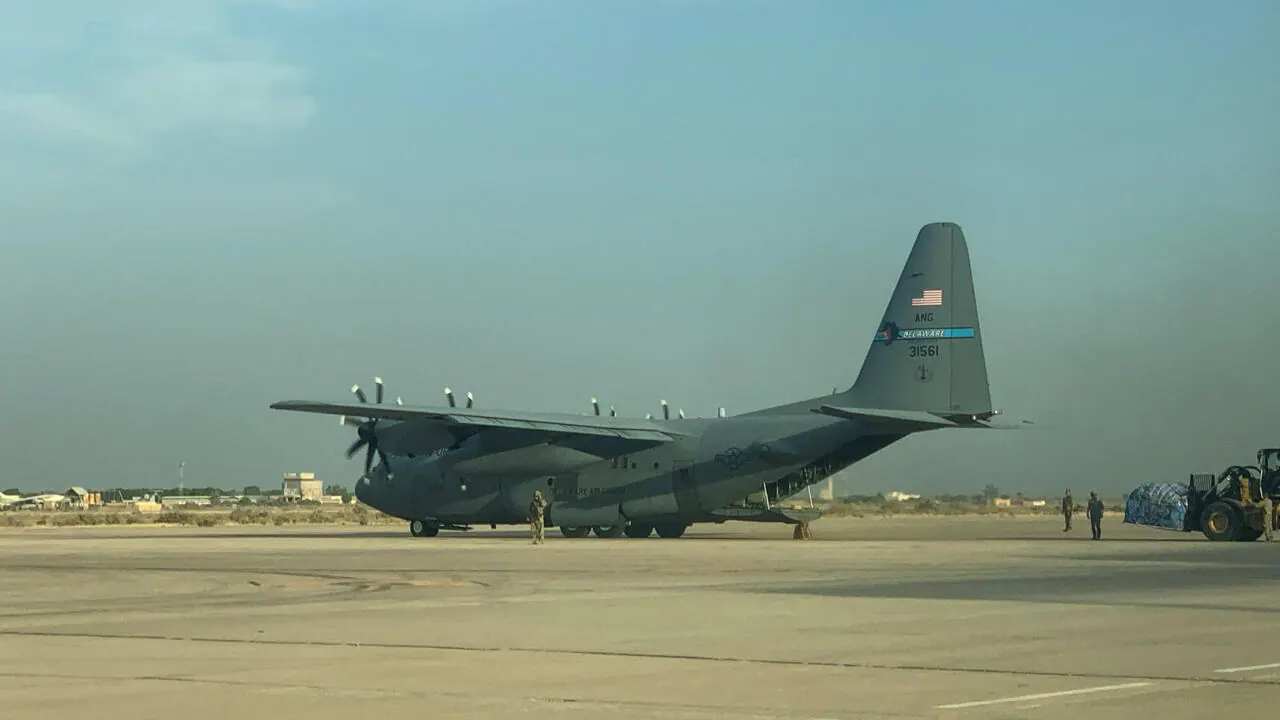
The United States has completed its withdrawal from remaining bases in Iraq, a move that has raised concerns about a potential security vacuum. This development could embolden Iranian-backed militias and allow the Islamic State group to regain strength. The withdrawal was initially agreed upon under US President Joe Biden in 2024 and executed by Donald Trump's administration, despite ongoing hostilities with Iran.
The decision to withdraw US troops from Iraq marks a significant moment in the country's history, 23 years after US-led forces ousted Saddam Hussein, a move that led to years of instability and the emergence of Islamic State. While many Iraqis view the US departure positively, some fear that Iraqi security forces—trained and funded by the US—remain ill-equipped to maintain order.
Iraqi analyst Jassim al-Bahadli noted that security vacuums can be extremely dangerous. The US forces invaded Iraq in 2003, eventually withdrawing in 2011, only to return in 2014 to assist Iraqi forces in the fight against Islamic State, which peaked in its control of large parts of the country.
Since the US return to Iraq in 2014, the number of US casualties in Iraq has far surpassed those in the Afghanistan conflict. Seven of the 18 US service personnel killed in this year's conflict with Iran died in Iraq, the most recent being an army sergeant who died during a drone-controlled detonation near Erbil in July.
Iran asserts that the US withdrawal is a significant victory for its network of allied armed groups throughout the Middle East. However, analysts warn that this absence may encourage Iran's proxies to seek greater influence over Iraqi policies. Some Iraqi officials are concerned that the US exit could revitalise Islamic State fighters.
Despite losing their self-declared caliphate almost a decade ago, Islamic State fighters still maintain sleeper cells. US troops have been crucial in providing the Iraqi military with intelligence and surveillance regarding Islamic State activities, raising questions about the preparedness of Iraq's security forces for a future without Coalition support.
Retired Iraqi General Mohammed al-Jubouri emphasised the need for a robust alternative plan to counter potential threats, particularly from Islamic State attempts to acquire armed drones. The Iraqi military will need to adapt to the new security landscape and develop strategies to address these emerging challenges.
Key points
- The US withdrawal from Iraq may create a security vacuum that could be exploited by Iranian-backed militias and Islamic State fighters.
- Iraqi security forces, trained and funded by the US, may be ill-equipped to maintain order in the country.
- The US exit could revitalise Islamic State fighters, who still maintain sleeper cells despite losing their self-declared caliphate almost a decade ago.