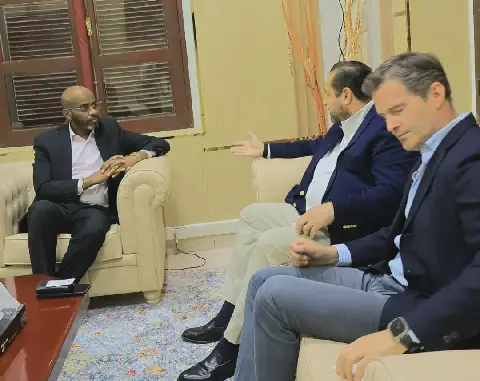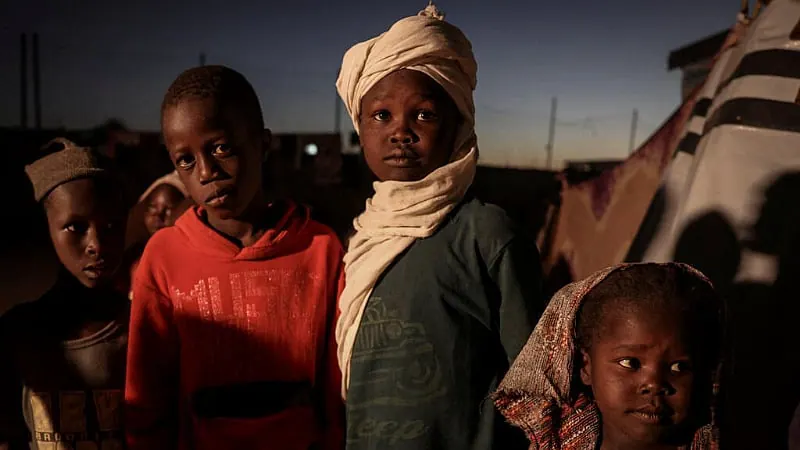
The US has reportedly taken a firm stance against Sudan's army chief, General Abdel Fattah al-Burhan, denying him a visa to attend the UN General Assembly in New York last week. According to sources, the decision was made in response to Burhan's refusal to sign a US-backed truce between the Sudanese army and the paramilitary Rapid Support Forces (RSF). The ongoing conflict in Sudan, which began in April 2023, has resulted in tens of thousands of deaths and millions of displaced people.
The conflict in Sudan is a complex and multifaceted issue, with various factors contributing to the ongoing violence. The power struggle between Burhan and his former deputy, RSF commander Mohamed Hamdan Daglo, known as "Hemedti", has been a major driver of the conflict. The situation has been further complicated by the involvement of foreign fighters, with the UN's Sudan probe revealing that external forces are fuelling the conflict. The humanitarian crisis in Sudan has been described as the world's largest.
The US decision to deny Burhan a visa has been seen as an attempt to pressure him into accepting a three-month truce with the RSF. However, Khartoum has rejected the proposal, arguing that a ceasefire would only give the RSF time to regroup. The Sudanese army has been making gains in North Kordofan province, particularly around the city of El Obeid, but the RSF still has thousands of fighters and has deployed newly trained soldiers equipped with full military gear.
The conflict in Sudan has also involved the use of drones by both sides, with a drone strike hitting a major fuel depot near the army-held city of Wad Madani. The attack was the first reported strike on the Al-Jazira state capital since the army recaptured it from the RSF last year. Two explosions also rocked Nyala, the RSF's main stronghold in the west. The situation on the ground remains volatile, with concerns about the humanitarian impact of the ongoing violence.
Analysts believe that the US has "alienated" the Sudanese army, making it unlikely that they will be able to find a solution to the complex war. However, the US has strategic interests in Sudan, particularly in keeping Russian influence away from the Red Sea. Russia is one of the arms suppliers to the Sudanese army and is pursuing plans to establish a military base on the Red Sea at Port Sudan.
The situation in Sudan is further complicated by the involvement of regional and international actors. Saudi Arabia, which has a military and intelligence partnership with the US, has appealed to President Trump to intervene in Yemen's conflict with the Iran-backed Houthis. This has created contradictions in the US approach to Sudan, with some arguing that the US should withdraw from negotiations.
Despite the challenges, analysts believe that the US should remain engaged in Sudan, given the country's strategic importance. The US, along with its regional allies, has proposed a three-month humanitarian cessation of hostilities to the two sides in Sudan. However, the Sudanese army remains skeptical about the proposal, and the situation remains uncertain.
Key points
- The US has denied Sudan's army chief a visa to attend the UN General Assembly, citing his refusal to sign a US-backed truce with the RSF.
- The conflict in Sudan has resulted in tens of thousands of deaths and millions of displaced people, with the humanitarian crisis described as the world's largest.
- The US has strategic interests in Sudan, particularly in keeping Russian influence away from the Red Sea.