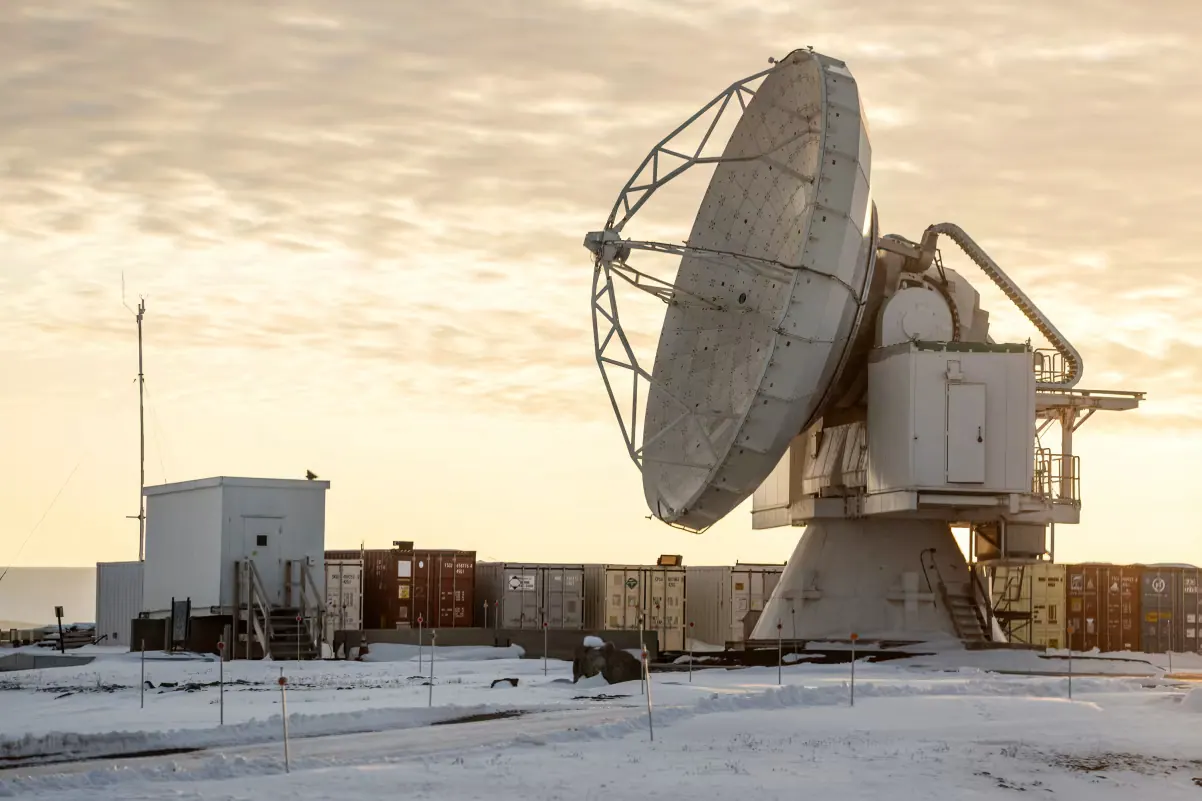
The United States, Denmark, and Greenland have signed an agreement that makes minor changes to a 1951 treaty governing the US military presence in the self-governing territory of Greenland. The deal, signed by US President Donald Trump, appears to keep non-NATO countries out and permits a small increase in US forces. The treaty, which frames the US military's footprint in Greenland, was initially part of NATO's defense strategy.
The new agreement serves as a supplement to the 70-year-old defense treaty that gave the US permission to station troops in Greenland as part of NATO's defense. Among the primary additions are a prohibition of non-NATO members basing forces in Greenland, the building of two US bases, and an assurance of US military access if Greenland becomes independent from Denmark.
Experts say that the changes are limited, and the US military presence in Greenland is unlikely to be significant. Mark Cancian, a senior adviser at the Center for Strategic and International Studies Defense and Security Department, said that the final number of forces could be modest, pegging the total addition at under 50 troops. The US military has had a small footprint at the Pituffik Space Base in Greenland for decades.
The deal's restrictions on non-NATO countries' influence over Greenland are seen as aimed at China and Russia. Trump has framed the agreement as providing "permanent control over security" of the territory. The agreement references Trump's planned "Golden Dome" missile defense system, though that program remains years away from being built.
The US and other countries have turned increasing attention to the Arctic as icepacks have thinned, creating now navigable waterways that could shape global trade. Iris Ferguson, the former deputy assistant secretary of defense for Arctic and global resilience, said that the agreement pushes in the right direction towards advancing common goals.
The new agreement includes an assurance of US access if Greenland becomes independent of Denmark — an issue that had long been a point of contention with the old agreement. Ferguson also noted that significant infrastructure investment would be needed at the two locations where the US will establish bases — Narsarsuaq and Mestersvig.
Reactions to the deal have been mixed. NATO Secretary General Mark Rutte welcomed the agreement, saying it enhances collective security and supports a safer and more stable future. Democratic Sen. Jeanne Shaheen of New Hampshire criticized Trump's threats ahead of the agreement, saying that the deal essentially returns the US-Greenland defense relationship to where it was before.
Key points
- The deal makes small changes to a 1951 treaty governing the US military presence in Greenland.
- The agreement prohibits non-NATO members from basing forces in Greenland and permits a small increase in US forces.
- The deal's restrictions on non-NATO countries' influence over Greenland are seen as aimed at China and Russia.